About this artwork
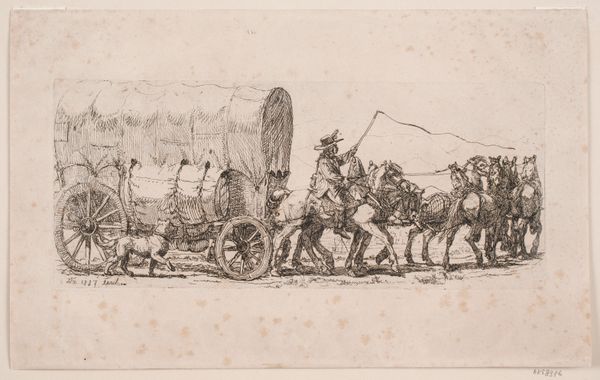
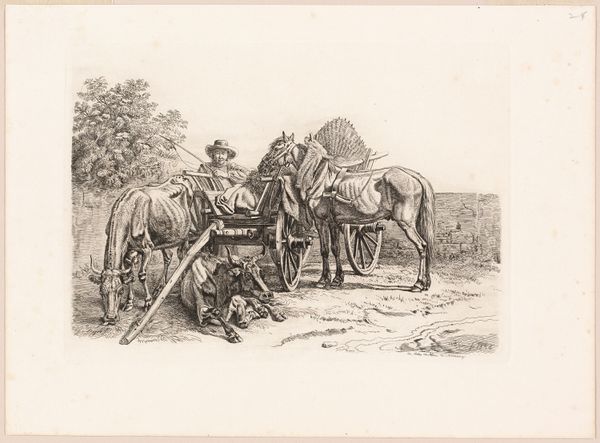
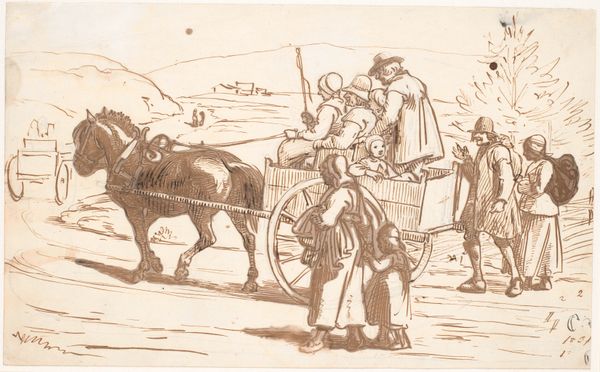
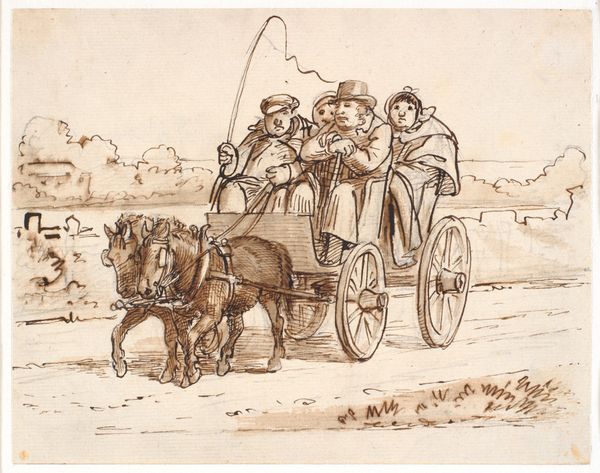
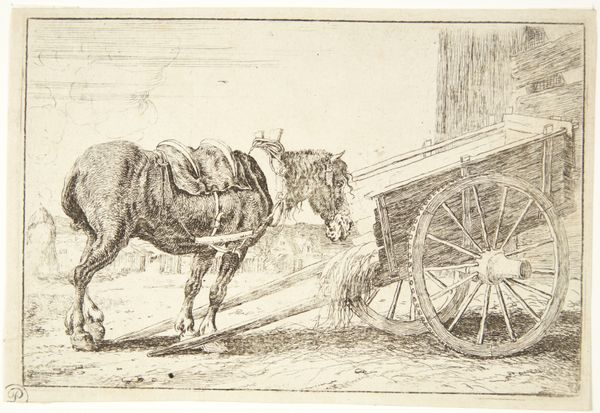
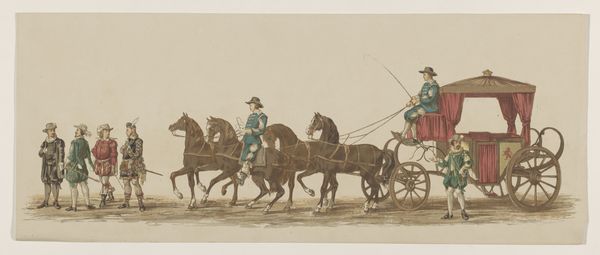
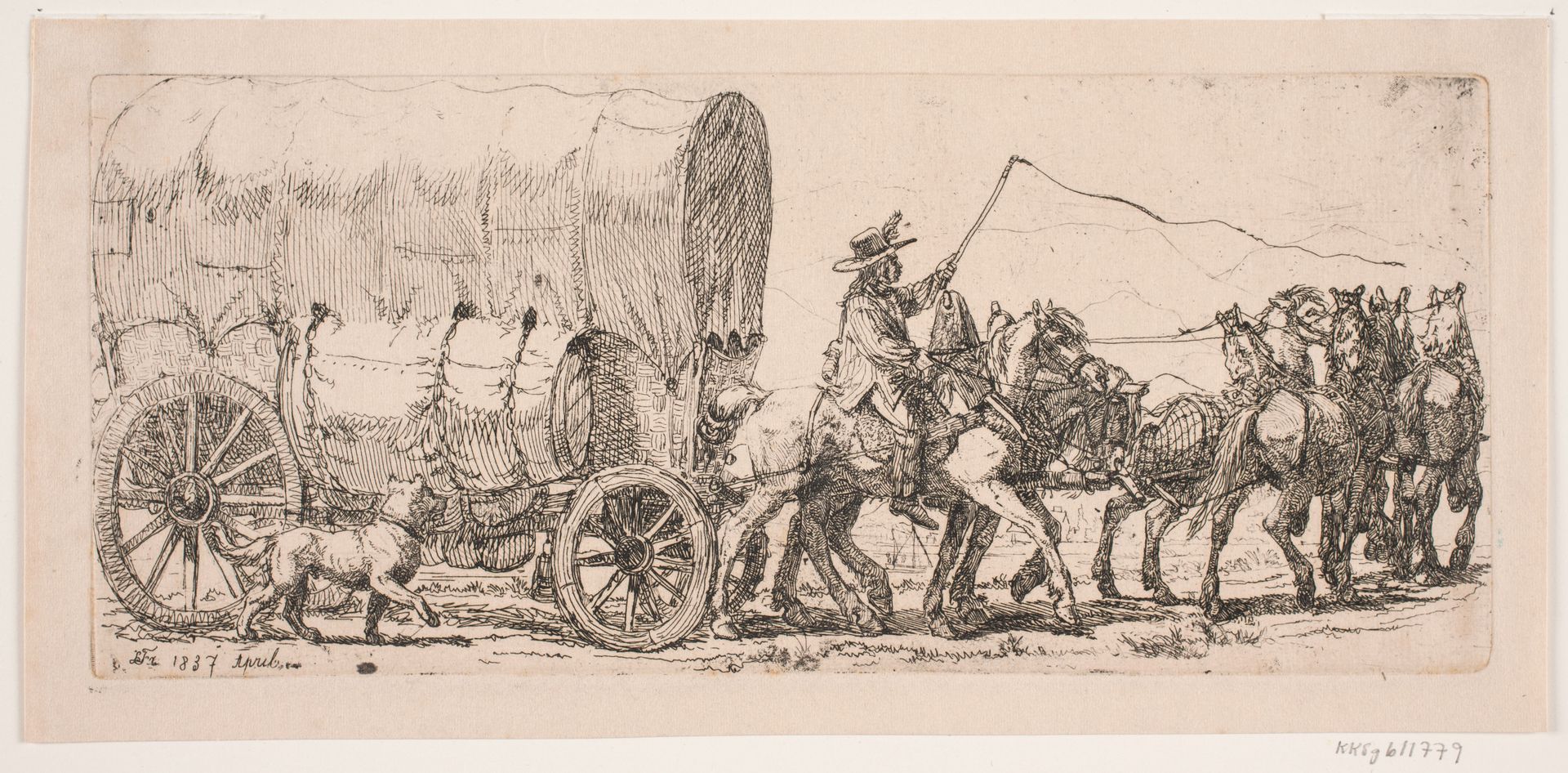
Lorenz Frølich created this etching, titled "Fragtvognen," or "The Wagon," which features a horse-drawn wagon and driver, sometime in the 19th century. Consider the social implications of transport in 19th century Denmark. The wagon is more than a vehicle; it represents trade, agriculture, and perhaps even migration. Note the attention to detail in the horses and wagon wheels. What does this tell us about Frølich's view of Danish society? Was it a celebration of rural life, or a commentary on the labor involved? Was he interested in representing the country's drive for modernization? To truly grasp the meaning of this work, one might delve into the economic conditions of 19th-century Denmark. Are there records of Frølich’s patrons, revealing their social status and political leanings? These factors might shed light on the artist’s perspective, and how the work engages with its own time.
Fragtvognen 1837


Artwork details
- Medium
- drawing, print, ink, engraving
- Dimensions
- 84 mm (height) x 200 mm (width) (plademaal)
- Location
- SMK - Statens Museum for Kunst
Tags
drawing
ink drawing
landscape
figuration
ink
genre-painting
history-painting
engraving
Comments
No comments
About this artwork
Lorenz Frølich created this etching, titled "Fragtvognen," or "The Wagon," which features a horse-drawn wagon and driver, sometime in the 19th century. Consider the social implications of transport in 19th century Denmark. The wagon is more than a vehicle; it represents trade, agriculture, and perhaps even migration. Note the attention to detail in the horses and wagon wheels. What does this tell us about Frølich's view of Danish society? Was it a celebration of rural life, or a commentary on the labor involved? Was he interested in representing the country's drive for modernization? To truly grasp the meaning of this work, one might delve into the economic conditions of 19th-century Denmark. Are there records of Frølich’s patrons, revealing their social status and political leanings? These factors might shed light on the artist’s perspective, and how the work engages with its own time.
Comments
No comments