Dimensions: height 188 mm, width 120 mm, thickness 35 mm
Copyright: Rijks Museum: Open Domain
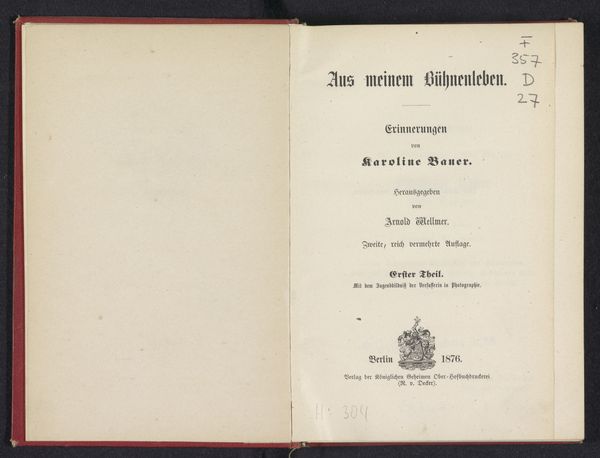
Curator: This is an 1876 edition of "Dante Allighieri's Göttliche Komödie," or "Divine Comedy," published in Berlin. What strikes you immediately about this image, Editor? Editor: Well, I'm drawn to the contrasting textures. The aged, slightly foxed paper whispers stories of use and time, against the rigid, almost industrial precision of the printed type. It creates a compelling visual tension. Curator: Indeed, notice the portrait of Dante himself. He is crowned with laurel, a timeless symbol of poetic glory and achievement but also perhaps, of the burdens of intellectual pursuits. Editor: Absolutely. Looking closer at the colophon – Berlin, 1876 – I wonder about the social context surrounding this publication. Who was consuming Dante in Germany at this time? Was it part of a nationalist project, claiming a European literary heritage? Curator: That's a great question. It certainly points to the broader cultural fascination with Dante and the way his work resonated across national boundaries. Think about his exile and longing to find meaning outside traditional institutional and spiritual confines. The imagery suggests both a physical and metaphorical journey, even a challenge to social orders. Editor: The physicality of the book itself is interesting. This isn't mass-produced pulp; the typography, the presumed quality of the paper – speaks to a certain level of craft and intended longevity. A commitment, if you will, to the enduring power of the written word. Curator: Exactly. It encapsulates a sense of preservation, attempting to render physical the eternal truths explored within the "Divine Comedy" itself. Editor: It makes you wonder how many hands have turned these pages. And each reader undoubtedly brought their own interpretations, their own materials into contact with it, imbuing it with further layers of meaning. It feels almost alive. Curator: A powerful reminder that symbols, once unleashed, take on lives of their own, morphing across cultures and generations. Editor: Right, the artifact as a historical node in a network of producers, disseminators, and audiences – constantly recreating the significance of both the poem and this material object we call a book.
Comments
No comments
Be the first to comment and join the conversation on the ultimate creative platform.
 Collect
 React
React Comment
More like this