

1878 - 1940
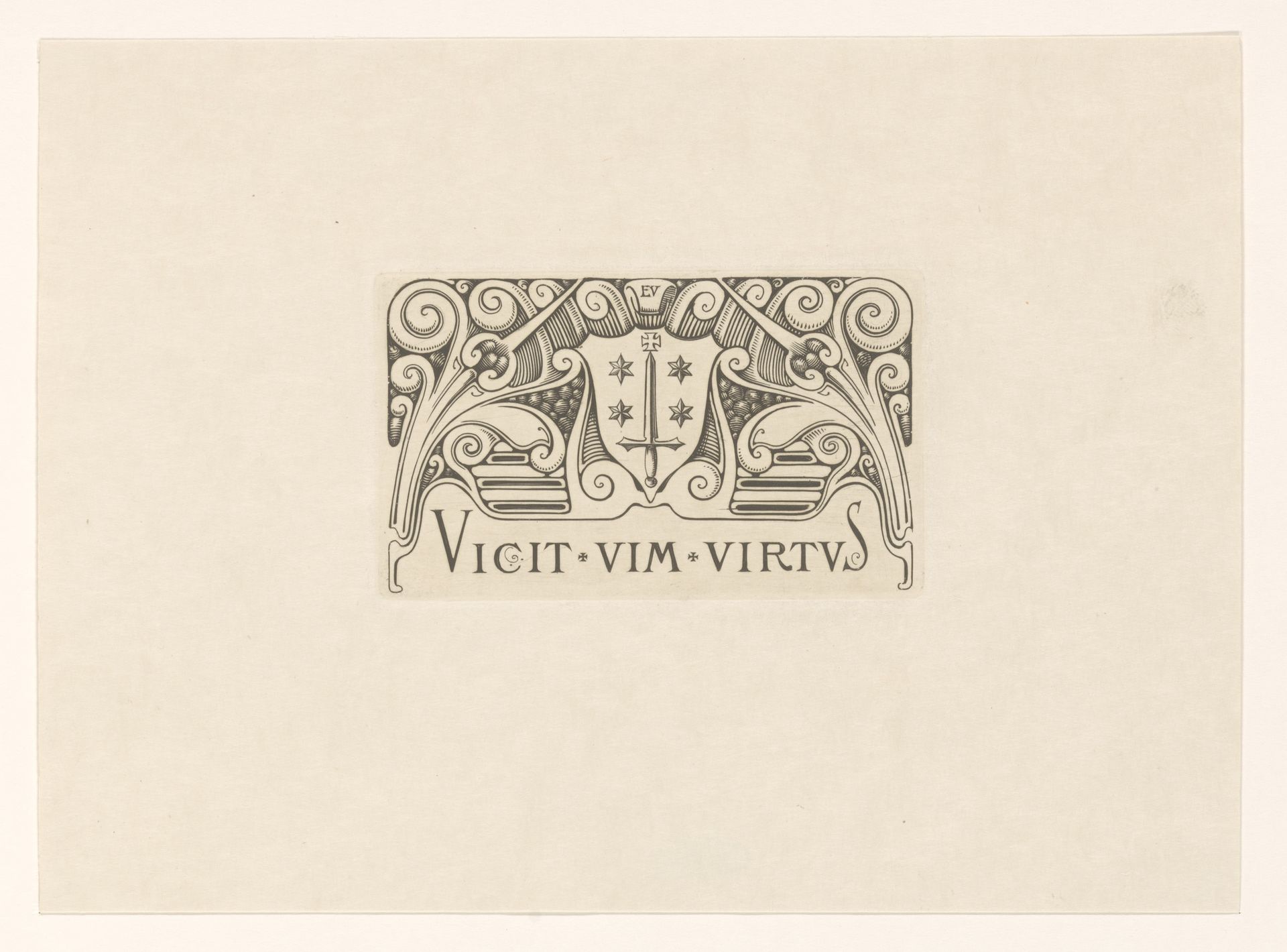
Vignet met het wapen van Haarlem

Listen to curator's interpretation
Curatorial notes
Editor: Here we have Elias Voet jr.’s "Vignet met het wapen van Haarlem," a print made sometime between 1878 and 1940. It's an engraving, very delicate and precise. The motto "Vicit Vim Virtus," or "Virtue Conquers Force," really stands out to me. What sociopolitical dynamics are at play in this work? Curator: A fascinating question. The image itself, a heraldic crest, speaks to a complex negotiation of power and identity. Consider the context: late 19th to early 20th century, a period rife with burgeoning nationalism and shifting class structures. Whose "virtue" are we celebrating, and whose "force" is being conquered? Is this about communal resilience, or does it hint at a justification for social hierarchies and the force used to maintain it? Editor: So it could be seen as both celebratory and perhaps… subtly oppressive? Curator: Precisely. Heraldry has always been a visual language of inclusion and exclusion, dictating belonging based on often arbitrary, inherited claims. A piece like this prompts us to critically examine what "virtue" is valorized and what is deemed "forceful" or threatening in the society it represents. Think about how these definitions might shift depending on race, gender, or economic standing. Who truly benefits from this narrative of conquered force? Editor: That's a really helpful lens. It pushes me to think beyond a simple appreciation of craftsmanship to the more complicated ideological underpinnings of such imagery. I appreciate your point on the fluidity of definitions, how "virtue" and "force" aren’t fixed but actively shaped. Curator: Exactly, we should always be thinking critically. Examining art from the past necessitates considering these complex social dynamics. I think that really helps us understand their relevance in today’s society as well.