About this artwork
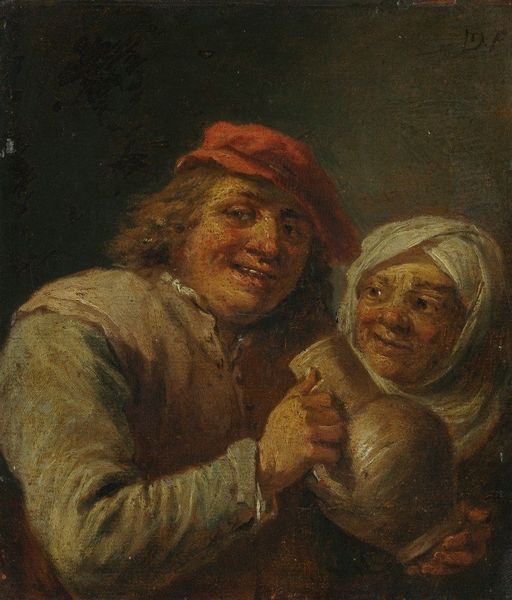
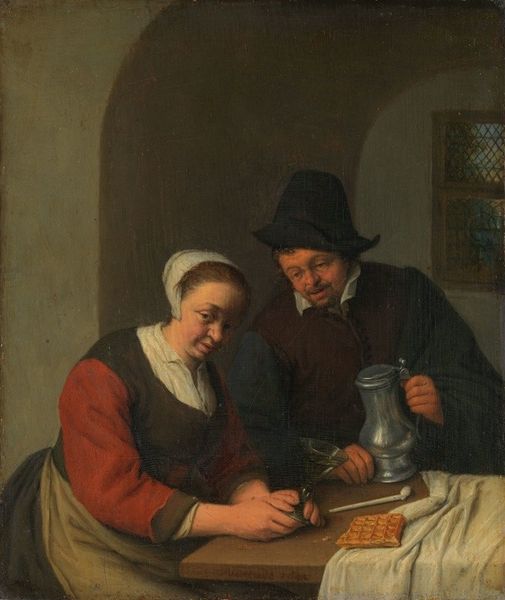
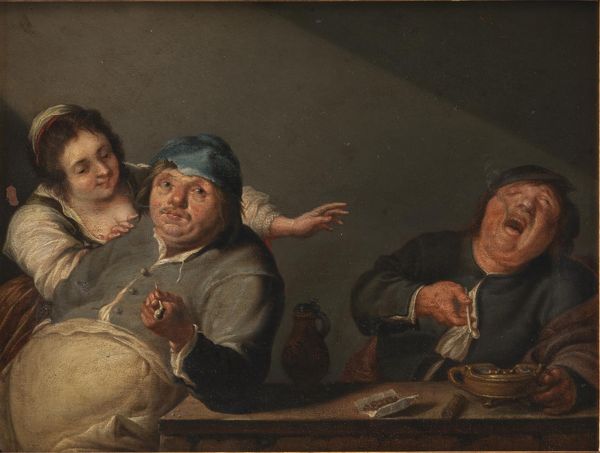
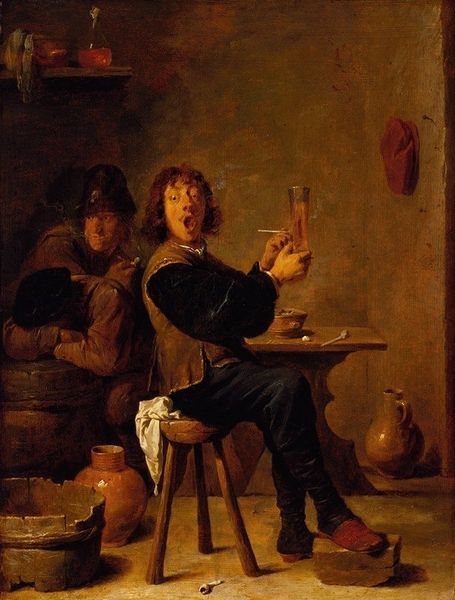
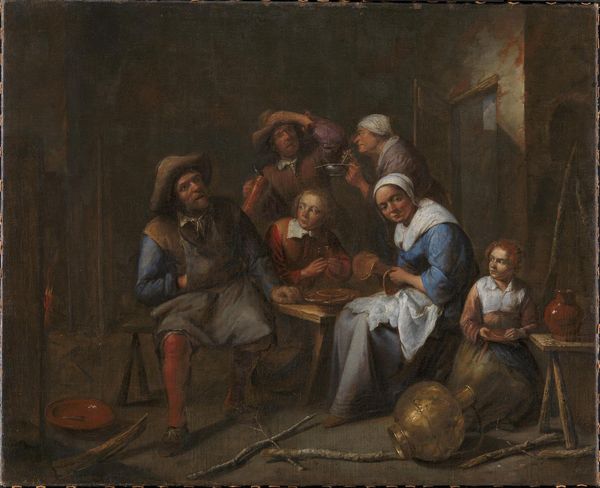
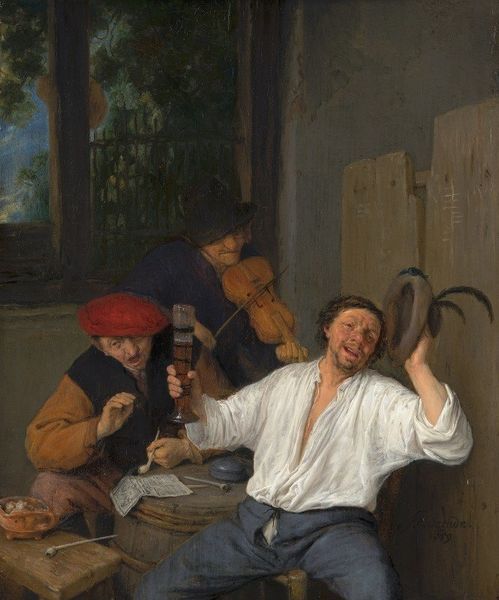
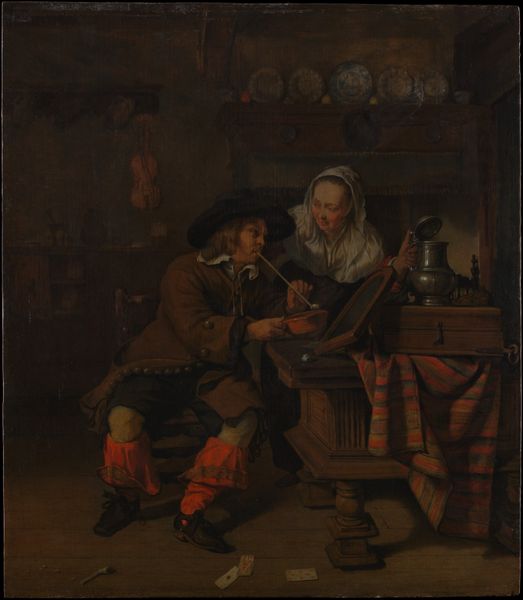
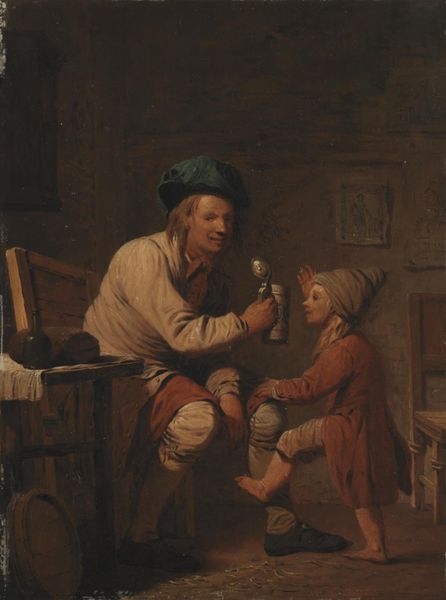
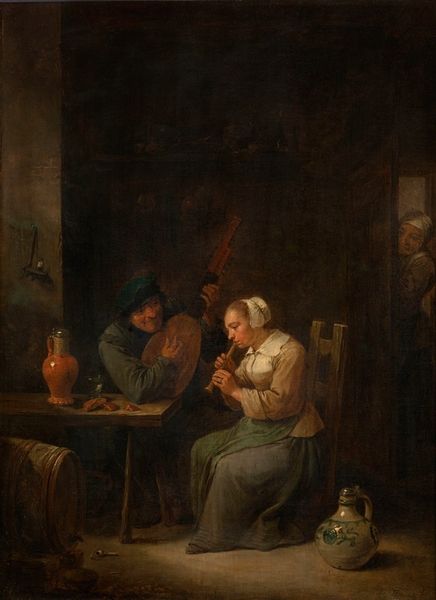
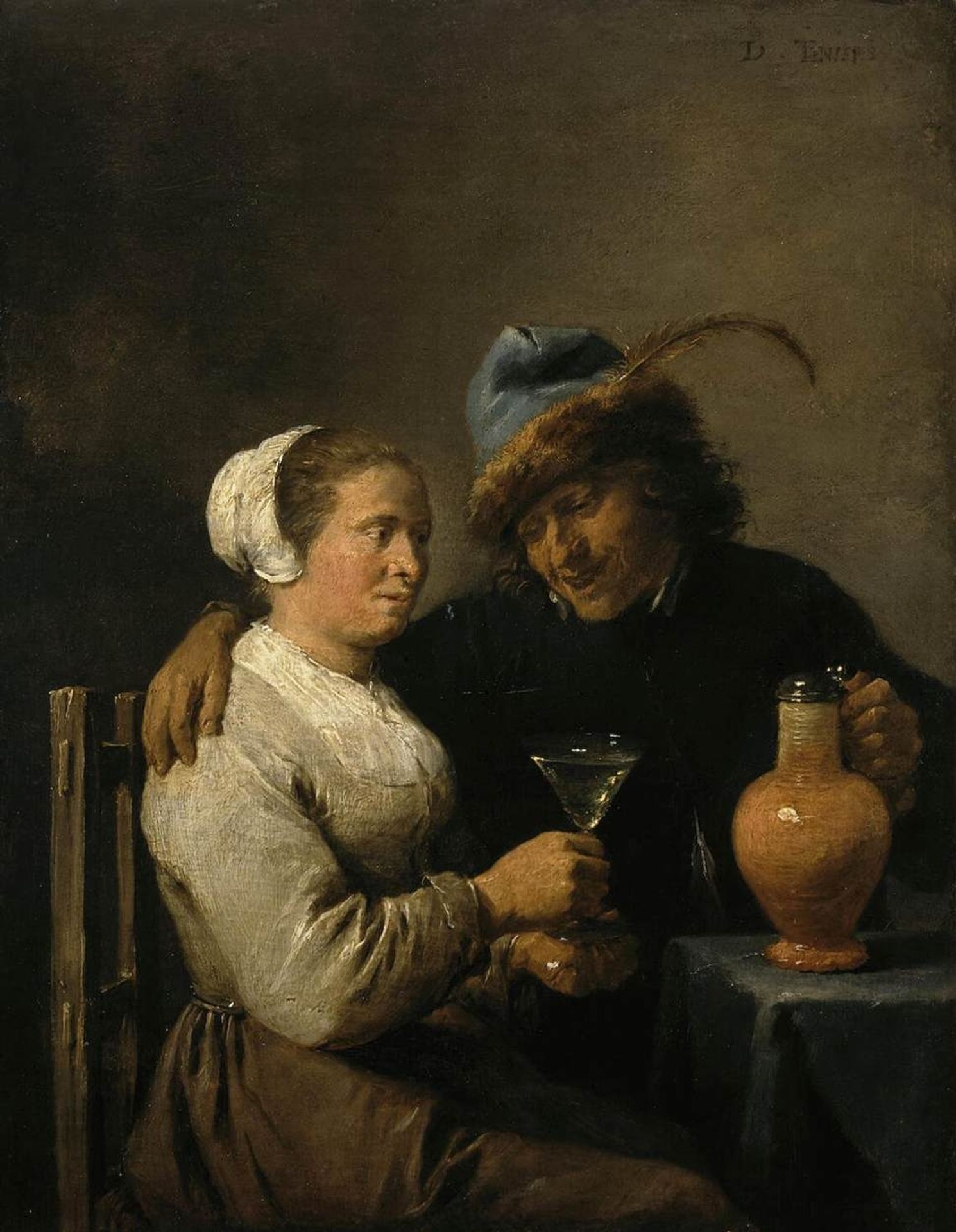
David Teniers the Younger painted this small oil on copper panel, Tavern Scene, in seventeenth-century Flanders. Teniers was a master of genre painting, often depicting scenes of everyday life. Here, we see a man with his arm around a woman, a wine glass in her hand, and a stoneware jug on the table, suggesting a moment of social interaction, perhaps even courtship. Teniers' paintings provide insights into the social customs of his time. Taverns were important social spaces in Flemish society and the popularity of these images reflected a growing urban culture and the rise of a merchant class with leisure time. They also reveal the complicated gender dynamics in the era, where women were often associated with the tavern as servers or patrons. The tavern was both a place of social exchange and, often, a morally questionable space. Art historians consult period documents such as guild records, social histories, and other visual sources to contextualize these artworks and gain insights into the lives and values of the people who created and consumed them.
Tavern Scene
1640

David Teniers The Younger
1610 - 1690
The State Hermitage Museum
Hermitage Museum, Saint Petersburg, RussiaArtwork details
- Medium
- painting, oil-paint
- Dimensions
- 21 x 17 cm
- Location
- Hermitage Museum, Saint Petersburg, Russia
- Copyright
- Public domain
Tags
Comments
Share your thoughts
About this artwork
David Teniers the Younger painted this small oil on copper panel, Tavern Scene, in seventeenth-century Flanders. Teniers was a master of genre painting, often depicting scenes of everyday life. Here, we see a man with his arm around a woman, a wine glass in her hand, and a stoneware jug on the table, suggesting a moment of social interaction, perhaps even courtship. Teniers' paintings provide insights into the social customs of his time. Taverns were important social spaces in Flemish society and the popularity of these images reflected a growing urban culture and the rise of a merchant class with leisure time. They also reveal the complicated gender dynamics in the era, where women were often associated with the tavern as servers or patrons. The tavern was both a place of social exchange and, often, a morally questionable space. Art historians consult period documents such as guild records, social histories, and other visual sources to contextualize these artworks and gain insights into the lives and values of the people who created and consumed them.
Comments
Share your thoughts