

1734 - 1793
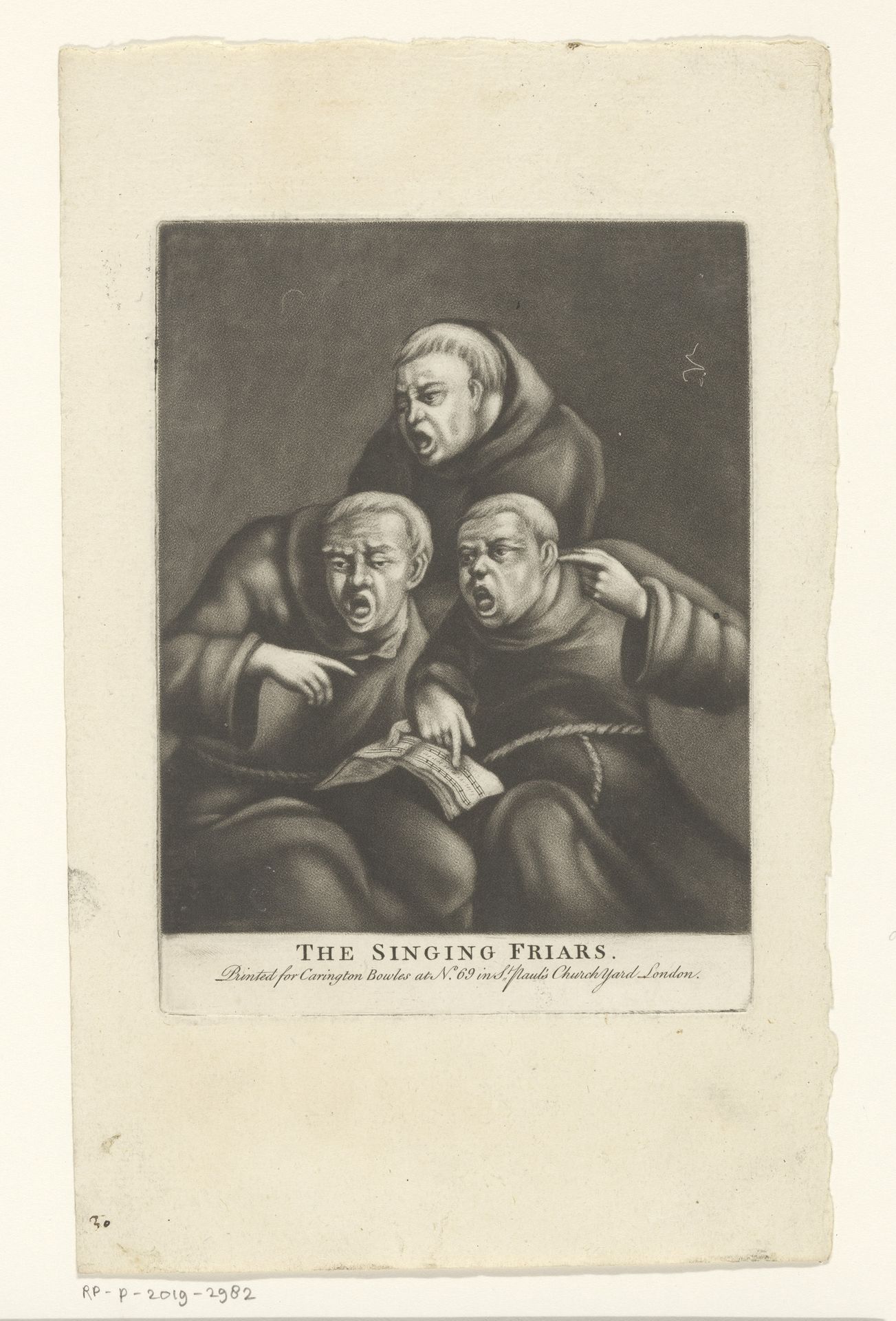
Drie zingende monniken

Anonymous
@anonymousLocation
RijksmuseumListen to curator's interpretation
Curatorial notes
Curator: Here we have a curious piece titled "Drie Zingende Monniken," or "Three Singing Monks," an engraving on paper that dates from the late 18th century, sometime between 1734 and 1793. Editor: The first thing that strikes me is how expressive their faces are, especially considering it's just an engraving. The heavy shading gives real weight to their features. Curator: Yes, the dramatic chiaroscuro adds a layer of intensity, doesn’t it? And we see the context, a time when genre scenes were gaining popularity, portraying everyday life, even within religious orders. Prints like these would have circulated widely, shaping perceptions. Editor: The tonal range is quite impressive, and the stark contrast serves a vital purpose here, heightening the dramatic effect of their somewhat pained expressions. It reminds me of Caricature but maybe its something else? Curator: Well, yes, certainly a kind of popular visual satire was emerging. But let's remember the historical context. Religious orders, their role, and the public's perception of them, were hotly debated at the time, frequently subject of caricature prints and plays, what does this print say about it? Are they comically struggling, devout, bored or something else? Editor: I can definitely see the theatrical quality. Compositionally, their heads form almost a triangular shape, anchored by the music sheet, and it almost seems as though a conductor should be leading them and not sheet of paper Curator: It speaks to a shift in the perception of religious figures. Once untouchable, they were now subjects for scrutiny, satire, and commercial exchange, just another consumable product of an engraving studio on the strand, in London. Editor: Agreed, and thank you. Considering this, what at first felt a slightly ridiculous piece, feels almost cutting edge. I think there is great insight shown in that work.