

1790
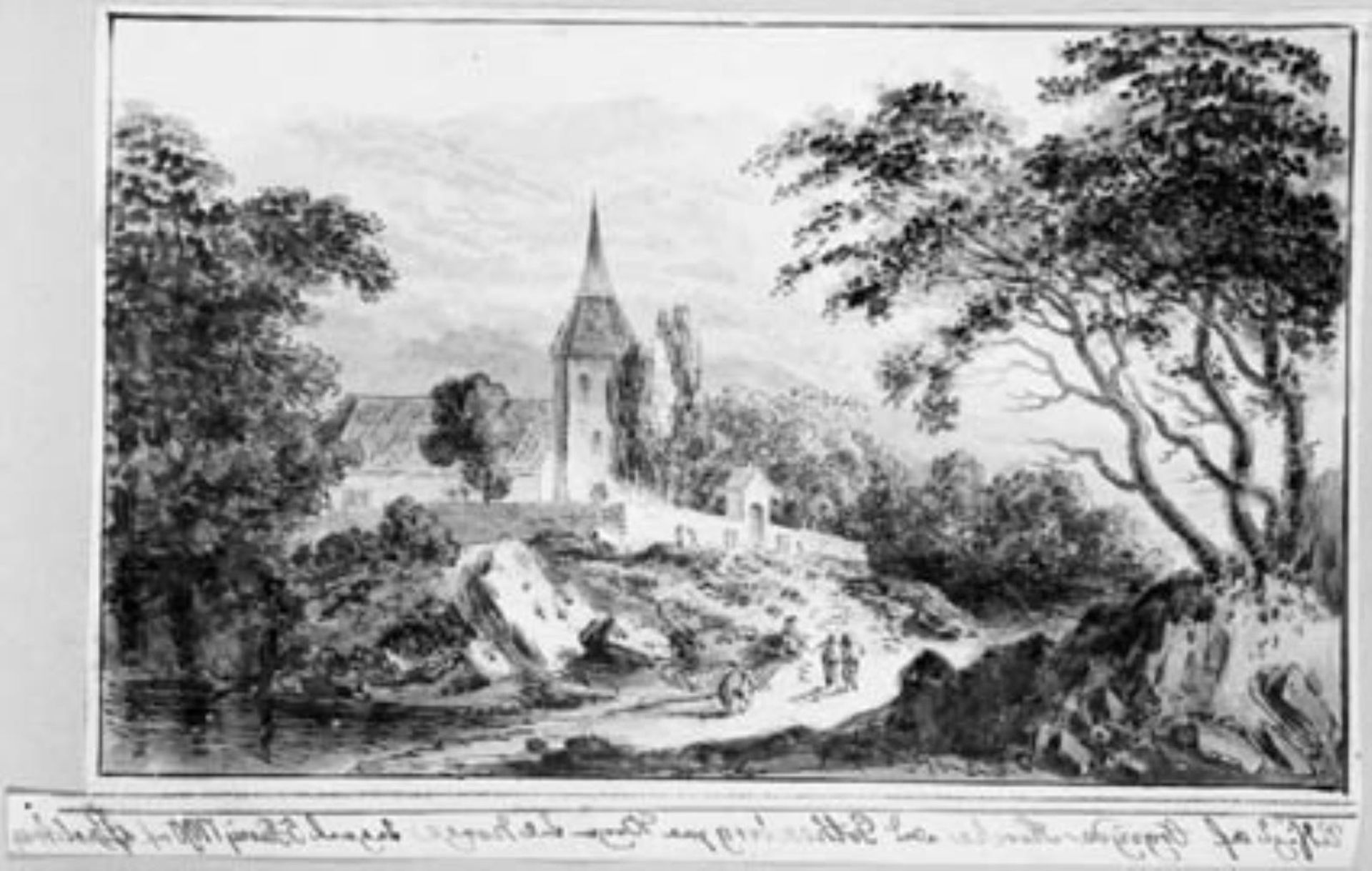
Ørgryde Kirke


Listen to curator's interpretation
Curatorial notes
Editor: We’re looking at Adam Gottlob Gjelstrup's "Ørgryde Kirke," a charcoal drawing from 1790. It's striking how the church dominates the landscape, but there's also a peacefulness to it. What strikes you about this piece? Curator: It’s fascinating to see this work through a historical lens. In the late 18th century, images of churches were less about religious piety and more about representing local identity and historical continuity. Do you notice how the figures almost seem incidental to the architecture and landscape? Editor: Yes, they seem very small, almost like an afterthought. Were these kinds of landscapes common at the time? Curator: Indeed. This ties into the burgeoning Romantic movement. Artists and patrons were increasingly interested in the picturesque, finding beauty in both the grandeur of nature and the simplicity of rural life. Think of this artwork as a kind of early tourism promotion! How does understanding that shift your perception of the work? Editor: It makes me think about how we choose which places to memorialize and how art can play a role in shaping that. Curator: Exactly. This drawing presents the church not just as a religious building, but as a landmark, a symbol of community pride, presented for both local contemplation and, potentially, outside appreciation. It’s an early example of how art started reflecting a sense of place. Editor: I hadn’t thought of it that way, but I see it now. It is not just about a building, but also about claiming a cultural heritage. I see it differently already. Thank you. Curator: My pleasure. Seeing art within the historical, cultural, and socio-political context certainly allows us to read imagery for its ideological, aesthetic, and functional role.