1877 - 1880
Chair


Listen to curator's interpretation
Curatorial notes
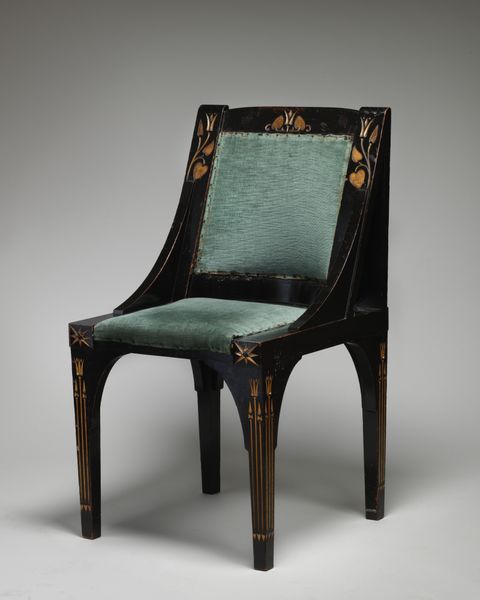
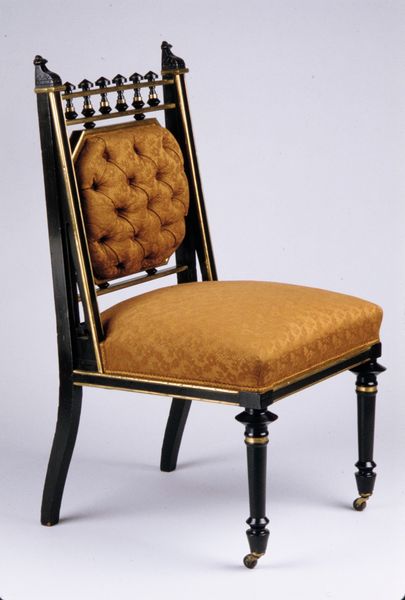
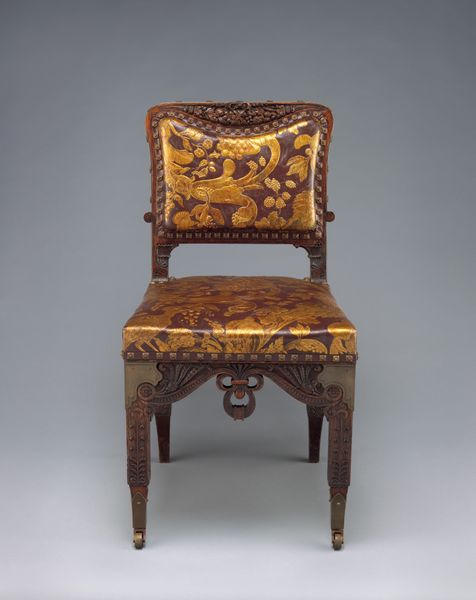
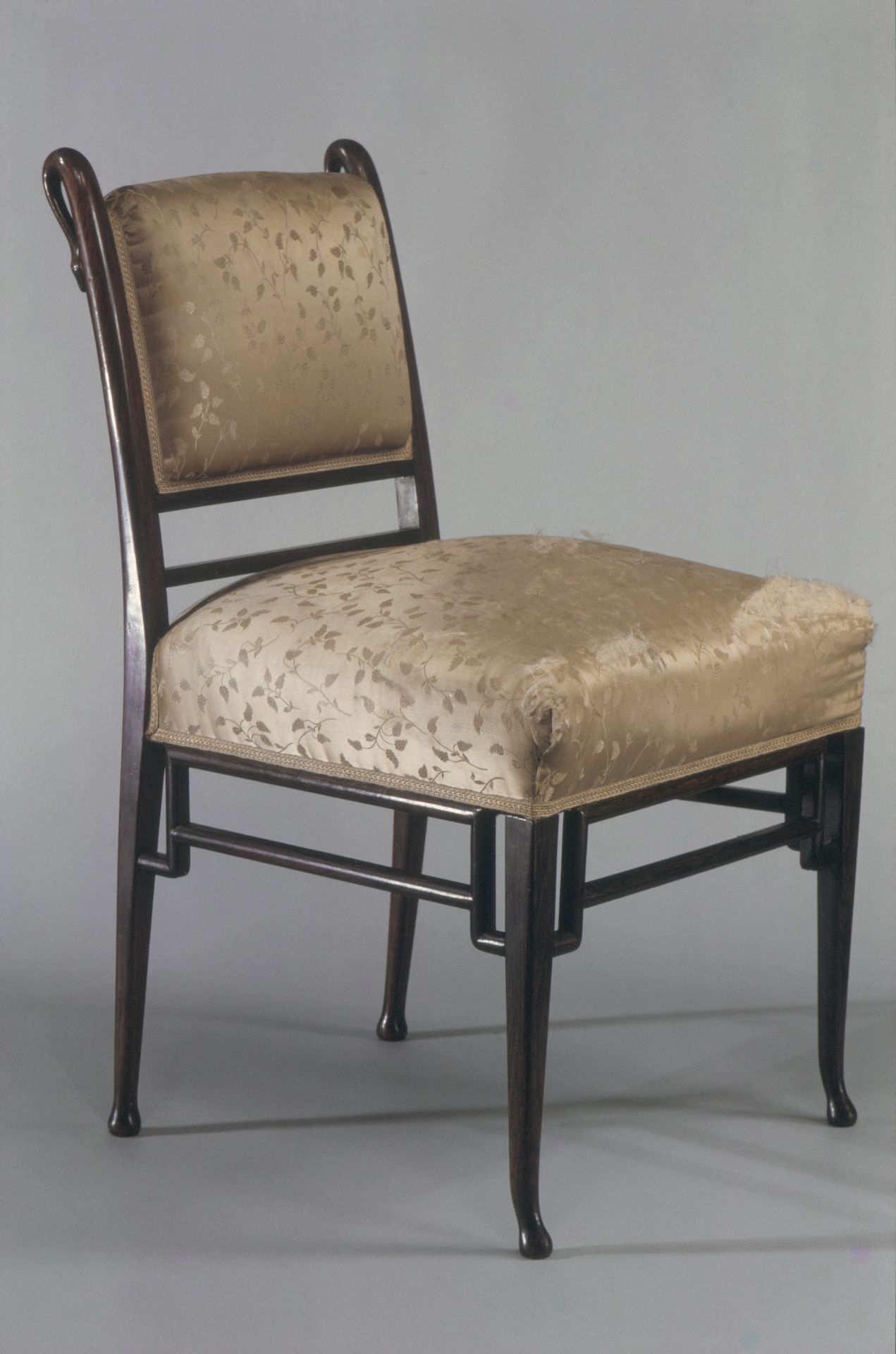
Editor: So, this is a chair by Herter Brothers, dating from 1877 to 1880. It’s a wood sculpture and textile piece located here at the Met. I’m really drawn to the interplay of the strong geometric structure and the plush fabric. It almost feels contradictory. What do you see in this piece? Curator: Focusing solely on the visual form, the object presents a fascinating study in contrasts. Consider first the rectilinear framework; note how it creates a strong sense of verticality counterpointed by the horizontal elements. The negative space, defined by these lines, contributes significantly to the chair's overall composition. How does the texture influence your interpretation? Editor: I find the fabric softens the rigid lines, adding a layer of opulence. The color palette is also interesting. The gold-ish fabric creates a different atmosphere when contrasted with the dark wooden frame. Curator: Indeed. The textile introduces both tactile and visual texture. Let us not disregard its materiality. How does it relate to the overall structure? The plushness invites physical interaction and disrupts the rigid structure. The interplay generates a rich experience. Editor: That makes sense. I hadn’t considered how the fabric's texture impacted my reading of its shape! Curator: Observe the geometric integrity and linearity of the chair. Now, compare its visual language to the curve details at the top of the back posts. Do these curves soften the geometric structure? Editor: Yes, those curves add another layer. It’s a beautiful way to enrich the geometric construction. Curator: The marriage of line, form, and material constructs a functional object that transcends utilitarian purpose, achieving artwork status. Editor: I see it now. Thank you!