Copyright: Public domain
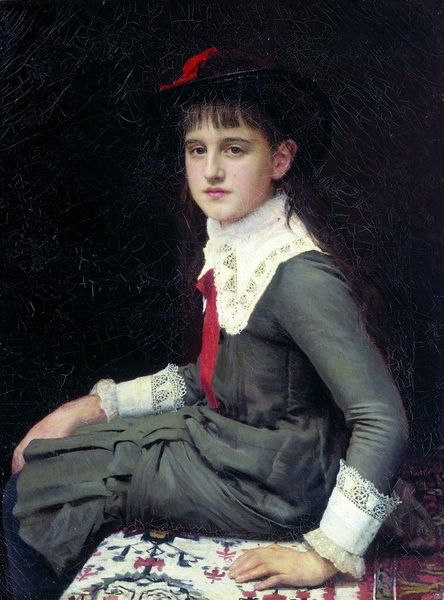
Editor: This is Ivan Kramskoy's "Portrait of Olga Afanasiyevna Raftopulo," painted in 1884, using oil on canvas. The intricate lace details really catch my eye, especially combined with that dark fan. How do you read the significance of such prominent displays of textile craftsmanship in this painting? Curator: It's fascinating to consider this work through a materialist lens. The exquisite rendering of the lace isn’t merely decorative. It points to the immense labor involved in its production. Lace making in 19th-century Russia was often a rural cottage industry, a form of survival, primarily for women. Kramskoy’s attention to such detail implicitly acknowledges the unseen work and social strata behind the aristocratic appearance. Editor: So, the luxurious aesthetic actually highlights the labor conditions of the time? Does the painting also say something about consumerism? Curator: Precisely! The portrait is not only a depiction of an individual, but it reveals the relationship of wealthy consumers to those creating luxury goods. The act of painting such intricate fabrics—almost fetishizing the textures—directs our attention to consumption habits, forcing us to consider the socioeconomic underpinnings that enable such displays of wealth. What about the fan, another material object displayed prominently? Editor: That’s a good question. It feels a bit ambiguous – the fan seems ornate, but perhaps its purpose goes beyond just being beautiful? Curator: Indeed. Fans served practical and social functions. But within the confines of portraiture, especially during this period of realism, it is often both a class signifier and also an indicator of wealth and consumerism within a specific milieu. Perhaps something mass-produced made to imitate quality craftmanship Editor: Thinking about all the layers embedded in seemingly simple choices around materials – that’s something I’ll definitely remember. Thanks! Curator: A lens to keep in mind! Always consider that what is seen as “fine art” reflects production, material value and larger social circumstances that challenge any high-low art divide.
Comments
No comments
Be the first to comment and join the conversation on the ultimate creative platform.
 Collect
 React
React Comment
More like this