1959
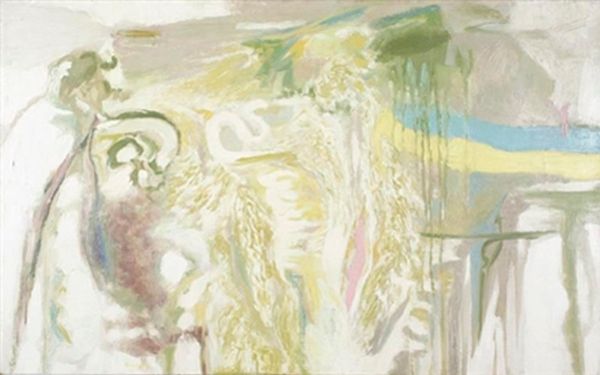
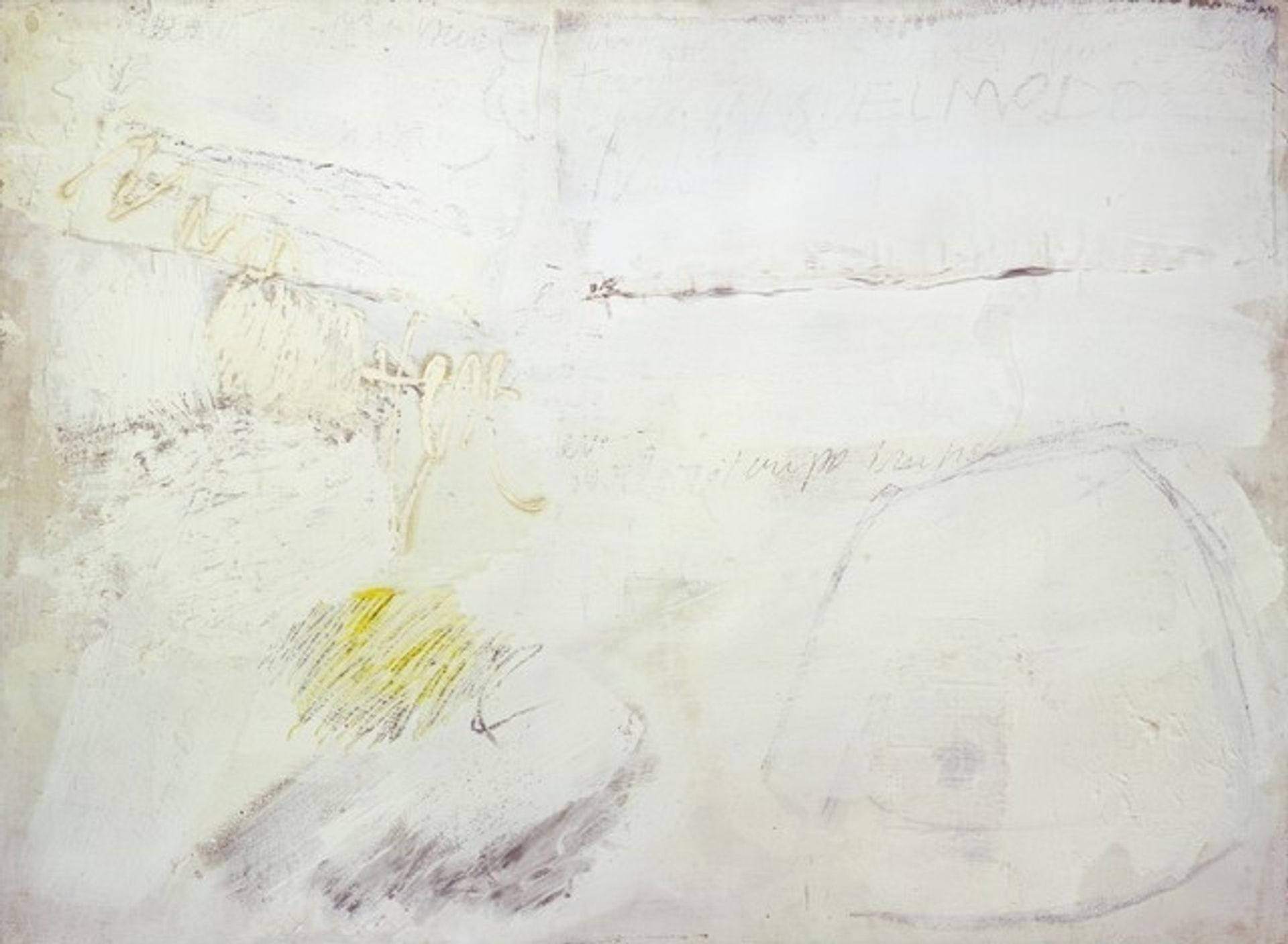
La Liberazione


Listen to curator's interpretation
Curatorial notes
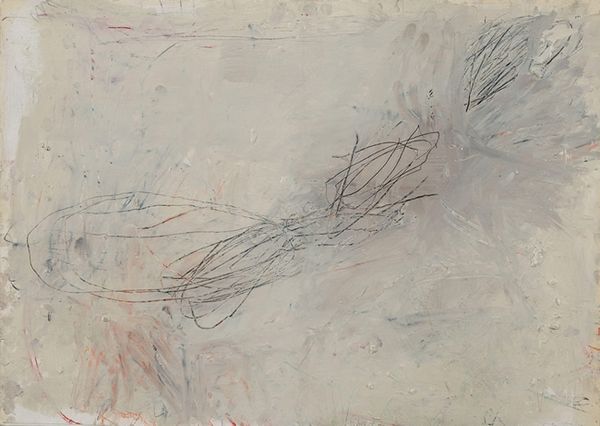
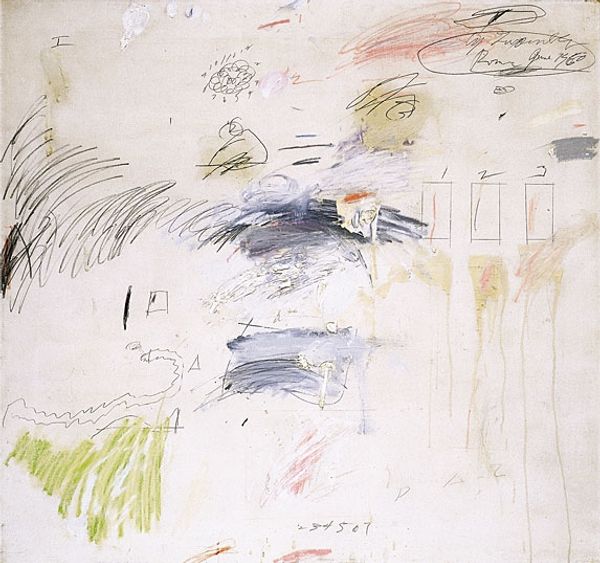
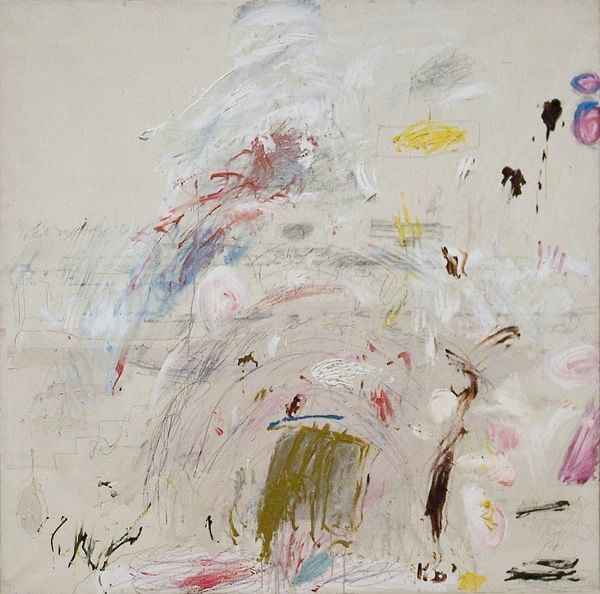
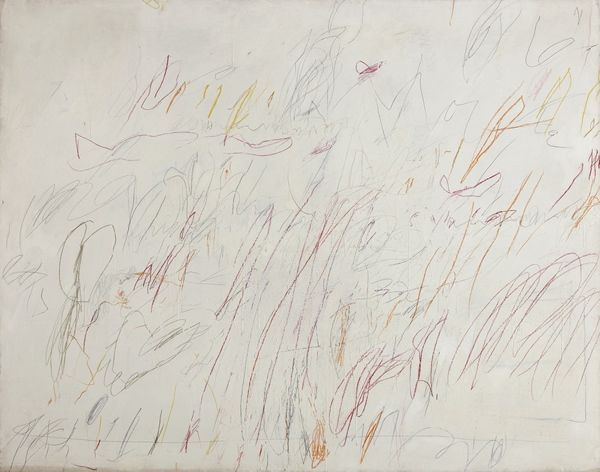
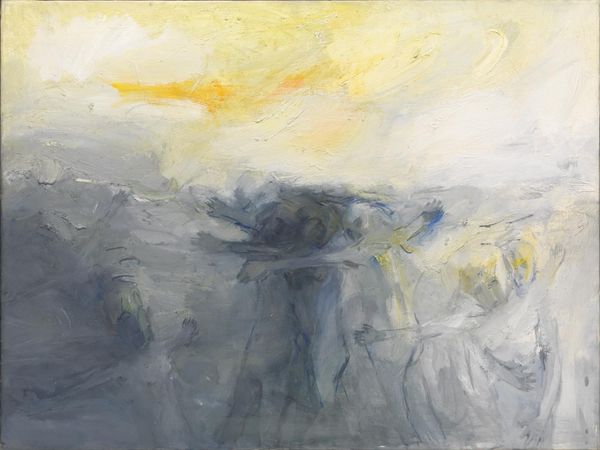
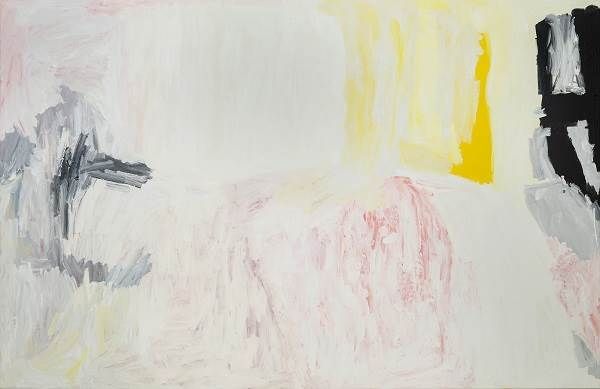
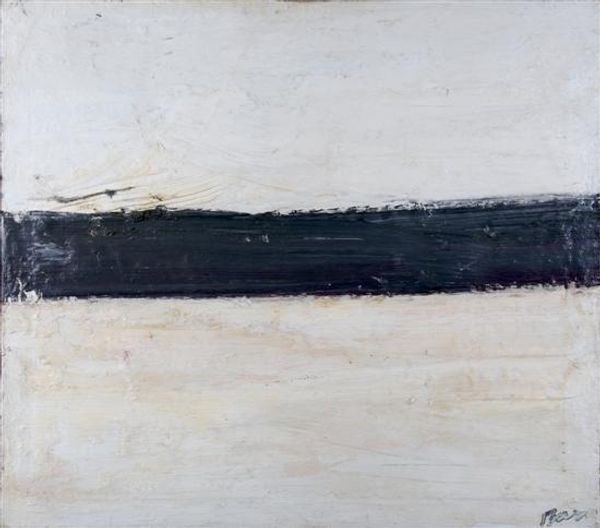
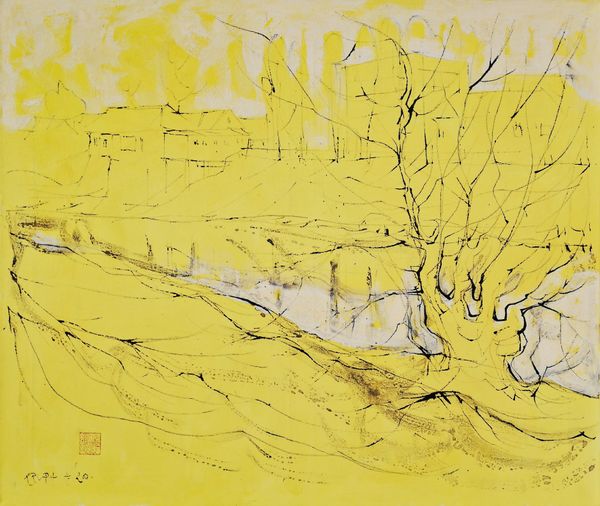
Editor: This is "La Liberazione" by Gastone Novelli, created in 1959 using acrylic paint. It has a very washed-out, almost ethereal quality. The muted colors and visible markings seem to hint at something concealed. What historical context might inform how we interpret this piece? Curator: Indeed. The title, "Liberazione," is particularly evocative considering it was painted just after the Second World War. Abstract Expressionism was a powerful mode of expression. What impact did post-war Italian politics and cultural rebuilding have on the themes explored by artists like Novelli? Editor: I see how "liberation" could be both a personal and a collective experience in that context. So the almost obscured elements – are they reflecting the messy, often unspoken truths of liberation? Curator: Precisely. Think about how Abstract Expressionism challenges traditional representation. Does Novelli’s apparent erasure of form represent a rejection of past ideologies, perhaps even a purging of the visual language associated with Fascism, paving the way for new modes of cultural expression? How might that act as public resistance? Editor: So the 'emptiness' isn't really empty at all. It is instead a charged space, representing social upheaval. The visible writing adds another layer. Was that also an element of this reconstruction, public voice finding a platform? Curator: It is. Think of those gestural markings, embedded words, and scribbles as vestiges of a traumatized past – glimpses of personal narrative inscribed within a broader, national narrative. A democratizing of experience. Novelli might be seen to be suggesting that personal expression should serve the collective, or, conversely, the collective enables personal freedoms. Editor: I never considered how deeply intertwined abstract art could be with the social and political climate of the time. Thanks, it's given me a totally different perspective. Curator: And it’s important to keep those viewpoints in mind as these pieces continue to be studied! Hopefully those same voices continue to speak.