About this artwork
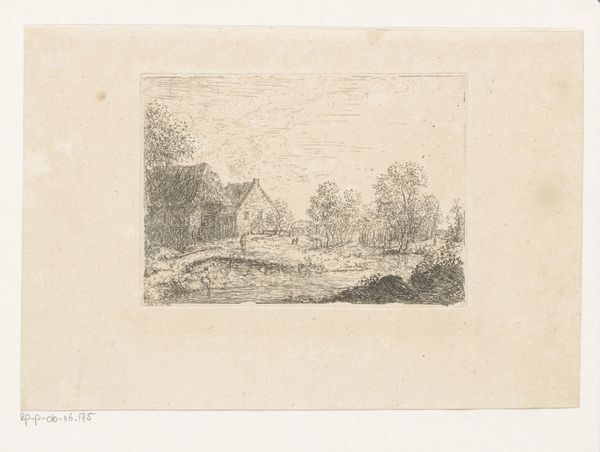
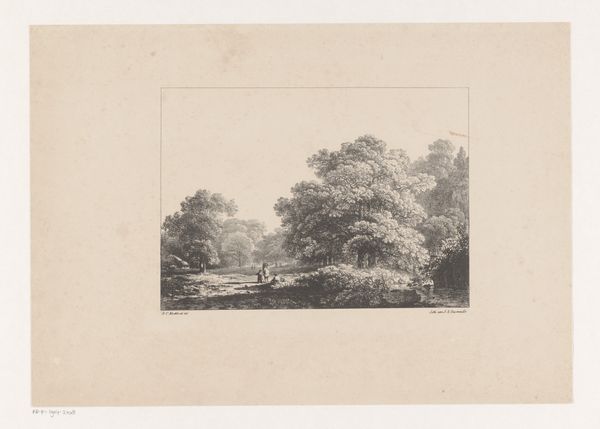
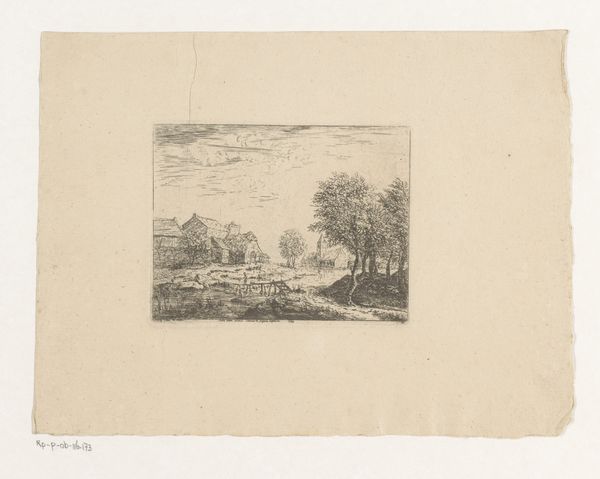
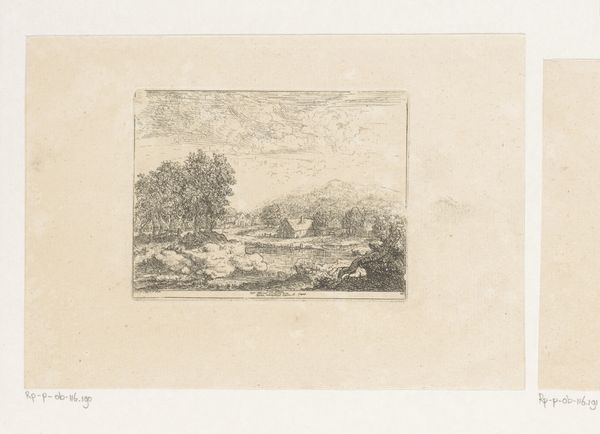
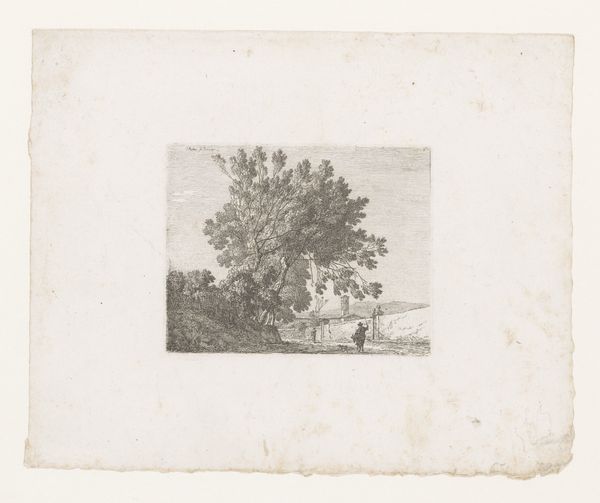
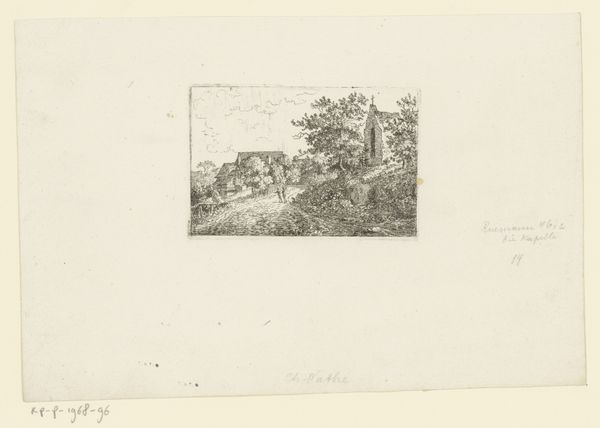
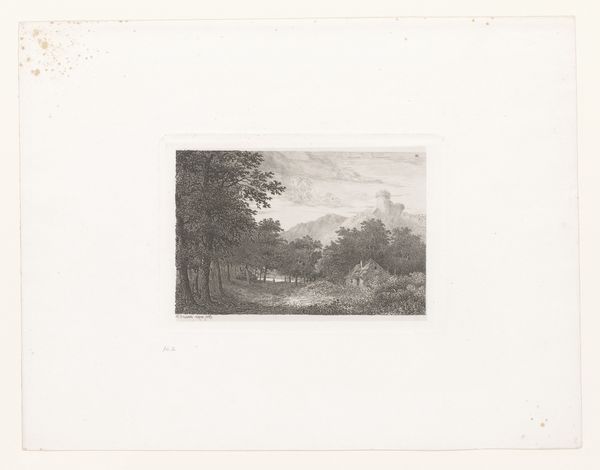
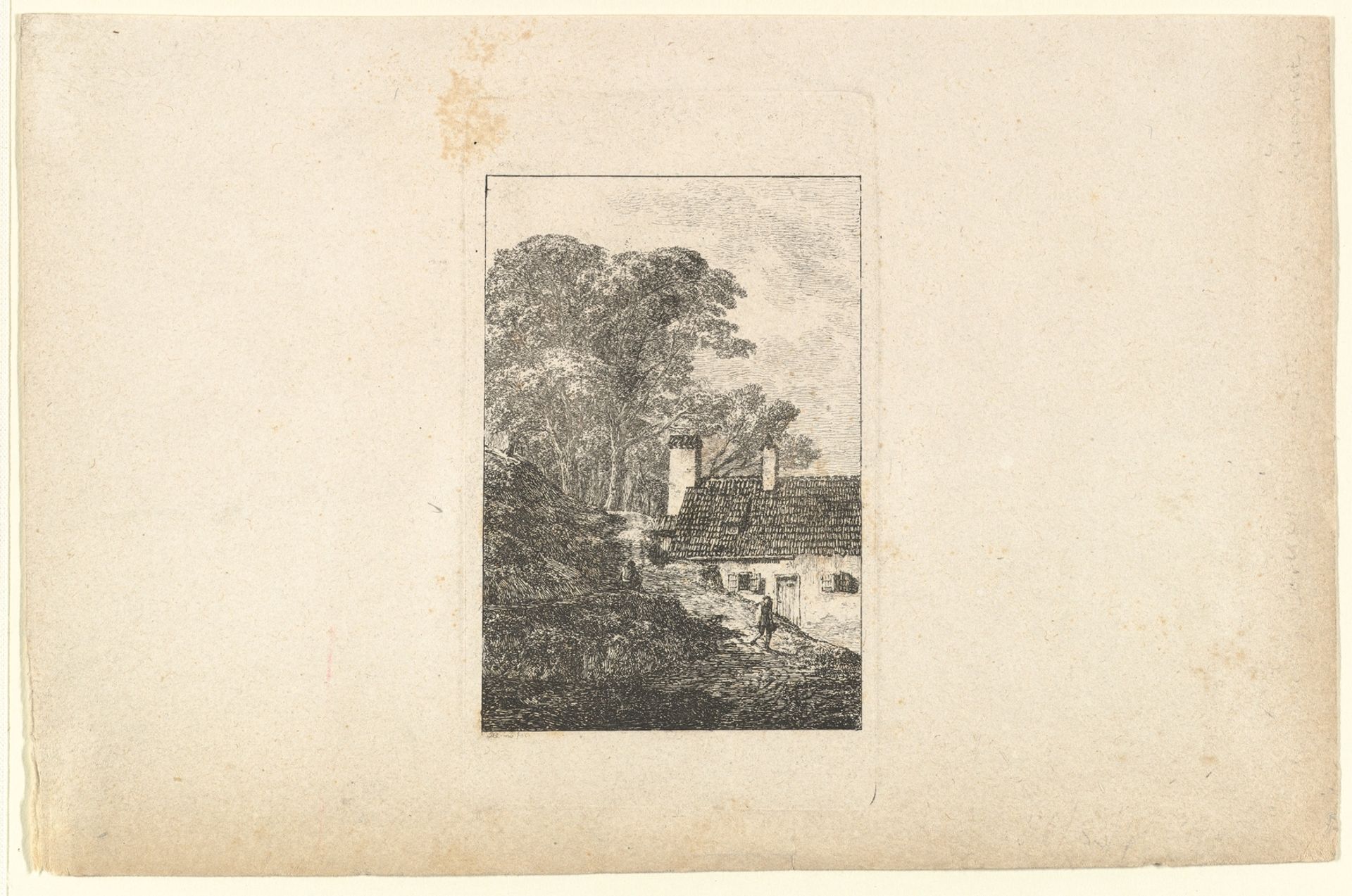
Editor: So, this is Domenico Quaglio’s etching, "House on a Hillside," dating back to sometime between 1801 and 1811. The monochromatic scene creates an aura of quaint isolation. What really jumps out at you when you look at this, Professor? Curator: It whispers stories of Romanticism's infatuation with nature, doesn't it? I imagine Quaglio, perched somewhere with his sketchpad, entirely consumed by this humble abode. The textures he's coaxed from the etching! The soft, blurry edges make it look like a fading dream. Does it make you want to escape the city? Editor: Definitely, there's a peacefulness here. Although, I wonder what life was really like in that little house. Probably not as idyllic as it looks. Curator: Precisely! The Romantics had a knack for idealizing the simple life, didn't they? They yearned for connection to nature and honest labor in a world becoming increasingly industrialized and complex. Perhaps the little figure walking up to the house symbolizes that yearning for connection and something simpler? Editor: Oh, I hadn't thought of the figure that way! Now I’m seeing this print in a completely different light. Thanks! Curator: Isn’t it interesting how art can hold a mirror up to our own longings and fantasies, even centuries later? It seems everyone longs to be lost in nature once in a while. Editor: Absolutely! I’m leaving with a new appreciation for Romanticism's enduring appeal. It’s kind of nice to dream of running away sometimes.
House on a Hillside
1801 - 1811

Domenico Quaglio II
1786 - 1837
The Metropolitan Museum of Art
Metropolitan Museum of Art, New York, NYArtwork details
- Medium
- drawing, etching
- Dimensions
- sheet: 5 11/16 x 8 11/16 in. (14.5 x 22 cm) plate: 4 3/4 x 2 3/4 in. (12 x 7 cm)
- Location
- Metropolitan Museum of Art, New York, NY
- Copyright
- Public Domain
Tags
Comments
Share your thoughts
About this artwork
Editor: So, this is Domenico Quaglio’s etching, "House on a Hillside," dating back to sometime between 1801 and 1811. The monochromatic scene creates an aura of quaint isolation. What really jumps out at you when you look at this, Professor? Curator: It whispers stories of Romanticism's infatuation with nature, doesn't it? I imagine Quaglio, perched somewhere with his sketchpad, entirely consumed by this humble abode. The textures he's coaxed from the etching! The soft, blurry edges make it look like a fading dream. Does it make you want to escape the city? Editor: Definitely, there's a peacefulness here. Although, I wonder what life was really like in that little house. Probably not as idyllic as it looks. Curator: Precisely! The Romantics had a knack for idealizing the simple life, didn't they? They yearned for connection to nature and honest labor in a world becoming increasingly industrialized and complex. Perhaps the little figure walking up to the house symbolizes that yearning for connection and something simpler? Editor: Oh, I hadn't thought of the figure that way! Now I’m seeing this print in a completely different light. Thanks! Curator: Isn’t it interesting how art can hold a mirror up to our own longings and fantasies, even centuries later? It seems everyone longs to be lost in nature once in a while. Editor: Absolutely! I’m leaving with a new appreciation for Romanticism's enduring appeal. It’s kind of nice to dream of running away sometimes.
Comments
Share your thoughts