About this artwork
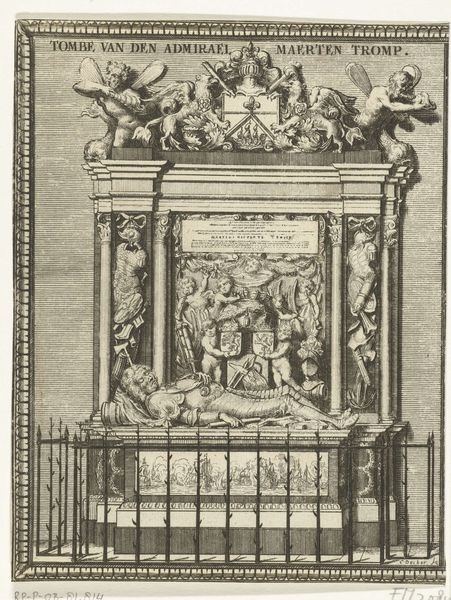
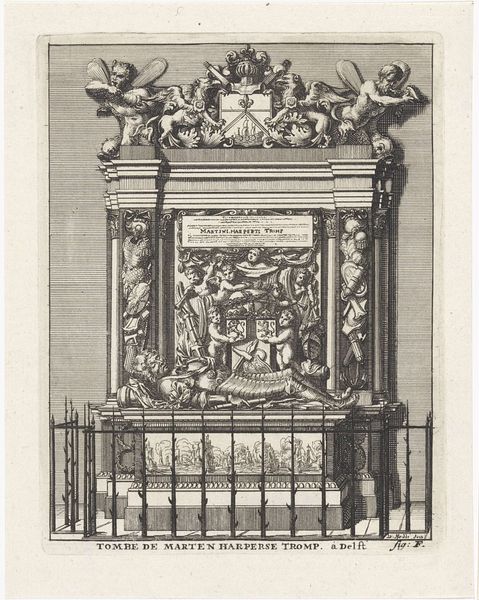
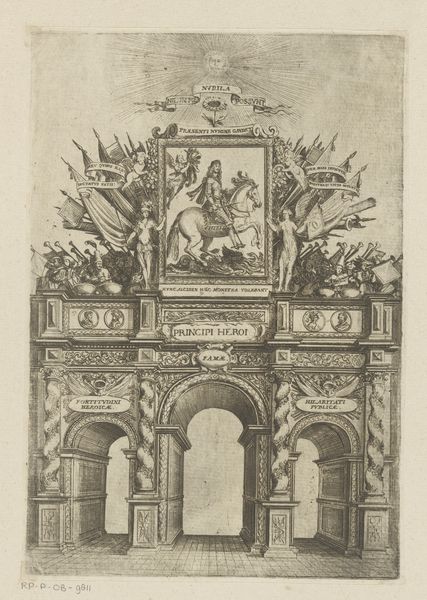
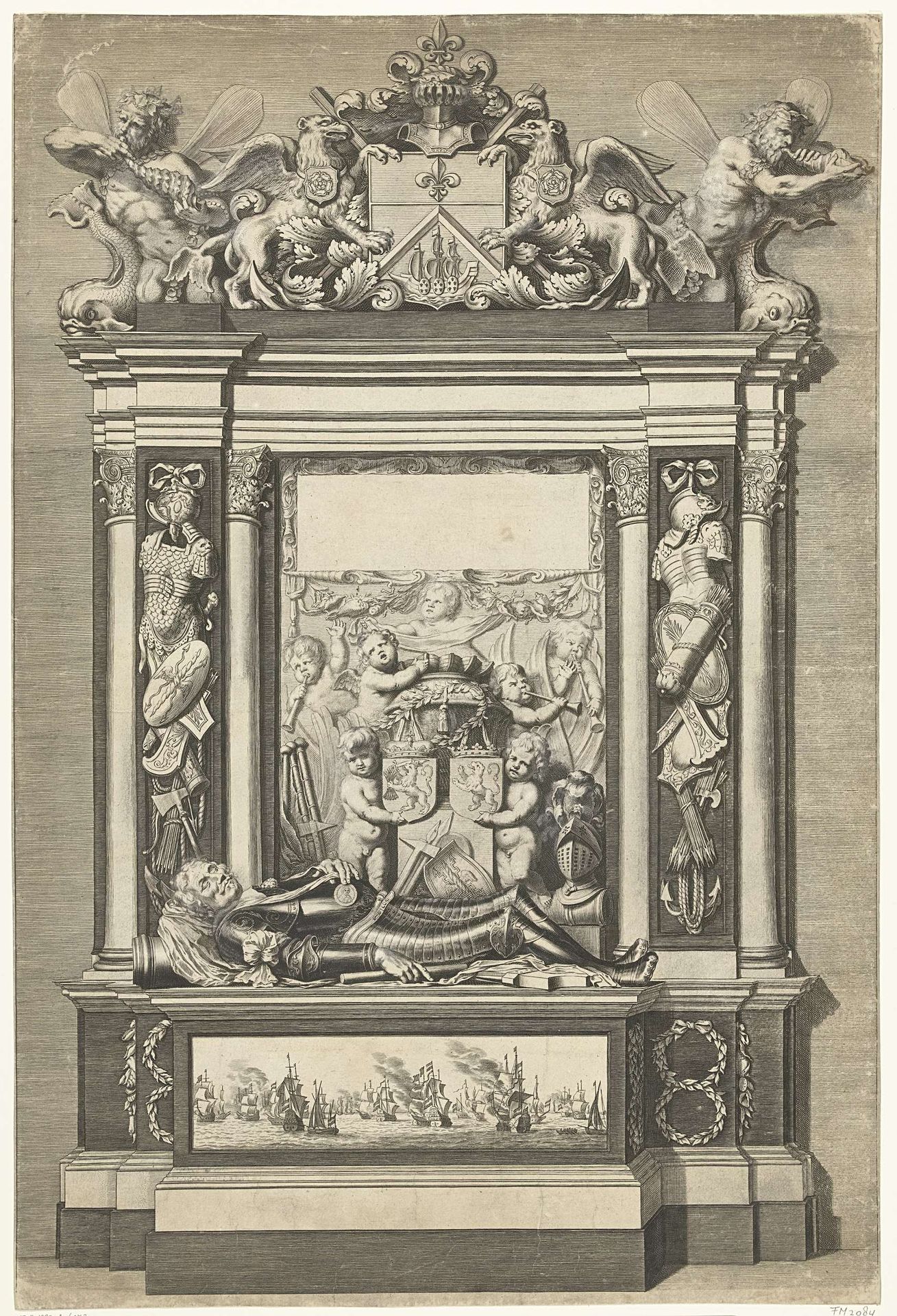
Cornelis van Dalen II created this print of Maarten Tromp’s tomb, and it abounds with symbols that speak volumes about memory, legacy, and the enduring power of imagery. At the base, a naval battle rages, immortalizing Tromp's martial prowess. Above, putti support the Tromp family crest, while the winged figures, emerging from the depths of classical antiquity, act as guardians of the admiral’s memory. The armor and weapons flanking the tomb are not merely decorative; they are visual testaments to Tromp's valor. Consider the recurring image of the putto. In ancient Rome, the putto was seen as a symbol of Eros or Cupid; however, with the rise of Christianity, its meaning was transformed into a symbol of innocence, divine love, and heavenly guidance, thus becoming a staple in Christian art. Here, its presence suggests divine favor and the eternal nature of Tromp's legacy. Observe how the artist blends classical and contemporary motifs. It shows how symbols evolve, carrying layers of meaning across time, engaging us on a deep, subconscious level. It invites reflection on how cultural memory shapes our perceptions, as images and symbols resurface, reinvented, yet retaining echoes of their past.
Graftombe van admiraal Maarten Harpertsz. Tromp in Oude Kerk te Delft 1656 - 1664

Cornelis van (II) Dalen
1638 - 1664Location
RijksmuseumArtwork details
- Medium
- print, marble, engraving
- Dimensions
- height 615 mm, width 412 mm
- Location
- Rijksmuseum
- Copyright
- Rijks Museum: Open Domain
Tags
portrait
baroque
pen drawing
history-painting
marble
engraving
Comments
No comments
About this artwork
Cornelis van Dalen II created this print of Maarten Tromp’s tomb, and it abounds with symbols that speak volumes about memory, legacy, and the enduring power of imagery. At the base, a naval battle rages, immortalizing Tromp's martial prowess. Above, putti support the Tromp family crest, while the winged figures, emerging from the depths of classical antiquity, act as guardians of the admiral’s memory. The armor and weapons flanking the tomb are not merely decorative; they are visual testaments to Tromp's valor. Consider the recurring image of the putto. In ancient Rome, the putto was seen as a symbol of Eros or Cupid; however, with the rise of Christianity, its meaning was transformed into a symbol of innocence, divine love, and heavenly guidance, thus becoming a staple in Christian art. Here, its presence suggests divine favor and the eternal nature of Tromp's legacy. Observe how the artist blends classical and contemporary motifs. It shows how symbols evolve, carrying layers of meaning across time, engaging us on a deep, subconscious level. It invites reflection on how cultural memory shapes our perceptions, as images and symbols resurface, reinvented, yet retaining echoes of their past.
Comments
No comments