

1616
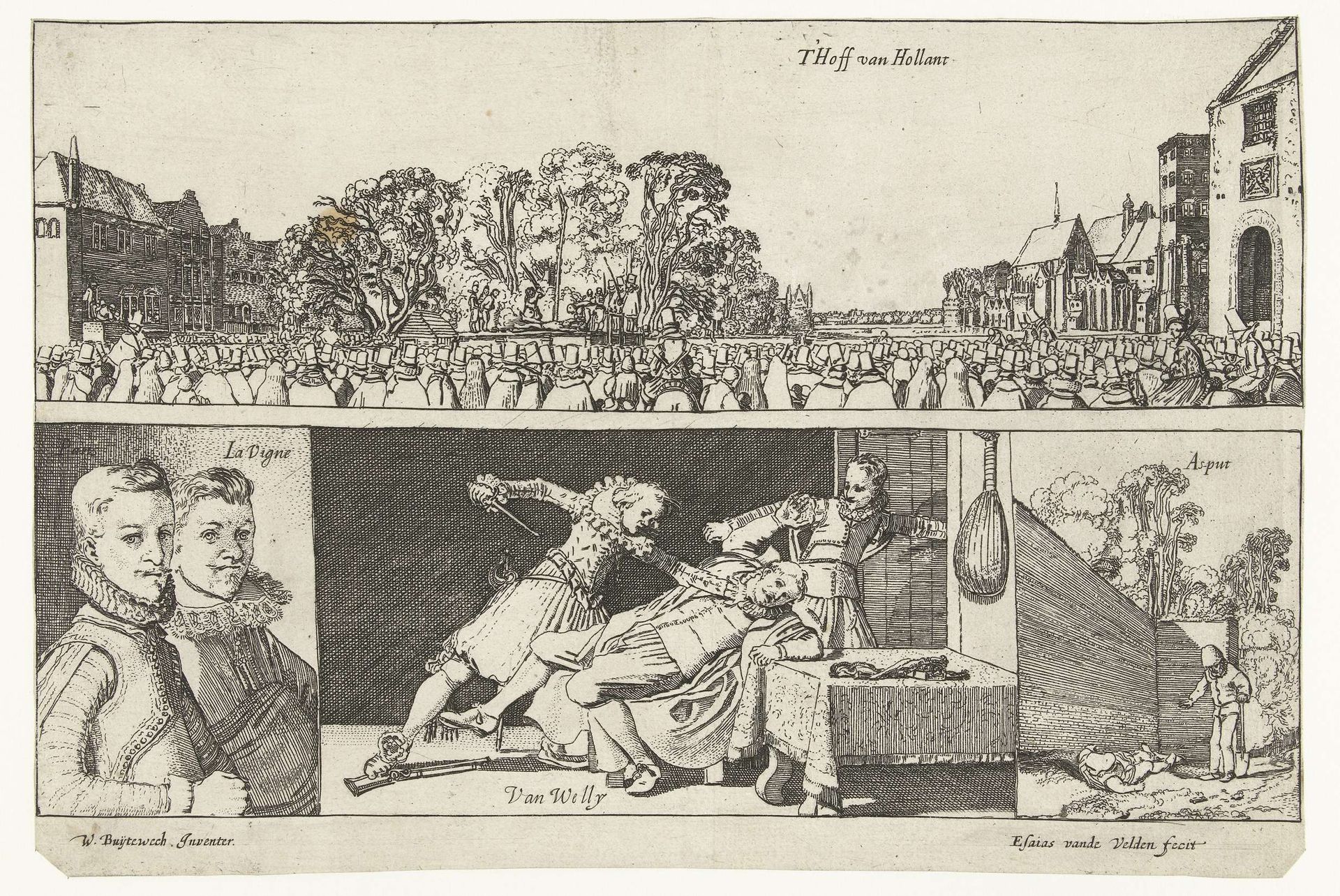
Moord op Jan van Wely, juwelier te Amsterdam, 1616

Esaias van de Velde
1587 - 1630Location
RijksmuseumListen to curator's interpretation
Curatorial notes
Editor: So, here we have Esaias van de Velde's 1616 etching, "Moord op Jan van Wely, juwelier te Amsterdam, 1616", which translates to "Murder of Jan van Wely, Jeweler in Amsterdam, 1616." The way it's structured, almost like a comic strip, is quite unusual for a depiction of such a violent act. It seems to be trying to document all the moments leading to the capture of the criminals. How do you interpret the social context around this artwork? Curator: This print offers us a glimpse into the 17th-century Dutch Republic's fascination with crime and justice, and the public performance of it. It's less about artistic flourish and more about visual reporting, documenting a scandalous crime. The scene at the top depicts the execution of the perpetrators. Think about how prints like these served as an early form of mass media, shaping public opinion and even influencing perceptions of justice and morality. How does the inclusion of "La Vigne" and "Aspar" factor into this narrative? Editor: Those are the portraits and the location, the place where the killers were captured! So including them in this etching serves almost as a sort of… journalistic thoroughness? Curator: Exactly. The print served as a public record. Consider the message it sends – justice is served, and the crime is meticulously documented for all to see. Does it normalize executions, even sensationalize it? Editor: I see what you mean. There's something quite cold and detached about its execution (no pun intended). I hadn't really considered how prints could be tools for shaping public perception. Curator: Precisely! Understanding the cultural landscape, including the role of these images, enhances our view and informs us that it's not JUST aesthetics! It offers insight into how historical events were consumed and understood. Editor: Definitely given me a lot to think about – it is useful to consider images like this less in isolation and more as actively working within their social context!