

c. 1875 - 1880
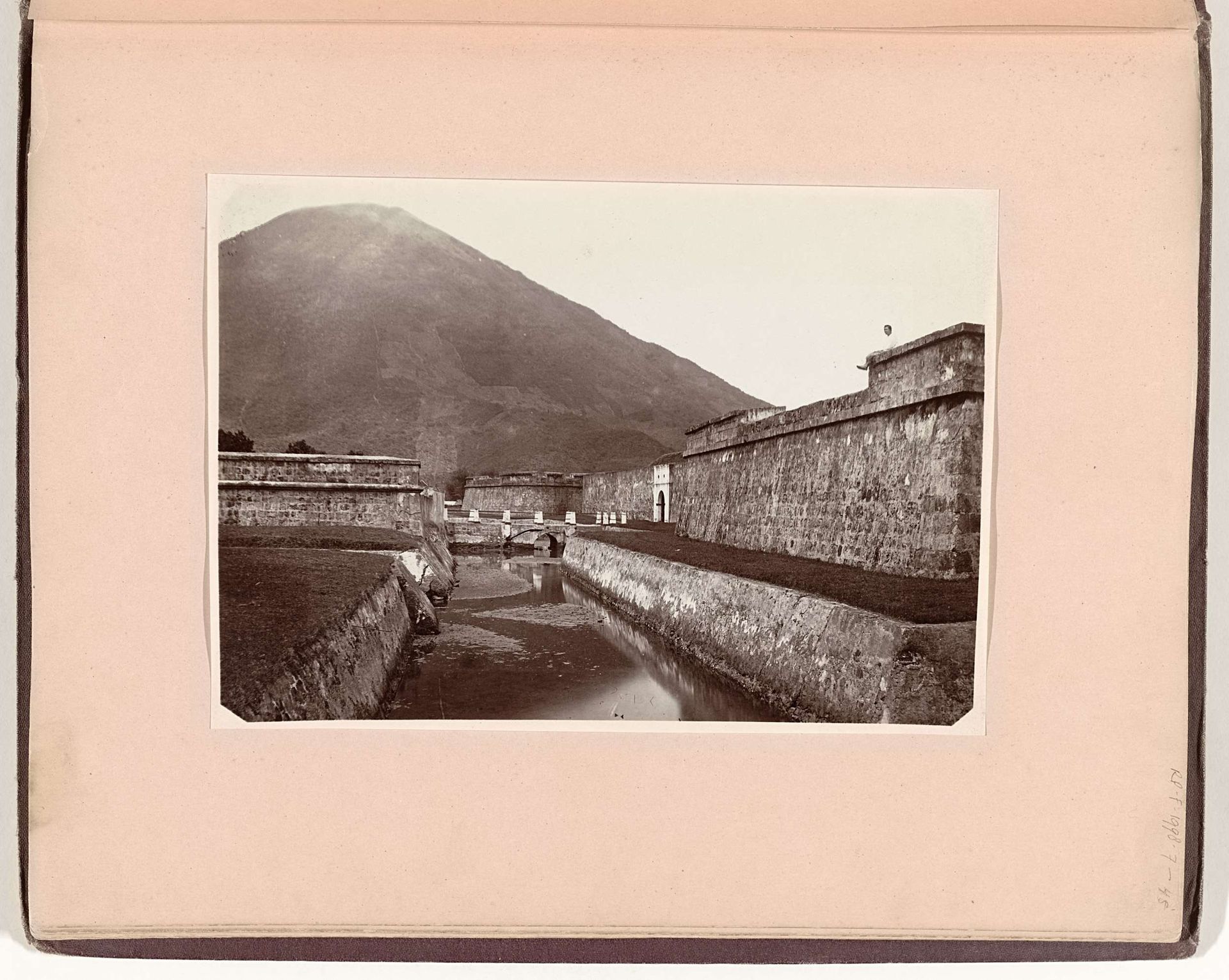
Het fort Nassau, binnenzijde, op Gunung Api ('Im fort Nassau (Banda, G. Api)')

Listen to curator's interpretation
Curatorial notes
Curator: Let's take a look at this gelatin-silver print by C. Dietrich, titled "Het fort Nassau, binnenzijde, op Gunung Api ('In fort Nassau (Banda, G. Api)')", created around 1875-1880. It presents an interior view of Fort Nassau against the backdrop of Gunung Api, a volcano. Editor: My immediate impression is of starkness and isolation. The monochromatic palette enhances the formidable architecture of the fort, its heavy walls, and that looming, hazy volcano in the background feels ominous. Curator: It’s fascinating to situate this image within the context of Dutch colonialism in the Banda Islands. Fort Nassau was strategically important for controlling the nutmeg trade, a resource violently extracted and controlled, thus, representing not only a landscape but the enforcement of imperial power and capitalist interests. Editor: Yes, I see that layering now. The imposing walls and the deliberate framing by the water evoke feelings of control, and that visual dominance over the landscape suggests a psychological intent beyond mere military strategy. Think about what a foreboding image like this would symbolize for locals or any visiting European power... Curator: Indeed. It also speaks to the visual language of colonialism, shaping how both colonizers and the colonized perceived power dynamics. Notice how even the mountain is placed – a symbol of nature – yet dwarfed by the built environment of colonial fortification. It reminds me of Foucault's writing about power and surveillance in shaping space. Editor: The details captured through photography in the patterns of stone evoke an interesting symbolic connection, I feel. These could be representations of enduring presence of colonial might, a constant, silent assertion. What we might find echoed throughout history. Curator: It's important to also acknowledge the inherent biases and limitations within photography from this period. Consider the absence of indigenous voices or perspectives within Dietrich’s frame. How can we engage critically with this photograph, mindful of its participation in larger structures of domination and silencing? Editor: By seeing it, perhaps, as one piece of a larger narrative. By acknowledging that this photographic vantage point inevitably colors our perspective of that history and encourages viewers to find alternate accounts for broader historical view. Curator: Precisely, by prompting critical inquiry, we move beyond passive spectatorship towards more ethical modes of engaging with colonial visual archives. Editor: A great photograph should offer visual cues but should also incite questioning, I agree entirely. It encourages me to rethink not only the symbols and history of control, but also to understand how we interpret these imageries in the present.