c. 1720
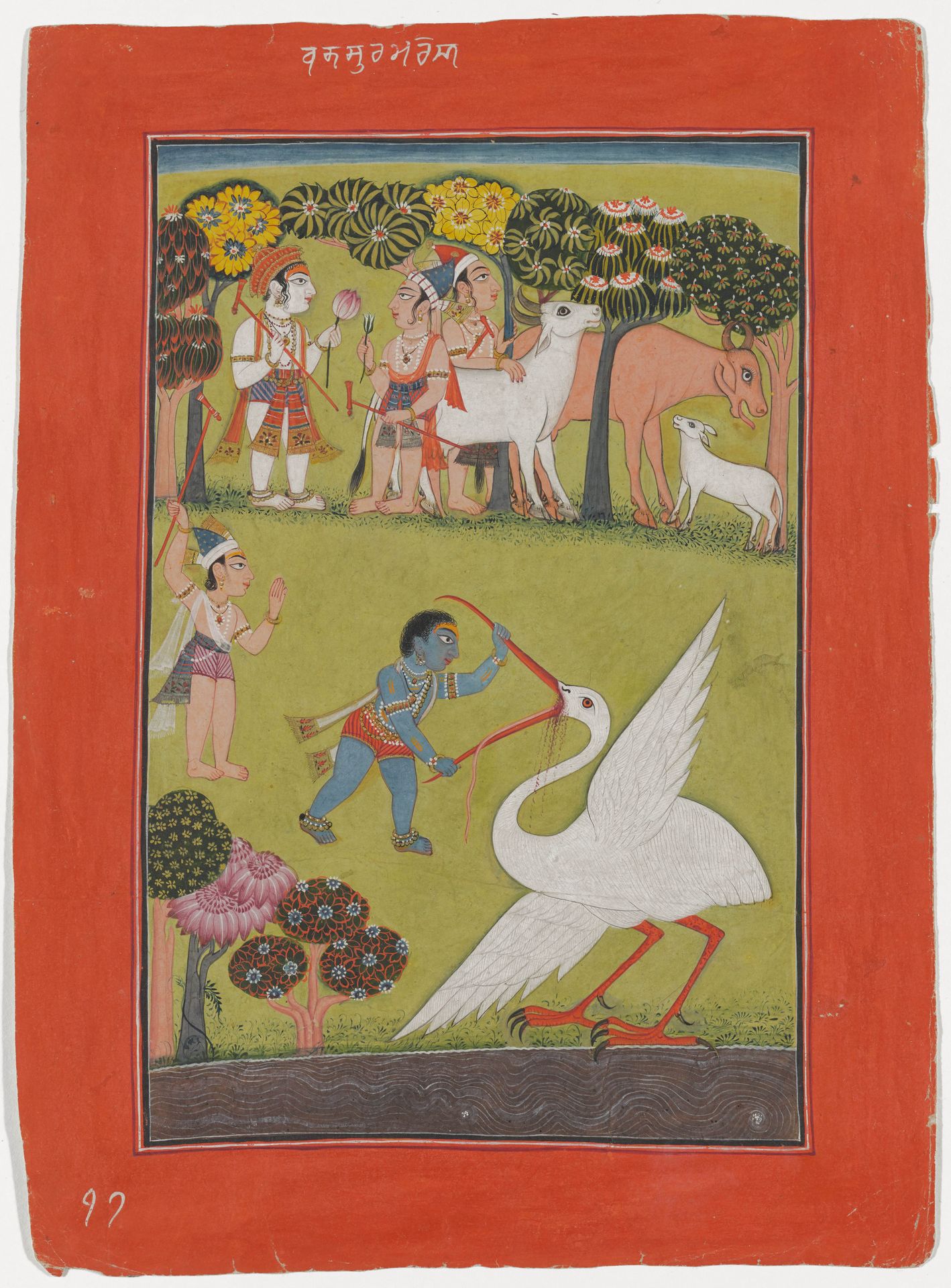
Krishna Kills the Crane Demon


Listen to curator's interpretation
Curatorial notes
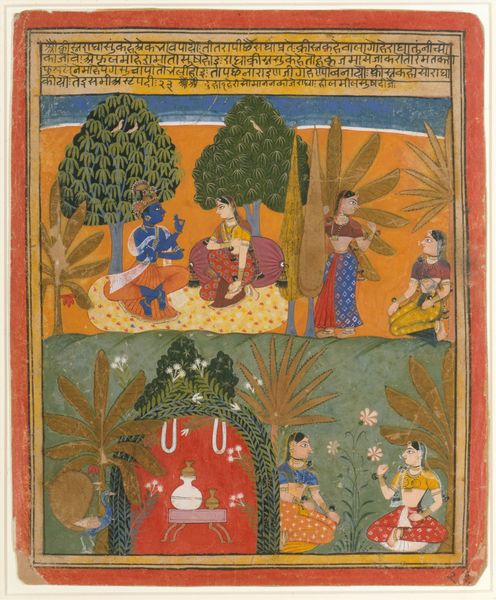
This vibrant watercolor, likely created in North India, depicts Krishna Killing the Crane Demon. We can see the blue-skinned god, Krishna, confronting a large white crane, tearing its beak apart. This image visualizes a story found in the Bhagavata Purana, a 9th or 10th century text that describes the life of Krishna. Krishna's triumph over the crane demon, Bakasura, is not just a narrative of good versus evil. It speaks to the complex social dynamics of the time. Consider the role of religious institutions in shaping these stories, and how they were used to reinforce social norms. Look at the ways in which divine figures like Krishna were depicted and how these representations influenced the understanding of power and authority in society. Was this artwork aimed at legitimizing the power of a specific ruler or social group? By delving into the cultural and religious context of this painting, we can gain a deeper understanding of its significance and the social values it reflects. The study of religious texts would certainly shed light on the symbolism and the various interpretations of the story.