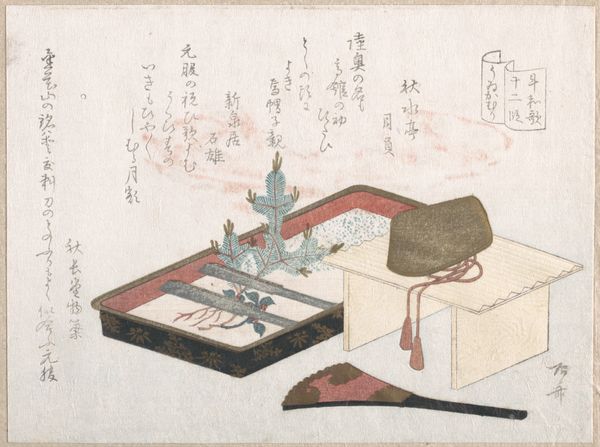
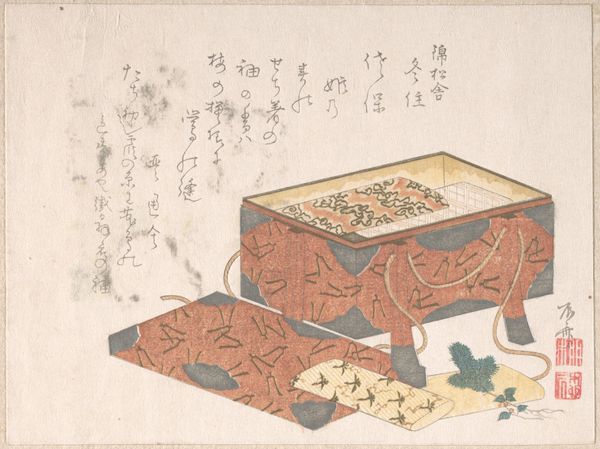
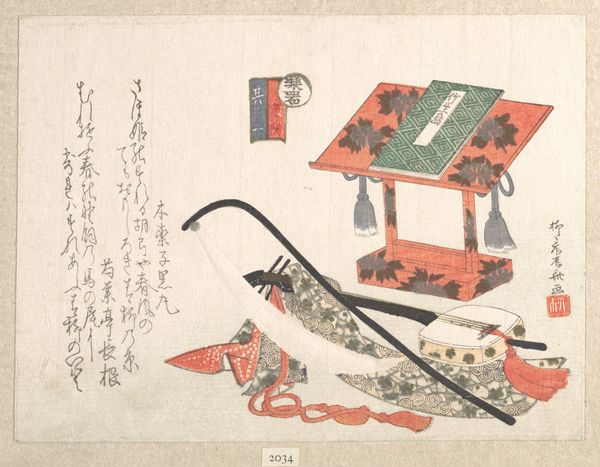
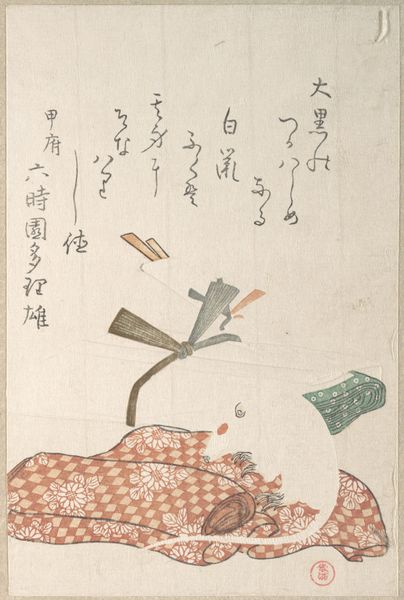
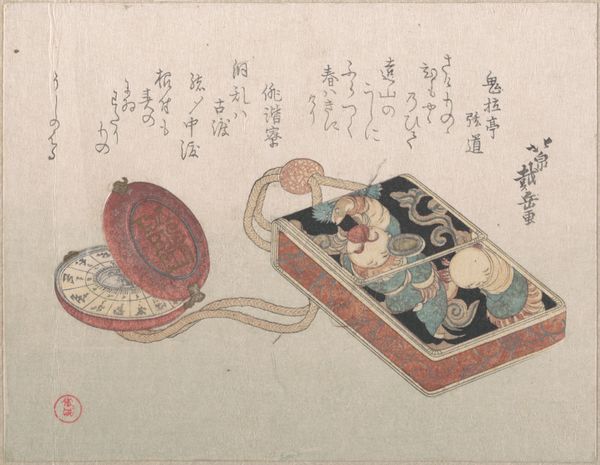
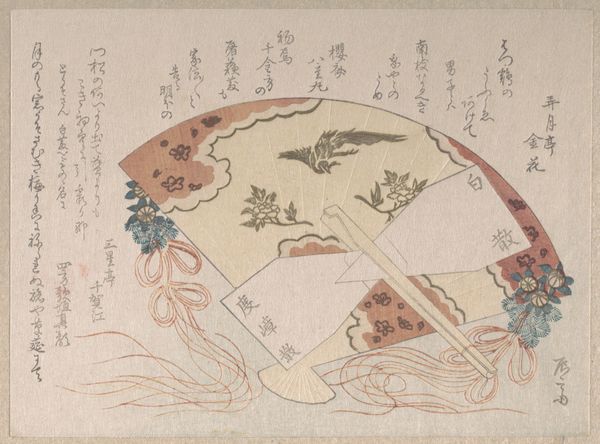
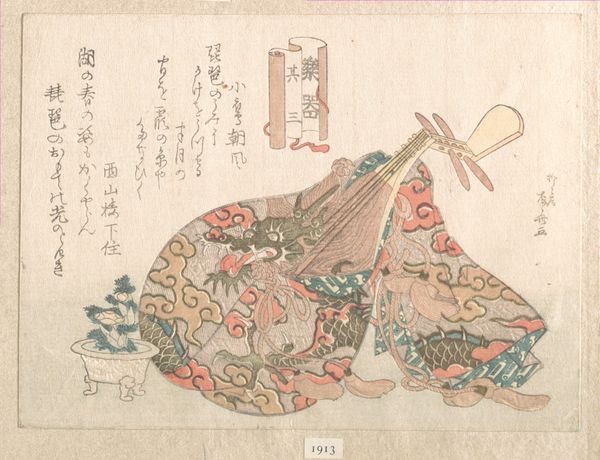
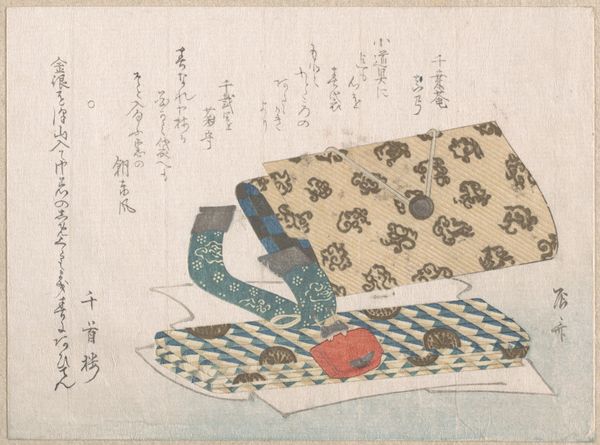
Spring Rain Collection (Harusame shū), vol. 2: Pine Shoots and Accoutrements for New Year’s Celebrations 19th century
0:00
0:00


print, woodblock-print
#
water colours
# print
#
asian-art
#
ukiyo-e
#
woodblock-print
Dimensions: 5 7/16 x 7 3/8 in. (13.8 x 18.7 cm)
Copyright: Public Domain
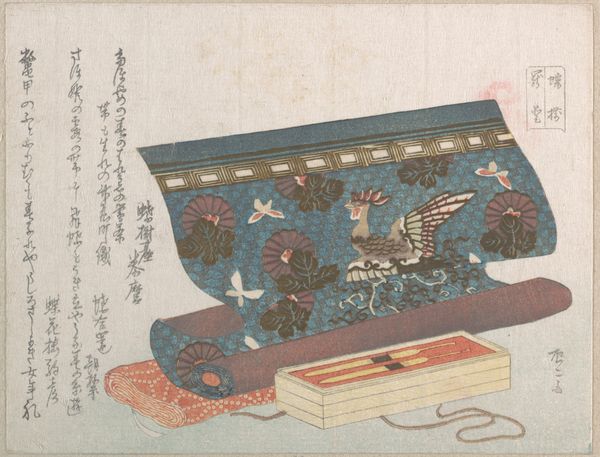
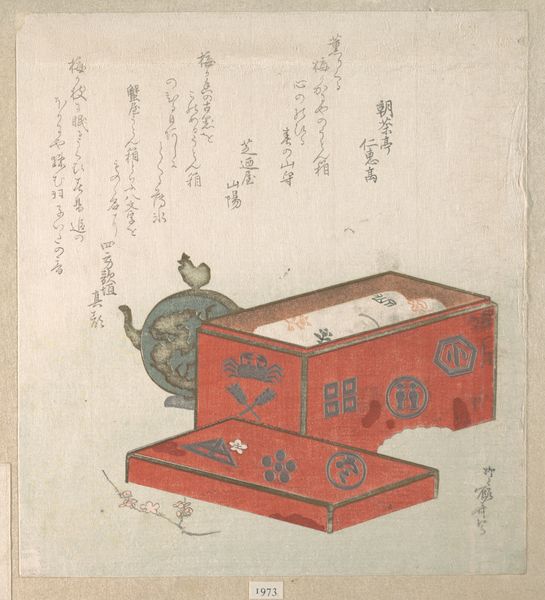
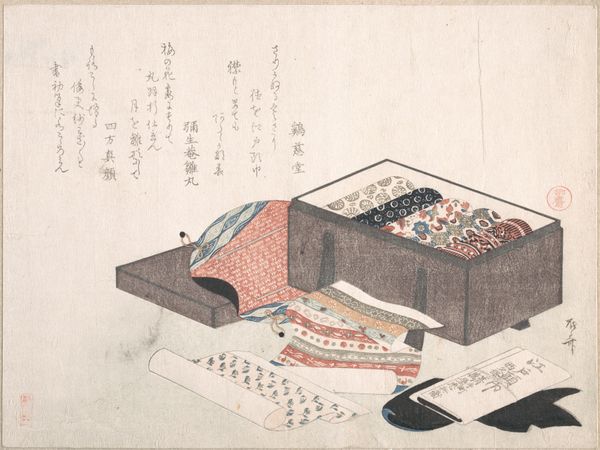
Editor: Here we have "Pine Shoots and Accoutrements for New Year’s Celebrations" by Ryūryūkyo Shinsai, a 19th-century woodblock print. It’s so delicate, almost like a still life, but flattened. The colors are muted, creating a serene, elegant feeling. What stands out to you in terms of its history? Curator: This print comes from a larger context, a period when printmaking flourished as popular culture in Japan was evolving, particularly within the ukiyo-e tradition. It's interesting how these "pictures of the floating world" often depicted transient pleasures, yet this one captures the preparation for a very specific cultural moment: New Year’s. Editor: Right, the New Year! The items included certainly give clues about celebration. So, why preserve the moment of getting ready rather than the event itself? Curator: Well, consider the burgeoning middle class in 19th-century Japan. Woodblock prints were affordable, making art accessible. These images provided not just decoration but also a glimpse into the customs and rituals valued by that society. The accoutrements reflect a sense of refined taste and cultural identity that people aspired to. Don’t you find it interesting that these are common items represented within fine art? Editor: Absolutely. It challenges traditional ideas about what is worth depicting. It democratizes art. I am glad that these works are so wonderfully preserved. Curator: Indeed! And this print reminds us that art always reflects not just beauty but also social and political currents of its time. Editor: That is definitely food for thought. I’ll remember to think about social implications as well as aesthetic appeal.
Comments
No comments
Be the first to comment and join the conversation on the ultimate creative platform.
 Collect
 React
React Comment
More like this