About this artwork
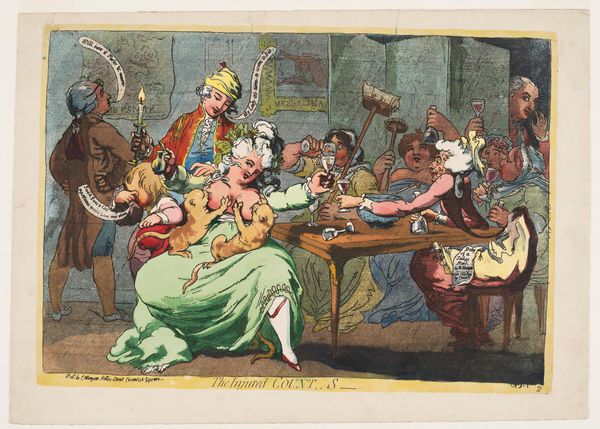
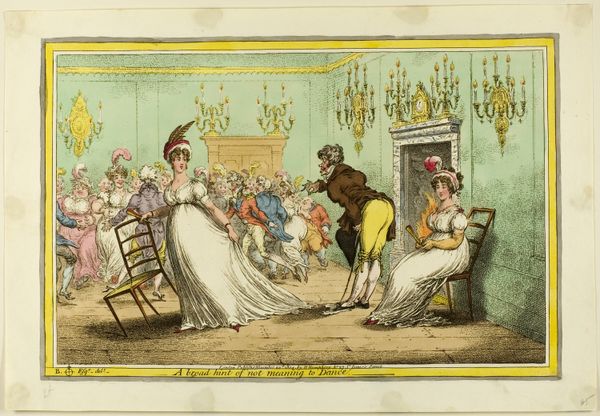
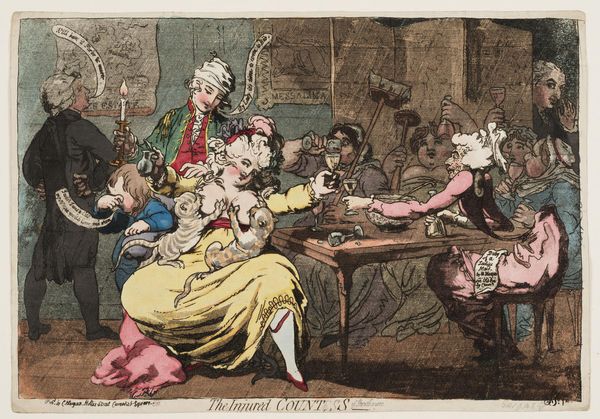
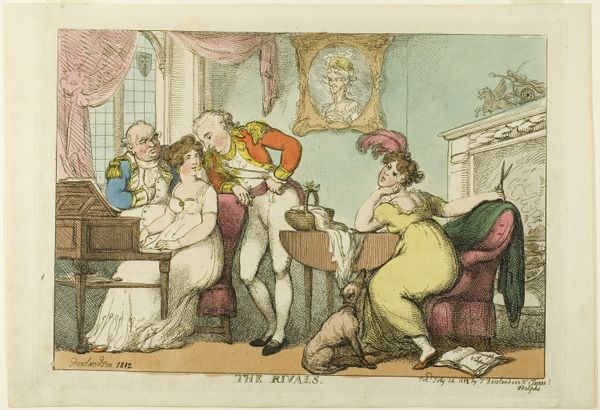
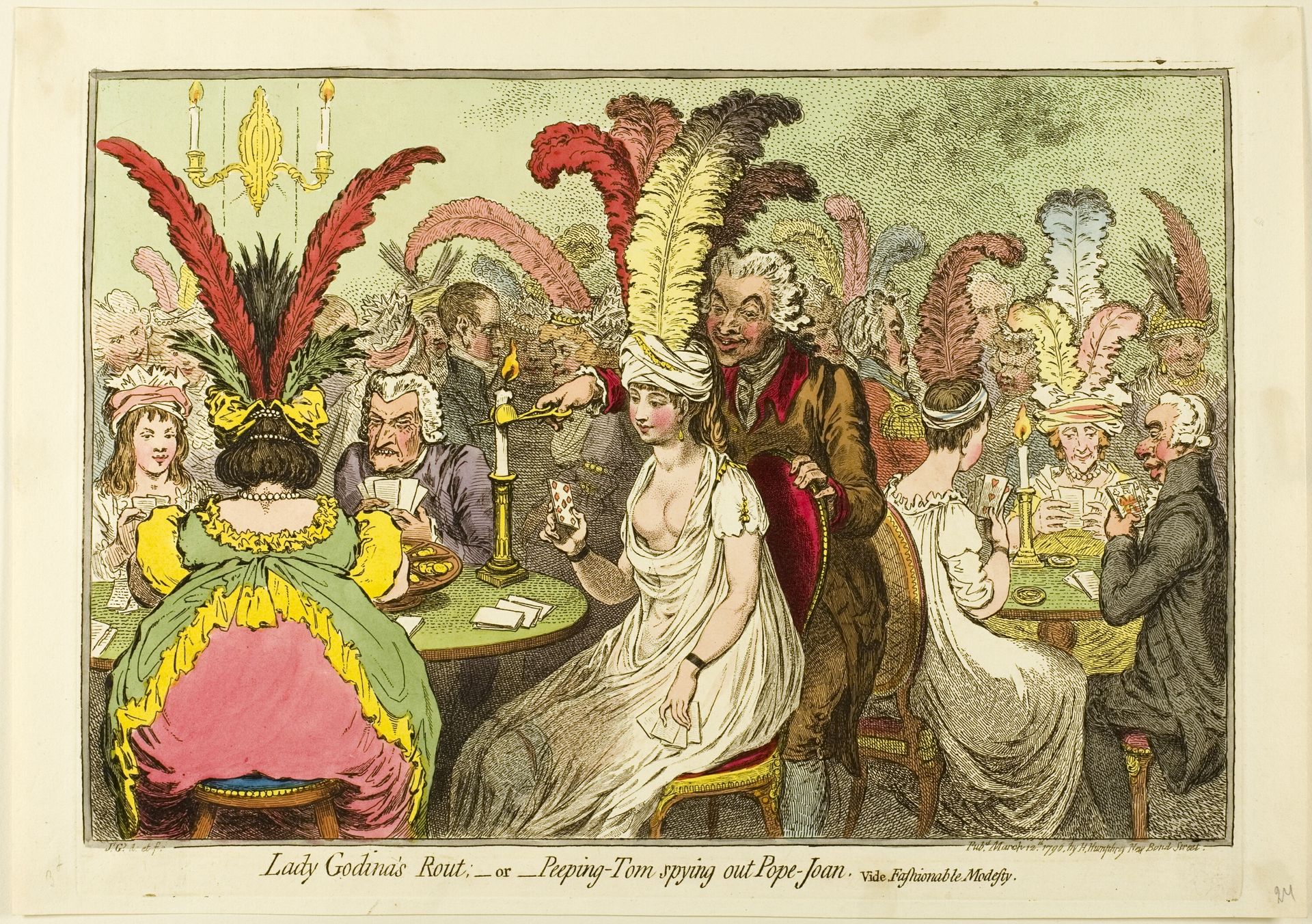
This print, by James Gillray, presents us with a densely packed scene rendered in etching with hand coloring. The composition, organized around a central group playing cards, is dominated by the extravagant plumes and caricatured faces. These features draw our eye and evoke a sense of chaotic frivolity. Gillray masterfully employs line and color to create a semiotic system that critiques the social mores of his time. The exaggerated costumes and facial expressions function as signs, pointing to the excesses and moral ambiguities of the late 18th-century British aristocracy. The print destabilizes established notions of virtue and modesty, suggesting that beneath the veneer of high society lies a world of voyeurism and scandalous behavior. The visual cacophony reflects the broader philosophical discourse of the era, questioning the Enlightenment ideals of reason and order. It reminds us that art serves not merely as a mirror but as a critical lens, challenging fixed meanings and inviting ongoing interpretation.
Lady Godina's Rout; —or—Peeping Tom Spying Out Pope Joan c. 1796


Artwork details
- Medium
- drawing, print, etching, paper
- Dimensions
- 242 × 357 mm (image); 260 × 361 mm (plate); 282 × 400 mm (sheet)
- Location
- The Art Institute of Chicago
- Copyright
- Public Domain
Tags
drawing
etching
caricature
caricature
paper
romanticism
history-painting
Comments
No comments
About this artwork
This print, by James Gillray, presents us with a densely packed scene rendered in etching with hand coloring. The composition, organized around a central group playing cards, is dominated by the extravagant plumes and caricatured faces. These features draw our eye and evoke a sense of chaotic frivolity. Gillray masterfully employs line and color to create a semiotic system that critiques the social mores of his time. The exaggerated costumes and facial expressions function as signs, pointing to the excesses and moral ambiguities of the late 18th-century British aristocracy. The print destabilizes established notions of virtue and modesty, suggesting that beneath the veneer of high society lies a world of voyeurism and scandalous behavior. The visual cacophony reflects the broader philosophical discourse of the era, questioning the Enlightenment ideals of reason and order. It reminds us that art serves not merely as a mirror but as a critical lens, challenging fixed meanings and inviting ongoing interpretation.
Comments
No comments