1550
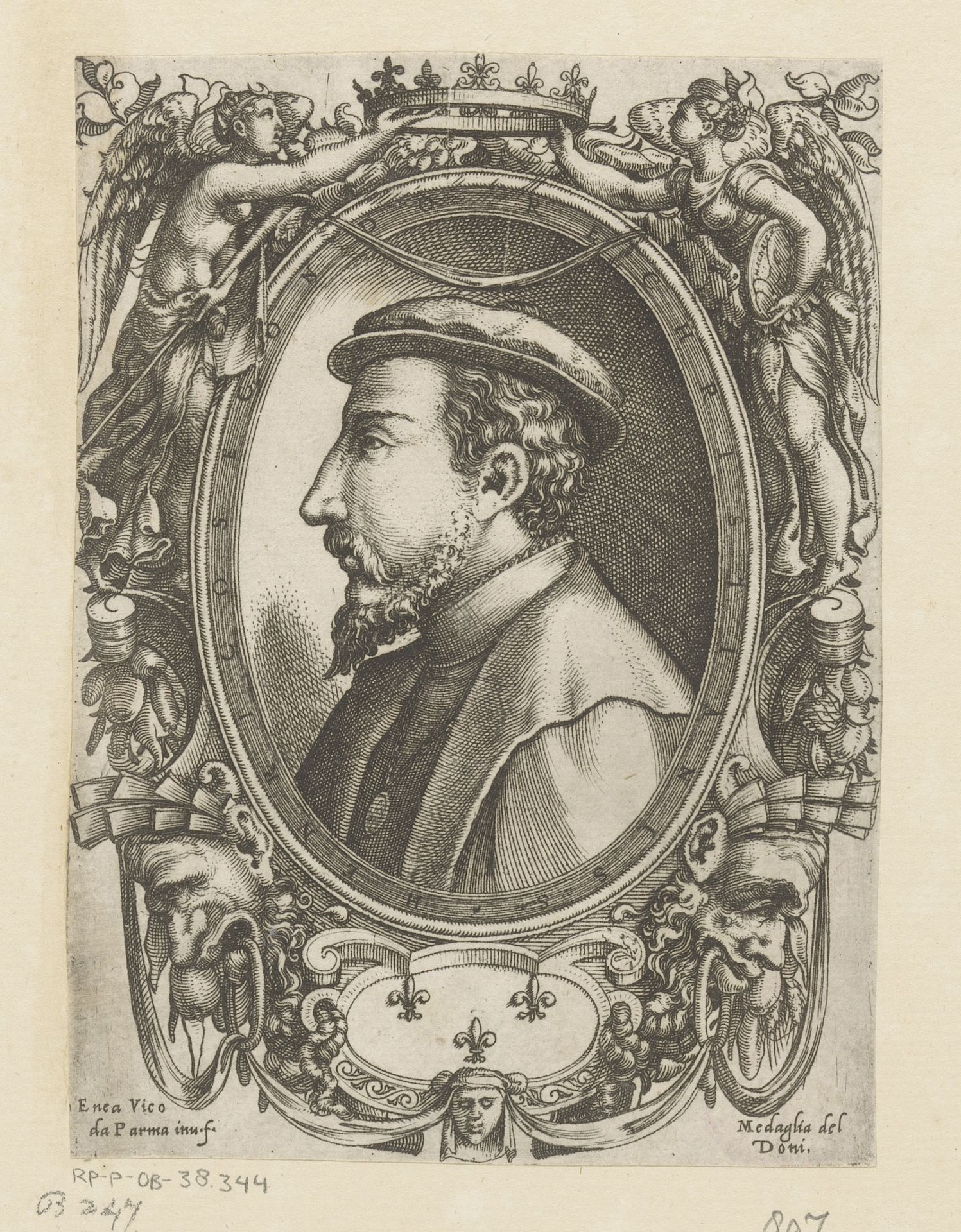
Portret van Hendrik II, koning van Frankrijk

Enea Vico
1523 - 1567Location
RijksmuseumListen to curator's interpretation
Curatorial notes
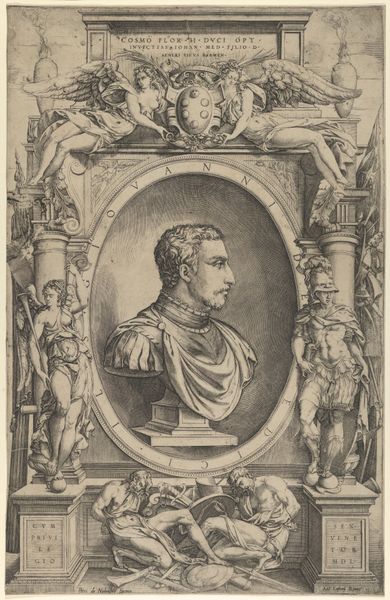
Enea Vico, an Italian engraver, created this print of Hendrik II, King of France, sometime in the 16th century. Portraits of monarchs like Hendrik were carefully designed to project power. The detail that surrounds Hendrik’s profile – angels, masks, fleur-de-lis – act as symbols of his authority. But these symbols also reflect the pressures on a monarch, whose legitimacy was always under scrutiny. To be a king was to perform a role, subject to constant public judgment. Hendrik’s reign was marked by religious conflict and the persecution of Protestants. For many, his image became associated with intolerance. Vico’s portrait thus raises questions about the relationship between representation and reality. Can an image truly capture a person's identity, or does it simply reinforce existing power structures? Looking at this portrait today, we might reflect on how images shape our understanding of both the powerful and the marginalized, and how they invite us to reconsider the narratives we inherit.