c. 100 - 500
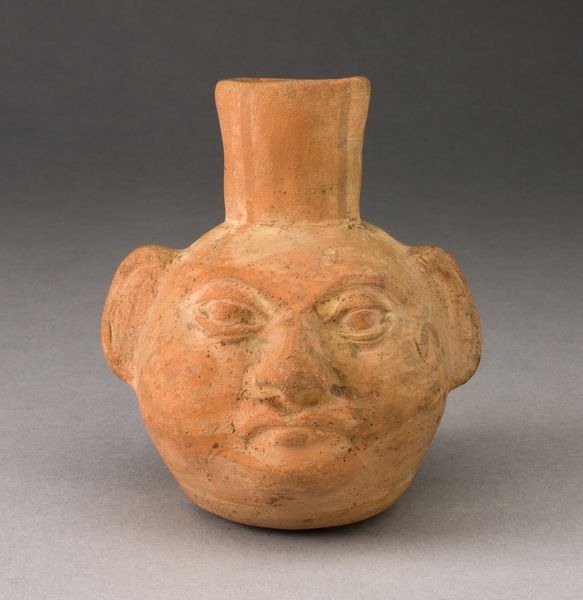
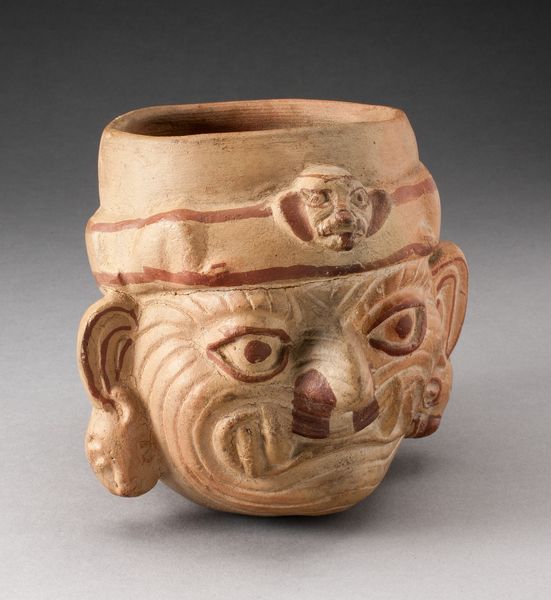
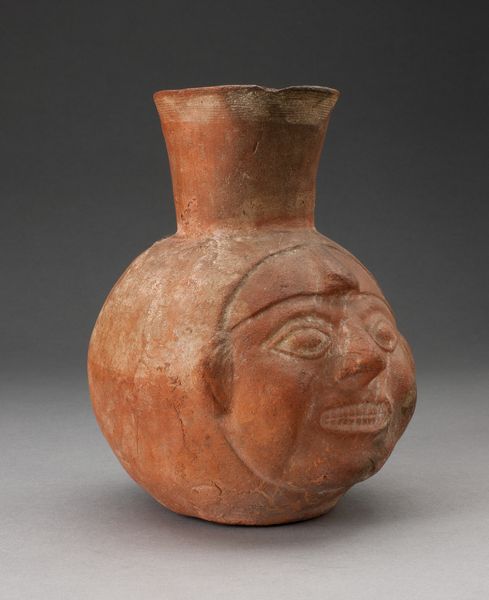
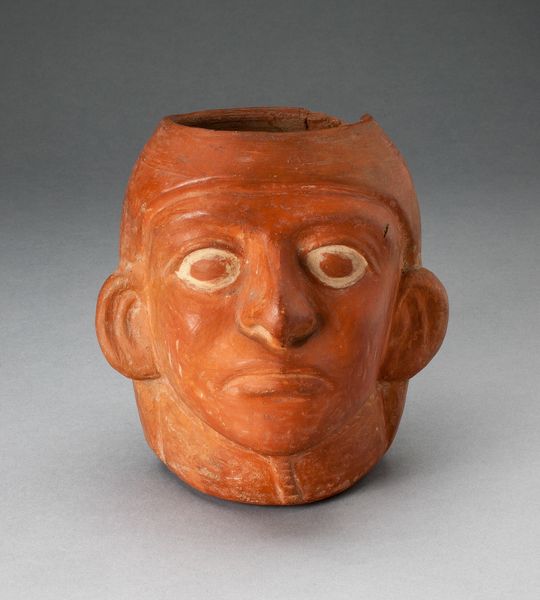
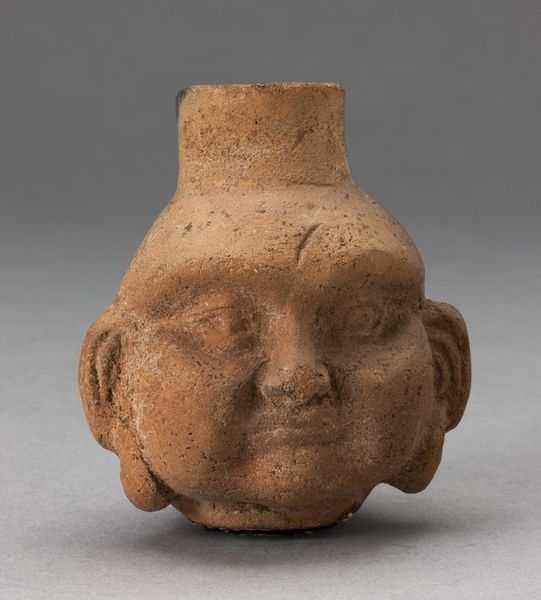
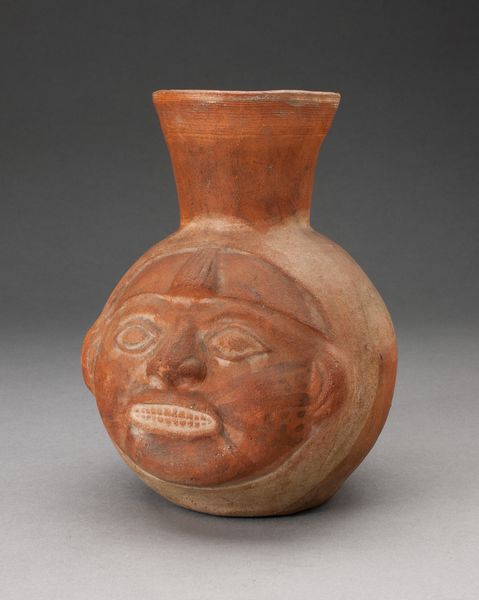
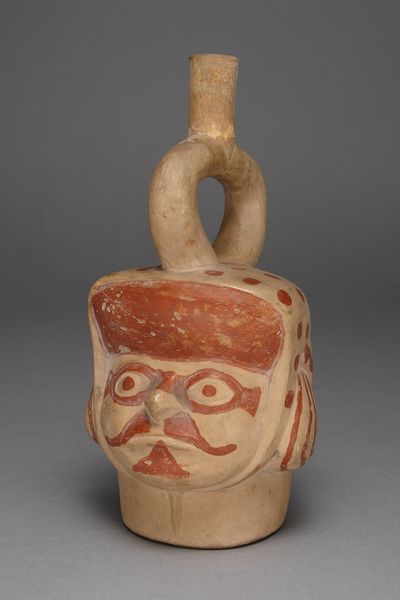
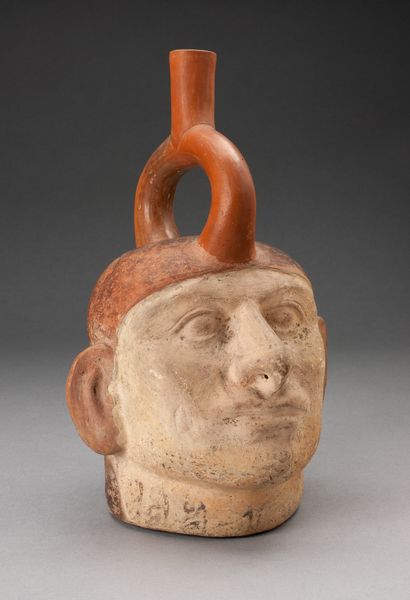
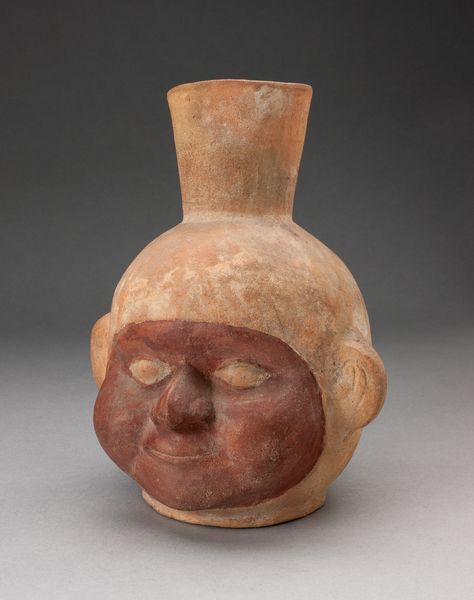
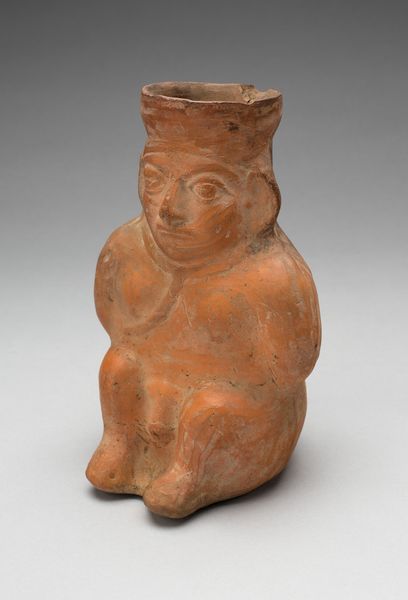
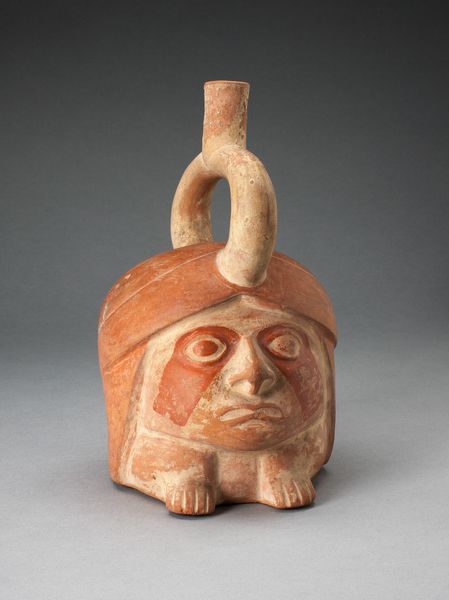
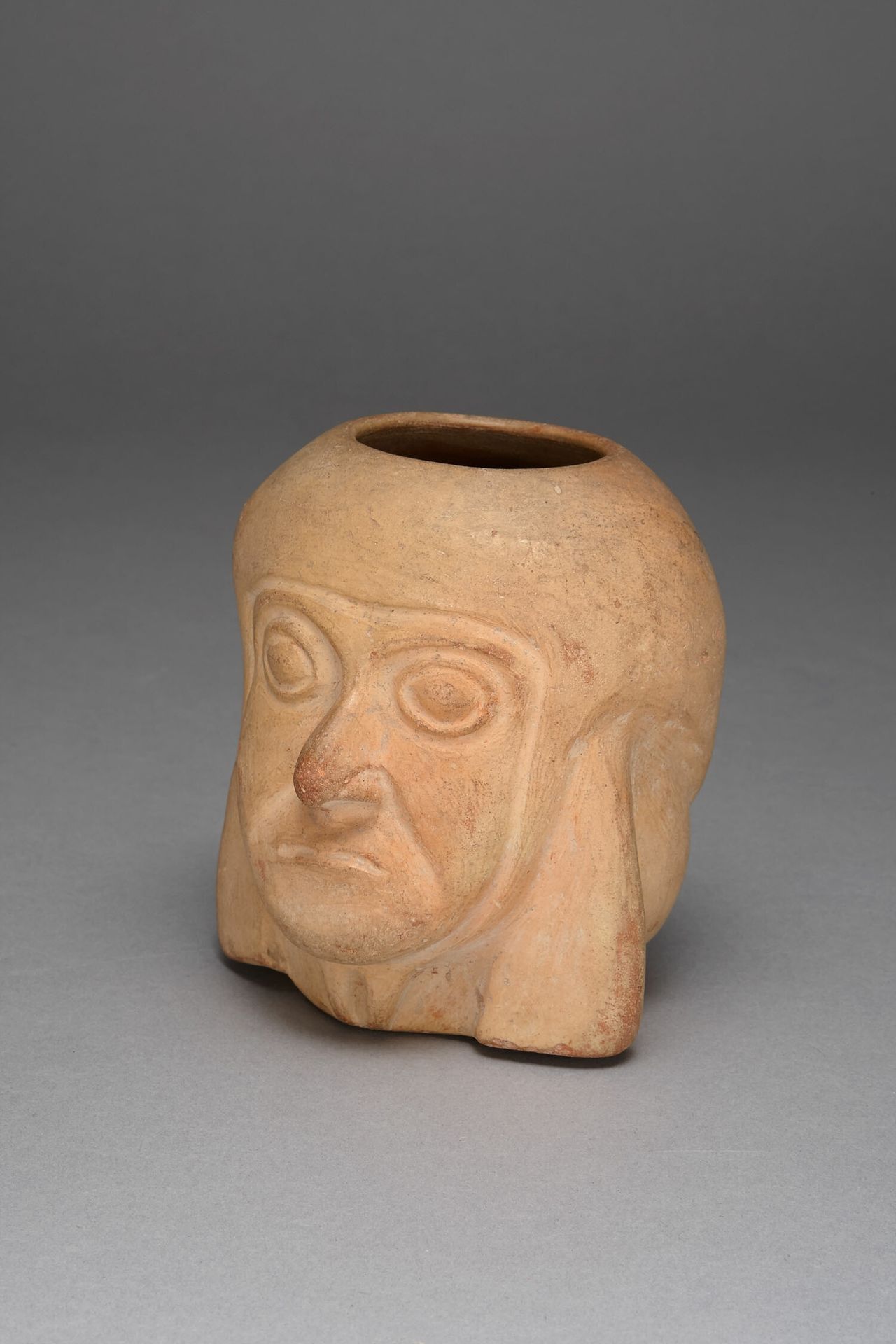
Vessel in the Form of a Human Head


Listen to curator's interpretation
Curatorial notes
Editor: We're looking at a ceramic piece called "Vessel in the Form of a Human Head," created by the Moche people, sometime between 100 and 500 AD. It's such a compelling object. The face seems both familiar and incredibly ancient. How do you interpret the symbolism embedded in a piece like this? Curator: It's more than a portrait; it’s a deliberate act of preserving or perhaps transforming identity. Consider the vessel form itself. What does it mean to contain something – water, perhaps, or offerings – within a representation of a human head? Editor: It’s like the person becomes a sacred container... Curator: Precisely! The face is rendered with a kind of stylized realism. The eyes, nose, mouth… these are clearly individual features, yet they are also archetypes. What emotional register do you read in them? Serenity? Resignation? Editor: I see a quiet intensity, a weight of responsibility perhaps. Curator: That’s interesting, especially in light of the function. Remember that among the Moche, portrait vessels weren't simple likenesses; they were believed to embody the spirit and essence of the individual. Using a pot like this for rituals connects it to the person that is pictured on it. Editor: So it’s not just art, but also ancestor worship. I hadn't considered how literal that could be, a tangible connection. Curator: Exactly. By engaging with it, we too become connected to that past, those beliefs. These symbols are how cultures remember and transmit values, even millennia later. Editor: It’s amazing to think that an object like this can hold so much meaning and history. Thank you for helping me unpack that.