1889
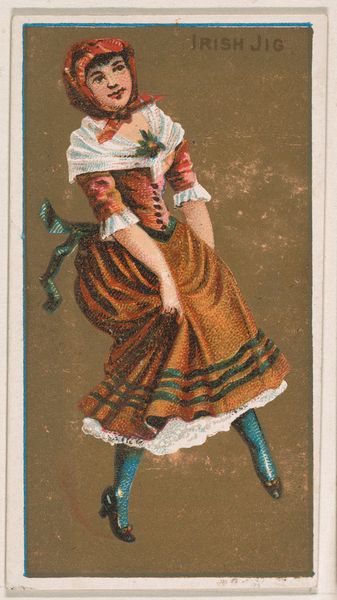
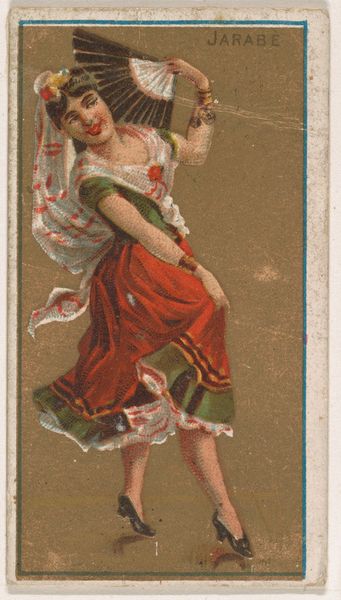
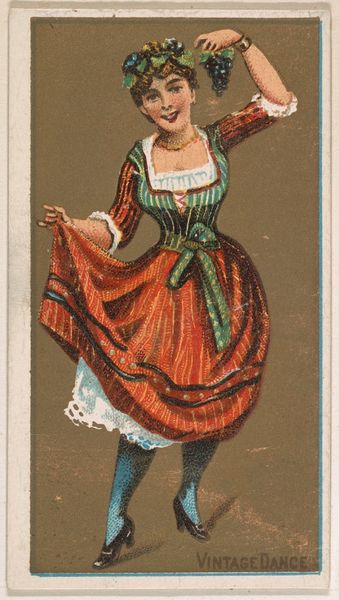
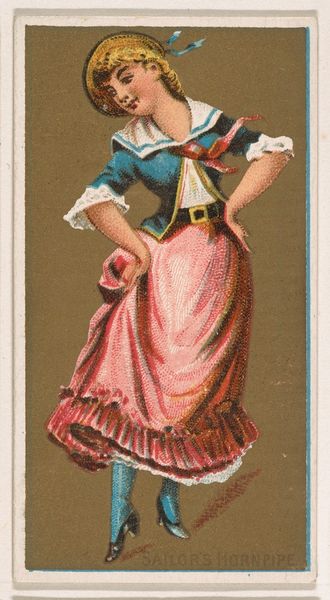
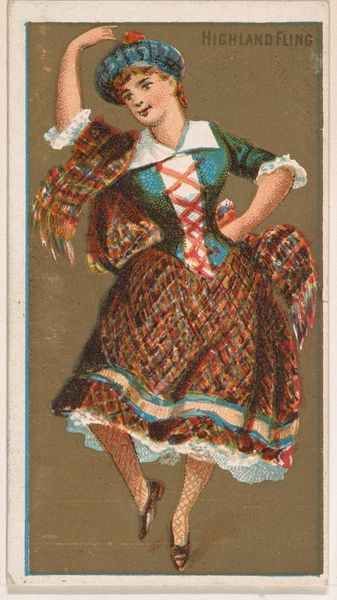
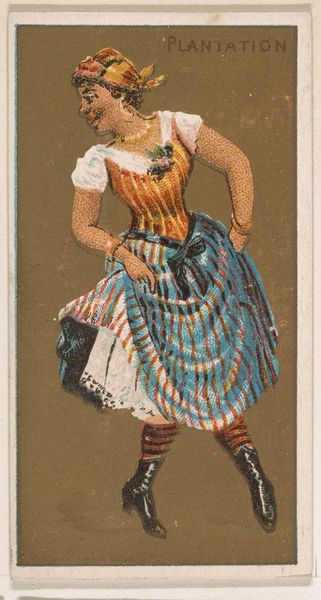
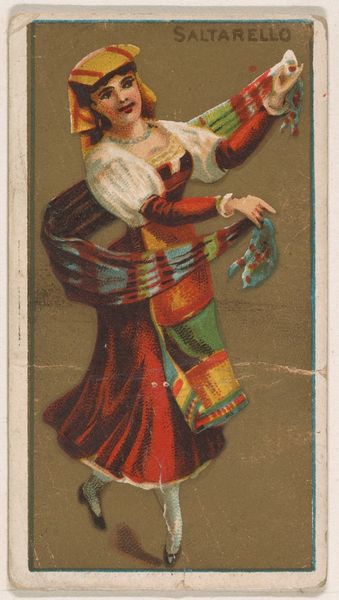
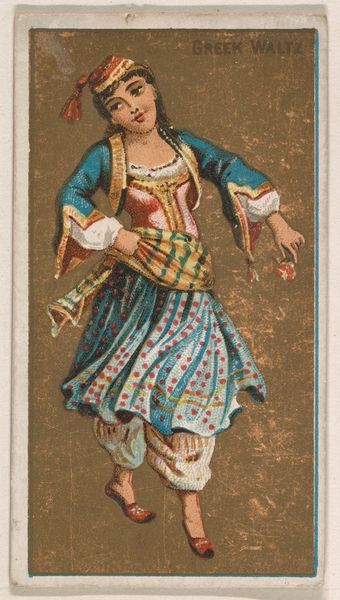
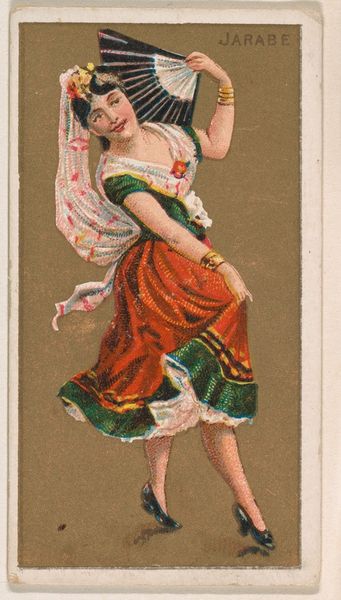
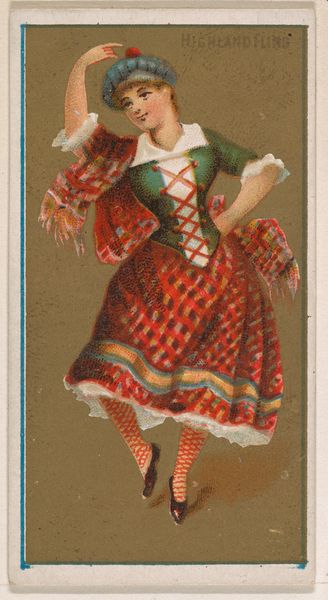
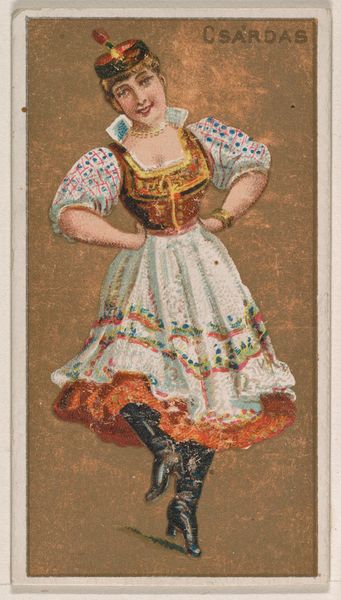
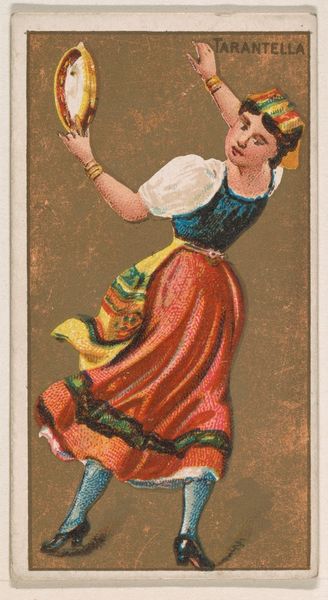
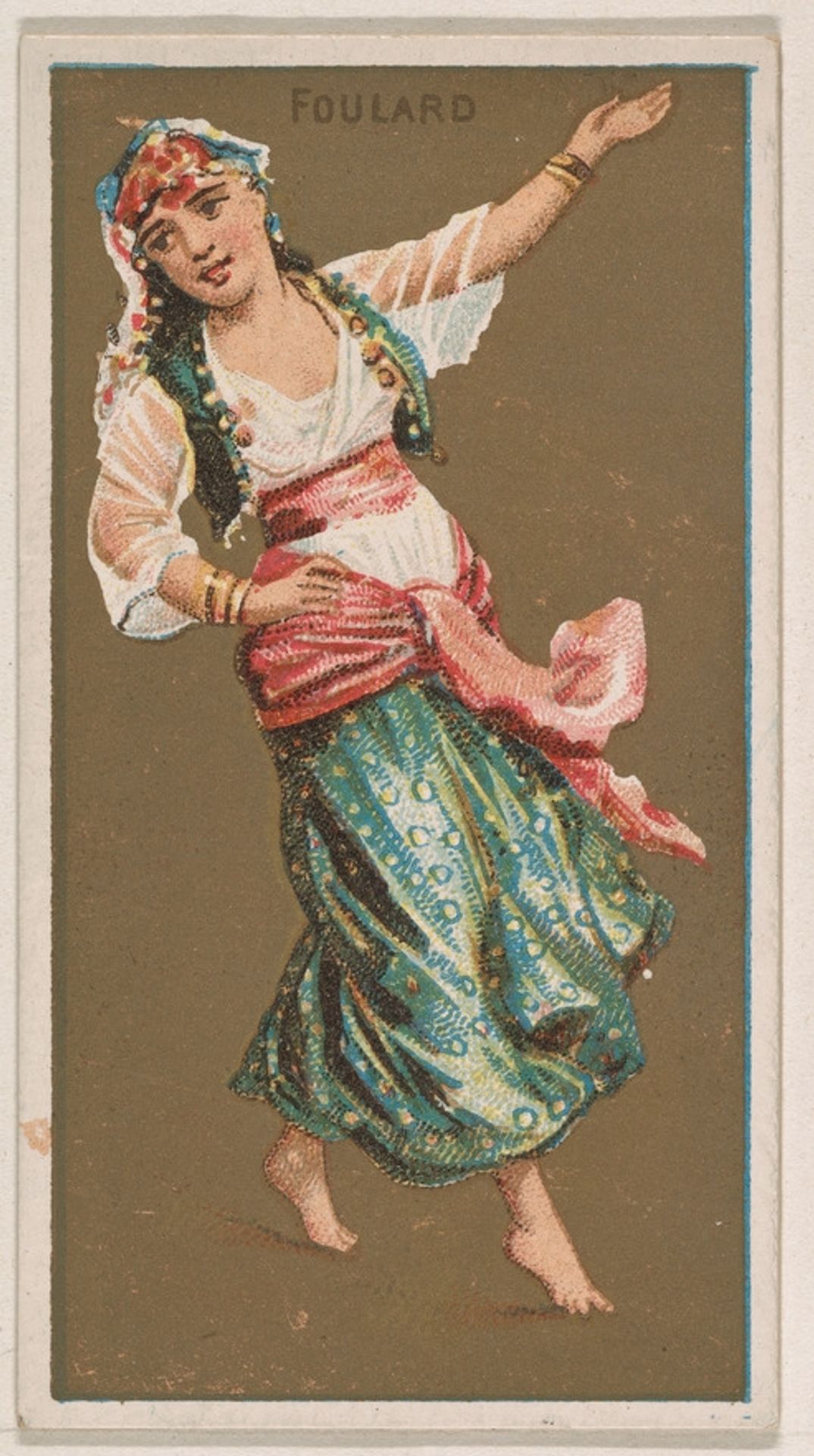
Foulard, from National Dances (N225, Type 1) issued by Kinney Bros.

Kinney Brothers Tobacco Company
1869 - 2011
The Metropolitan Museum of Art
Metropolitan Museum of Art, New York, NYListen to curator's interpretation
Curatorial notes
"Foulard," from National Dances, was issued by Kinney Bros., a tobacco company, as part of a series of trade cards. This chromolithograph reflects late 19th-century America's fascination with global cultures, albeit filtered through a lens of orientalism and exoticism. The card depicts a woman, likely meant to represent a dancer from an unspecified "national" tradition, in a pose that is both alluring and theatrical. Her attire, including a colorful headscarf and layered skirt, is rendered with an eye for detail that romanticizes and perhaps misrepresents cultural dress. This card catered to the era’s desires for a glimpse into faraway lands, while reinforcing dominant cultural narratives. Consider how the commodification of culture through tobacco cards contributed to the construction of identity, both for those depicted and those consuming these images. While seemingly innocuous, these cards played a role in shaping perceptions of race, gender, and cultural difference, highlighting the power of visual media to influence societal attitudes.