About this artwork
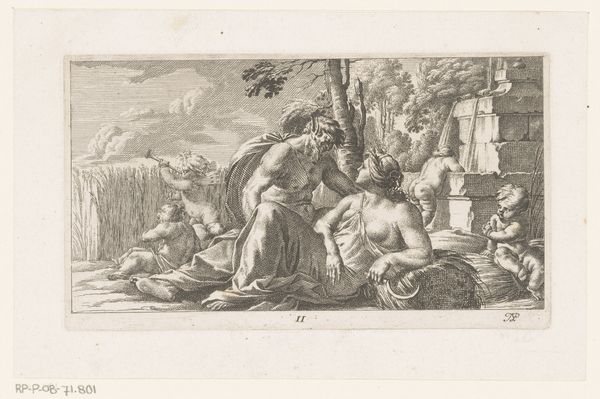
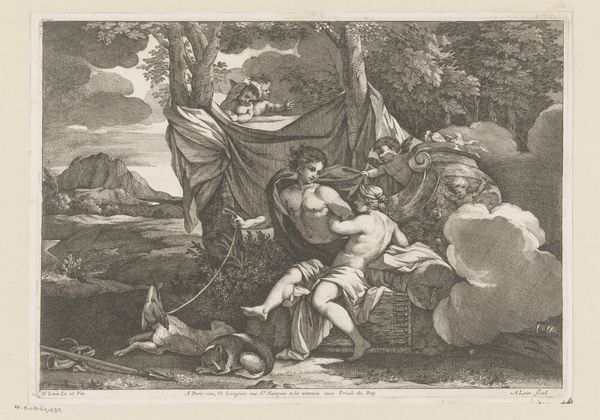
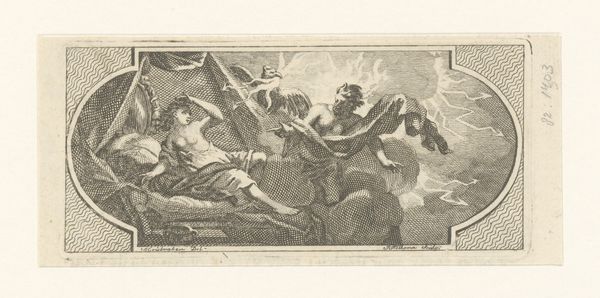
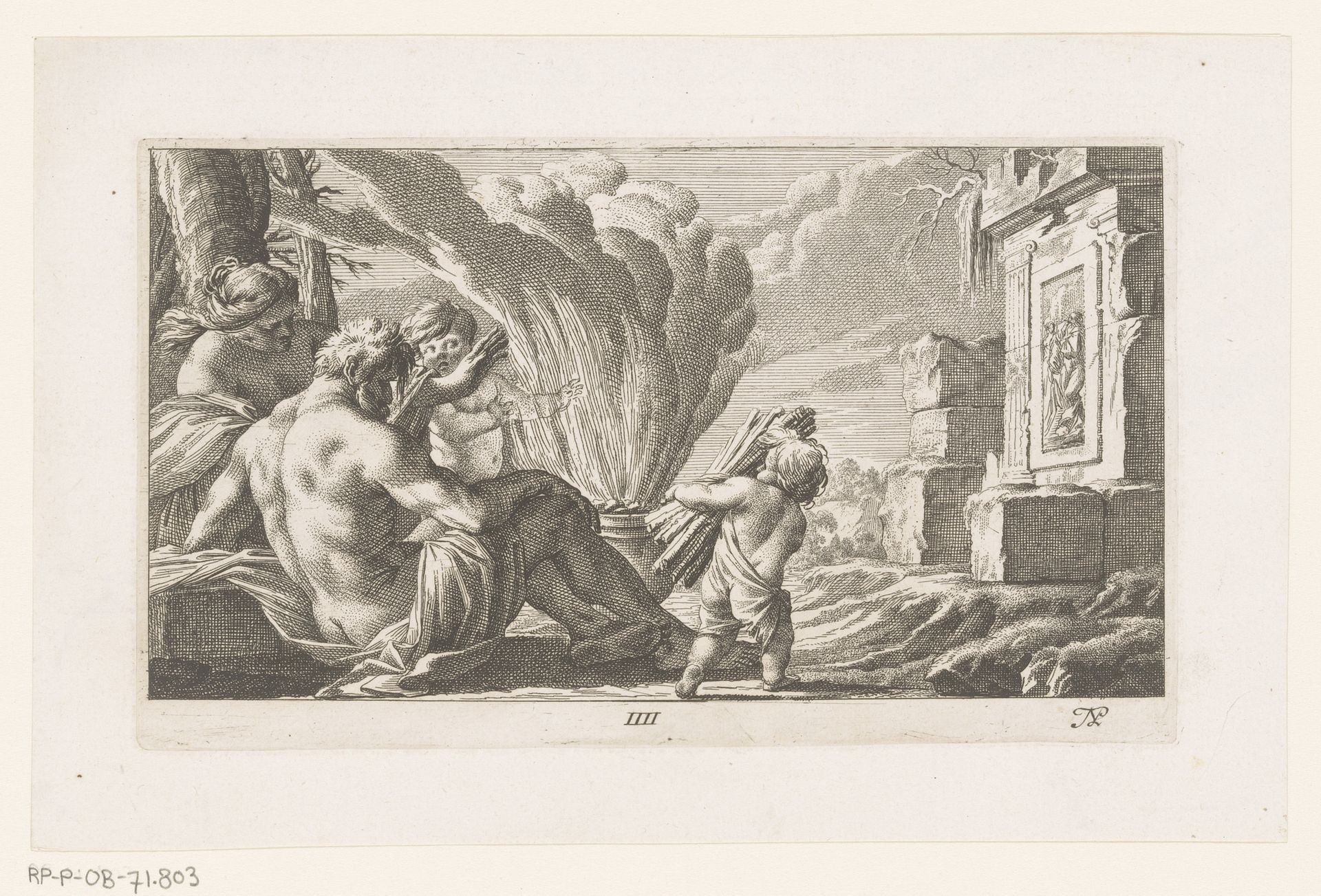
Nicolas Perelle created this print, "Man en vrouw zittend bij vuur, opgestookt door putti," in the late 17th century. The print depicts a classical scene where love, in the form of putti, attends to the desires of men and women. The male figure dominates the composition with his back turned to us, a not so subtle display of masculine power. The gaze of the woman beside him directs us to the putti, who stoke the flames and fan the desires of the couple. Another putto struggles to carry a bundle of sticks to feed the fire. Are we to read his labour as the uneven burden love places on us? Perelle was active during a time when gender roles were highly codified. While the scene draws on classical imagery, it reflects the period’s views on love, desire, and labor. How might the seemingly innocent image subtly uphold societal expectations around gender and relationships?
Man en vrouw zittend bij vuur, opgestookt door putti
1641 - 1695

Nicolas Perelle
1631 - 1695Location
RijksmuseumArtwork details
- Medium
- print, engraving
- Dimensions
- height 112 mm, width 191 mm
- Location
- Rijksmuseum
- Copyright
- Rijks Museum: Open Domain
Tags
aged paper
baroque
old engraving style
landscape
figuration
history-painting
engraving
Comments
Be the first to share your thoughts about this work.
About this artwork
Nicolas Perelle created this print, "Man en vrouw zittend bij vuur, opgestookt door putti," in the late 17th century. The print depicts a classical scene where love, in the form of putti, attends to the desires of men and women. The male figure dominates the composition with his back turned to us, a not so subtle display of masculine power. The gaze of the woman beside him directs us to the putti, who stoke the flames and fan the desires of the couple. Another putto struggles to carry a bundle of sticks to feed the fire. Are we to read his labour as the uneven burden love places on us? Perelle was active during a time when gender roles were highly codified. While the scene draws on classical imagery, it reflects the period’s views on love, desire, and labor. How might the seemingly innocent image subtly uphold societal expectations around gender and relationships?
Comments
Be the first to share your thoughts about this work.