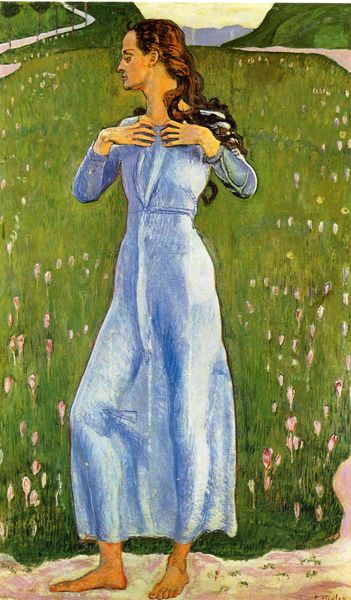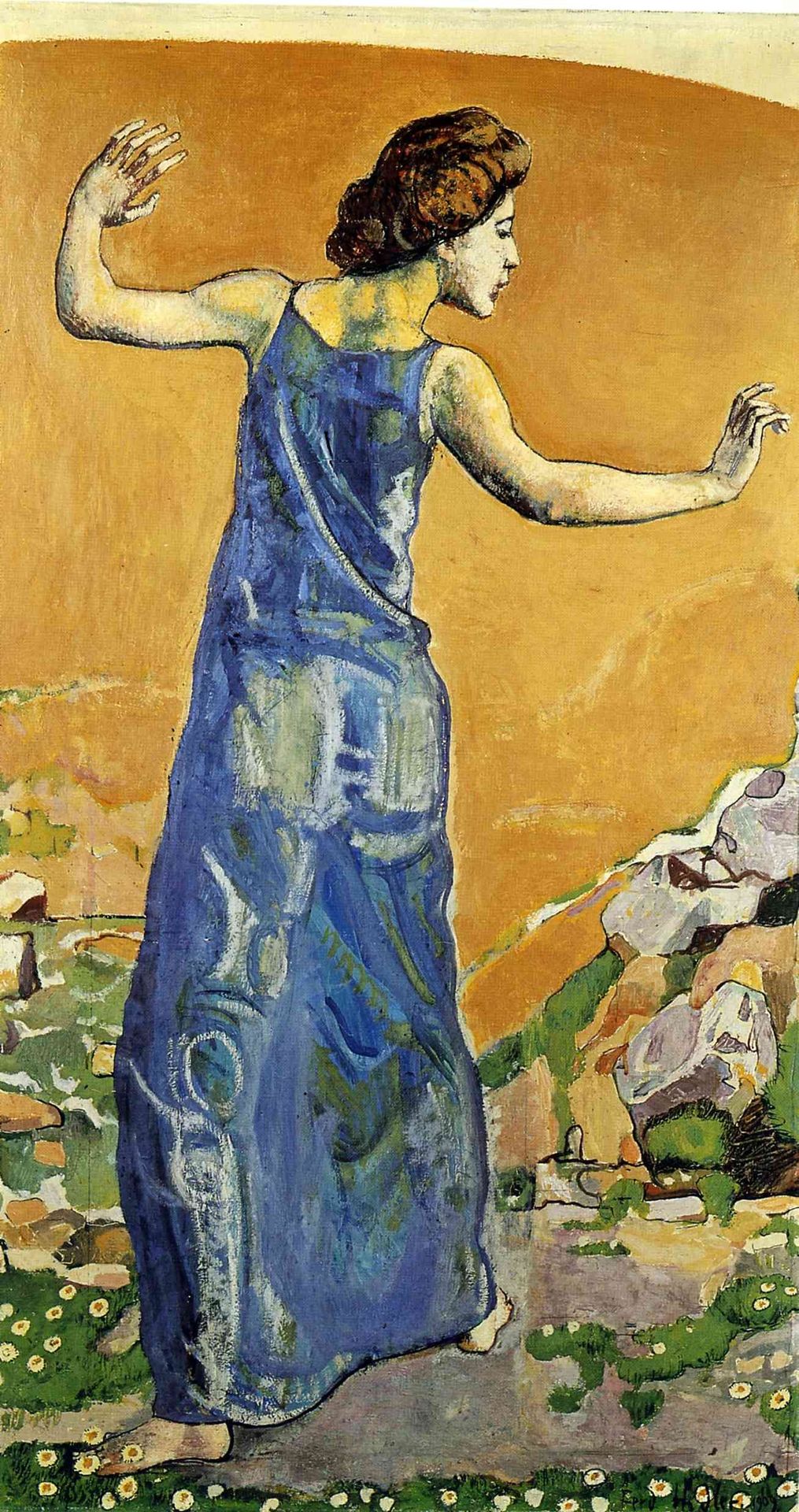
Joyous Woman

Ferdinand Hodler
1853 - 1918Location
Private CollectionListen to curator's interpretation
Curatorial notes
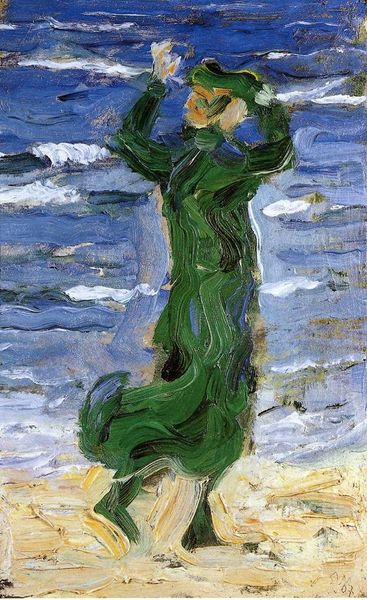
Editor: So this painting, “Joyous Woman” by Ferdinand Hodler, done in oil paint, strikes me as very expressive. The figure's posture, her arms raised, evokes a feeling of freedom or release. What's your take? How do you interpret this work within its historical context? Curator: Hodler, working during a time of great social upheaval, particularly concerning the role of women, uses the female form to symbolize not just personal joy, but a kind of liberated spirit. Think about the burgeoning feminist movements. Do you see a connection between her pose and the idea of breaking free from societal constraints? Editor: That's an interesting angle! I hadn't considered the feminist subtext explicitly, but now that you mention it, her uplifted arms do feel like a defiant act, maybe a rejection of traditional expectations. Curator: Exactly. And consider the landscapes common during Modernism; Hodler uses them to give his subject space, freedom. The woman is part of something grander. In terms of feminist theory, this painting pushes a very gendered art history into something broader. How does that intersection shape your opinion? Editor: It's thought-provoking! I'm wondering, though, if focusing solely on a feminist reading might overlook other potential interpretations. Perhaps joy is simpler? Curator: Of course! Personal joy and liberation from the art-historical canon can co-exist and intertwine. Thinking about the broader narratives can give us new angles. Do you agree that it adds complexity and enriches your initial reading of the painting? Editor: Absolutely. Looking at “Joyous Woman” through this historical lens gives me a deeper appreciation of it! Curator: Indeed, and it helps us understand how the painting still resonates with contemporary audiences and dialogues about identity and liberation.