
Curatorial notes
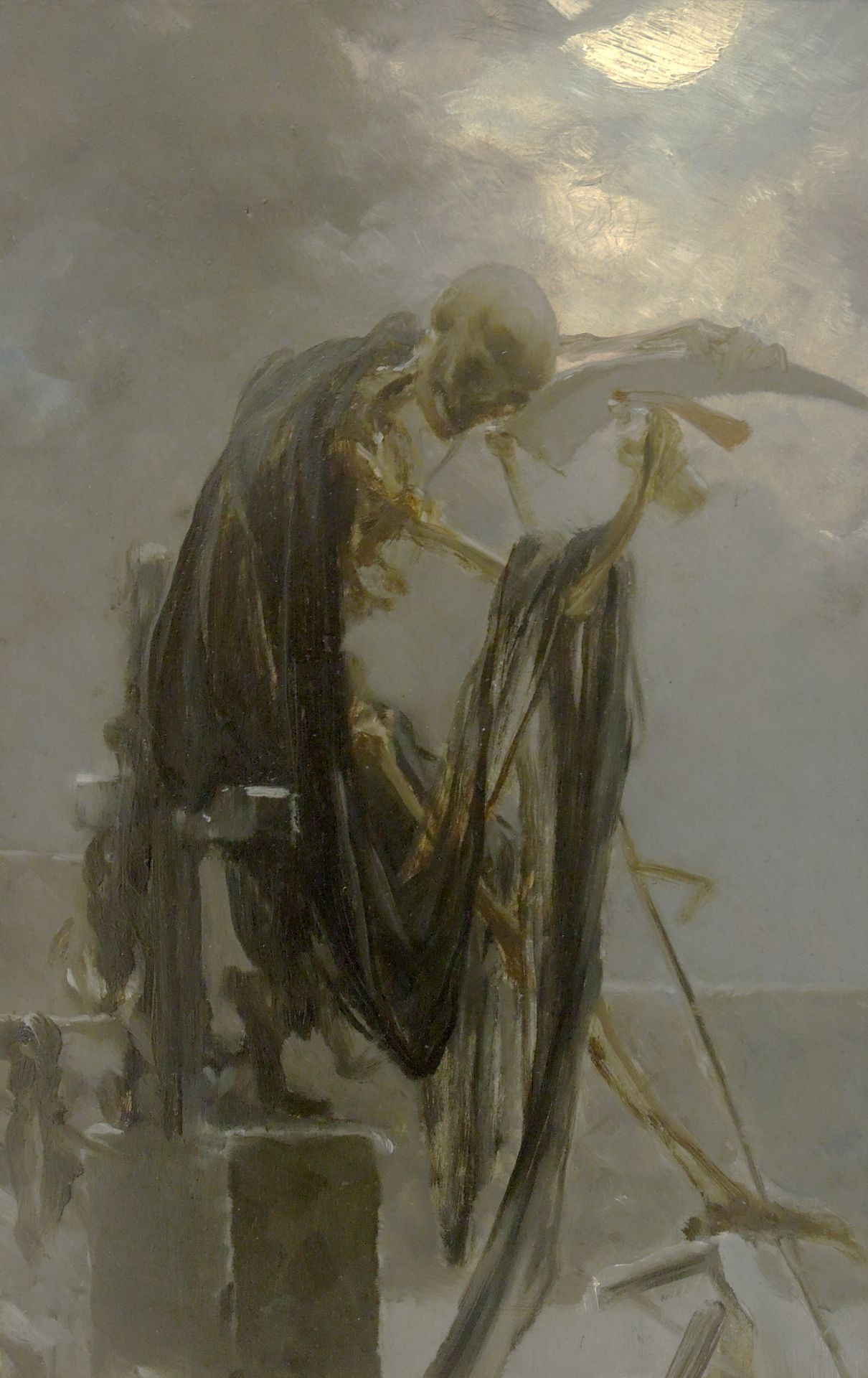
Editor: So, this oil painting is called "Death," created by Maximilian Pirner in 1893. It's… somber, to say the least. The monochrome palette makes it seem ghostly, and the skeletal figure is undeniably unsettling. What do you see in this piece beyond the obvious morbidity? Curator: Beyond the iconographic representation, the success of this piece lies in its composition. Note the deliberate asymmetry, placing Death off-center and directing our gaze along the descending diagonals created by the shrouded figure and the musical instrument. This induces a sense of imbalance, a visual correlate to mortality itself. Editor: I see what you mean. It's not just a picture of death; the structure itself feels like something is falling apart. Is the symbolism just about death then, or is there something more? Curator: Symbolism pervades the work. Consider the figure's downward gaze and slumped posture, mirrored in the moon’s pale light and the shrouded cloth that almost blends into its skeletal form. Pirner is drawing our attention to color as form; these recurring visual forms underscore ideas of decay, futility, and the transient nature of life, inviting philosophical contemplation on our finitude. Do you see how he connects shadow and texture to further establish the mood? Editor: Absolutely. The texture, created with what must be loose brushwork, adds to the feeling of decay. And that pale moonlight feels less like illumination and more like a spotlight on decline. It’s interesting to notice that death has been depicted with a musical instrument in tow. Curator: Indeed. That inclusion prompts several questions. Why depict it with music, the subject of a good number of *vanitas* works of the time? Music can symbolize harmony but is typically enjoyed for such a brief moment in time before its passing from existence. The artist uses the moon to signify the *death* of each month. What did you make of the steps included on the painting’s right side? Editor: Now I see why Pirner has combined these specific artistic decisions into the larger artwork and am intrigued to study his choices and rationale further! Thanks for offering that perspective! Curator: A closer consideration of formal elements yields unexpected insights into its themes! It changes how I see painting as a field of research.