drawing, lithograph, paper, pen
#
drawing
#
narrative-art
#
lithograph
#
caricature
#
paper
#
romanticism
#
pen
#
genre-painting
Dimensions: height 278 mm, width 219 mm
Copyright: Rijks Museum: Open Domain
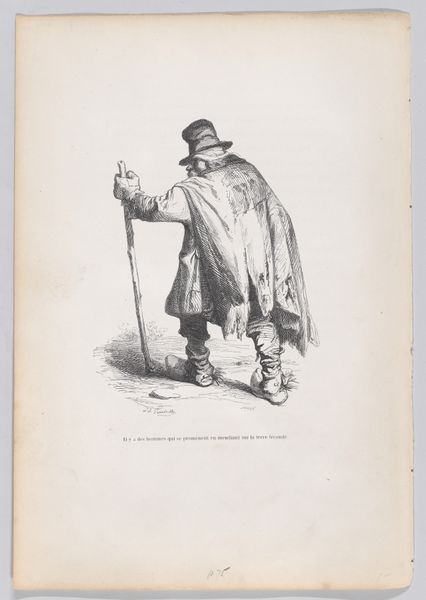
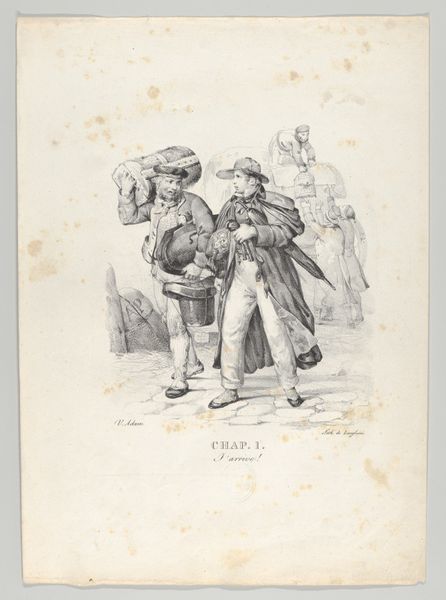
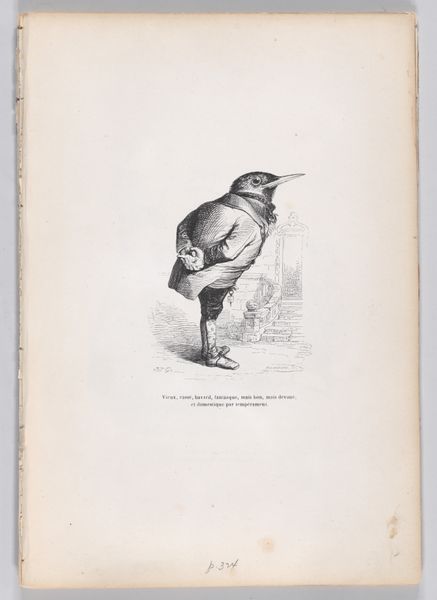
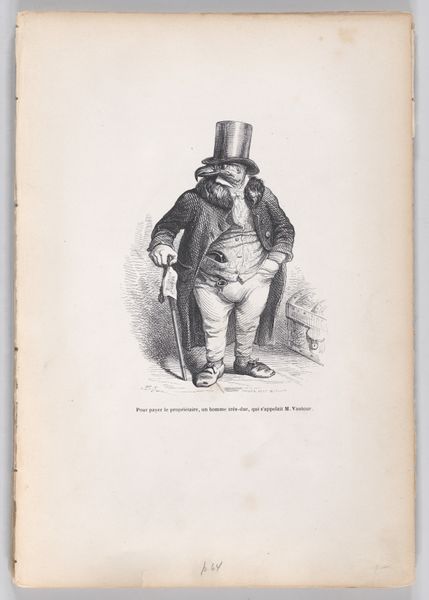
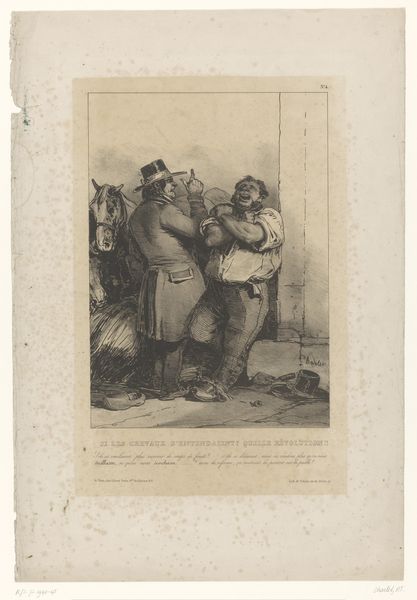
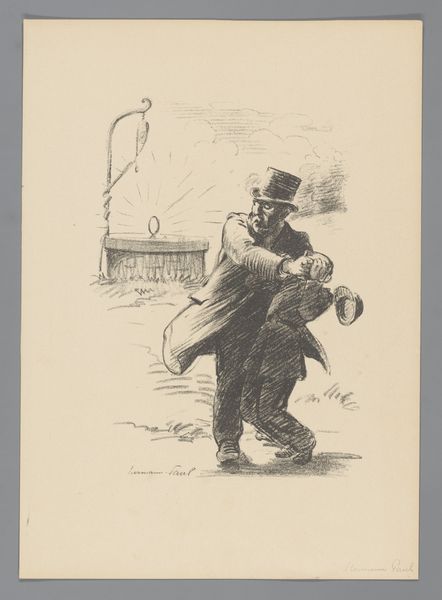
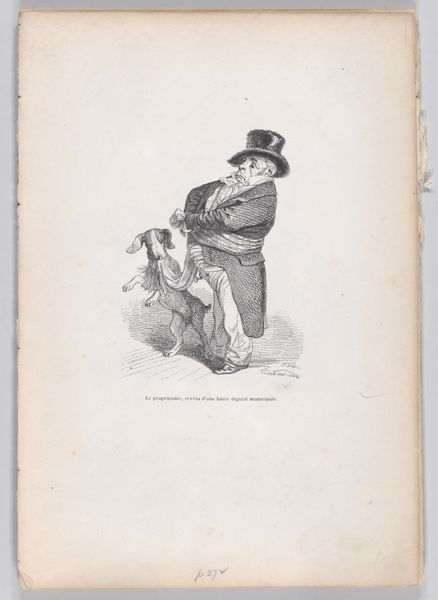
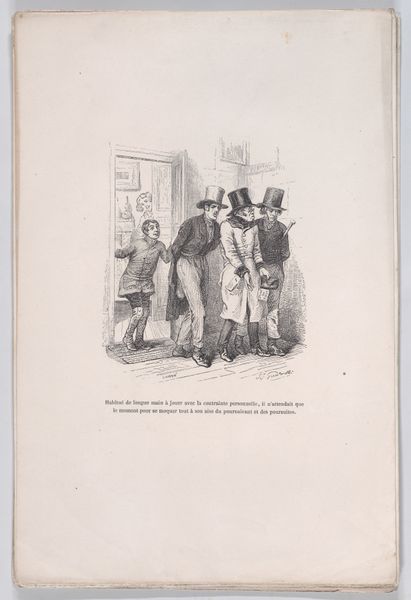
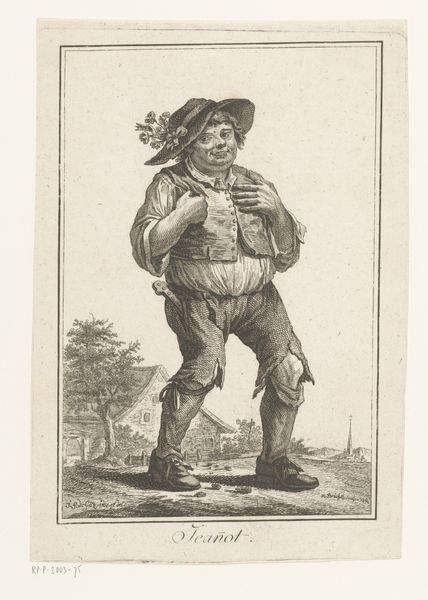
Curator: Here we have "Vader Riboule met kan in zijn hand" or "Father Riboule with a can in his hand" by Auguste Raffet, created around 1835. It is a lithograph made with pen on paper, currently held here at the Rijksmuseum. Editor: The image immediately strikes me as a bit unsettling. There’s something disjointed about the figure—the exaggerated features and slightly askew stance create a sense of unease. What is your impression? Curator: Raffet created this drawing during the Romantic era, so it's worth considering this image as less about pure aesthetics and more about exploring social commentary. Caricatures like these are steeped in social and political undertones, which reveal insights into the complex fabric of 19th-century society. Who was Father Riboule? What societal roles was Raffet interested in subverting or celebrating? Editor: Indeed. Looking purely at its composition, there's an interesting tension between the highly detailed figure of Riboule and the sketchier background. This contrast draws our eye directly to him. The interplay of light and shadow, achieved through the lithographic technique, also contributes to the artwork's somewhat dark, almost ominous mood. The tilted pot in his hand forms a subtle diagonal, further unsettling the composition. Curator: Right, and consider the inscription. In the original French it roughly translates as: "He knew that Prince Eugene was the leader of his daughter, Prince Eugene was sufficient for him". We should explore questions surrounding family, paternity, perhaps a bit of intergenerational tension here. Given this image is rooted in satire, it’s unlikely that Raffet literally admires this scene. How can the image serve as commentary for gendered-power imbalances in the nineteenth century? Editor: Interesting questions. Zooming back into formal considerations, look at how Raffet masterfully uses line to delineate form and texture. The dense cross-hatching creates a tangible sense of weight and volume. The artist's precision here is particularly noticeable in the rendering of the clothes, contrasting to other areas that remain ambiguous. Curator: And that precise technique becomes more potent when contrasted to the subject's broader political narrative. In our contemporary context, it serves to highlight the long trajectory of such satirical narratives. What can this historical commentary tell us about contemporary modes of satire and political dissent? Editor: In closing, examining Raffet’s "Vader Riboule" through formal analysis opens an engaging look into artistic method, revealing a confluence of stylistic considerations. Curator: And situating the work within the Romantic era helps unpack the nuances embedded within its social context—making it a powerful artifact for understanding issues surrounding gender, power, and identity.
Comments
No comments
Be the first to comment and join the conversation on the ultimate creative platform.
 Collect
 React
React Comment
More like this