

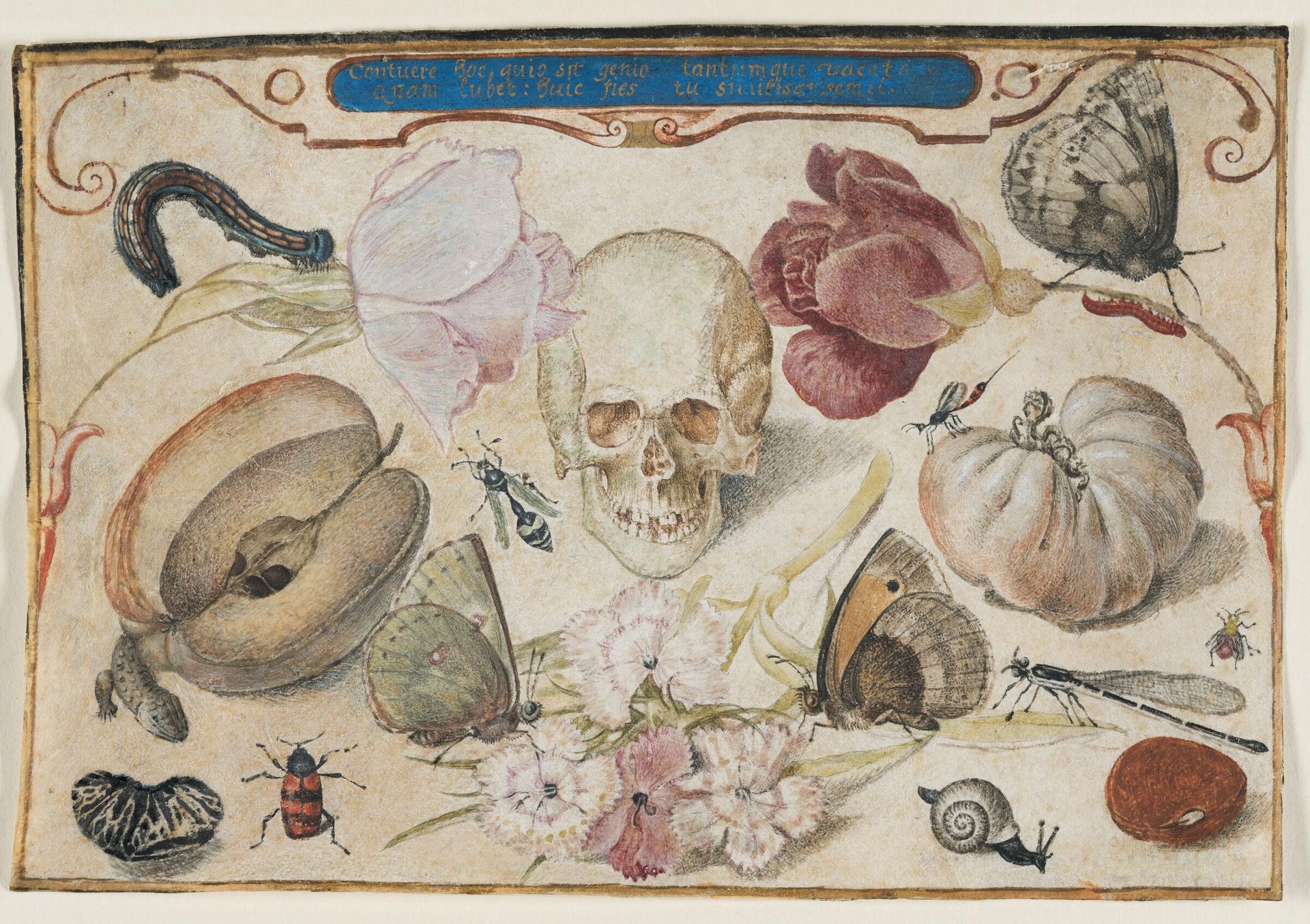
c. 16th century
Vanitas


Listen to curator's interpretation
Curatorial notes
Curator: Here we have Joris Hoefnagel's "Vanitas," a work whose creation date remains unknown. It's a small piece, about 11 by 16 centimeters, currently residing at the Harvard Art Museums. Editor: The immediate impression is quite intense. It's so meticulously rendered, yet crowded with symbols of decay. The skull, of course, dominates, but all the insects and fading flowers contribute to a sense of transience. Curator: The vanitas tradition was very much embedded in the social and moral concerns of the time. These images served as reminders of mortality, cautioning against the pursuit of earthly pleasures. Editor: Absolutely. The arrangement creates a powerful visual statement. The sharp, contrasting colors, the interplay of light and shadow, all emphasize the fragility of life against the inevitable pull of death. Curator: It's a potent piece, encapsulating a worldview profoundly shaped by religious and philosophical contemplation. Editor: Indeed, a remarkable fusion of aesthetic skill and cultural commentary.