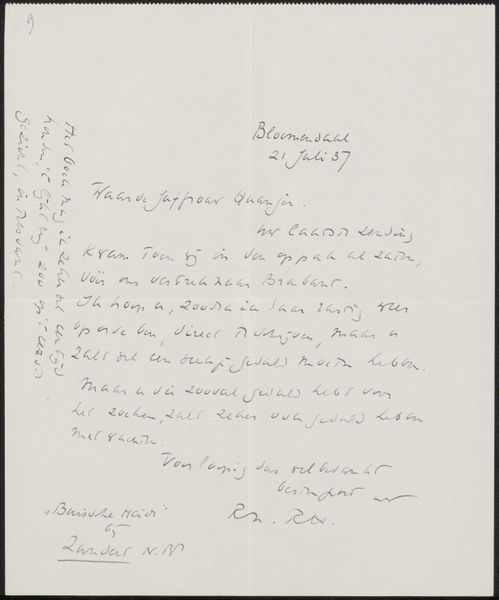
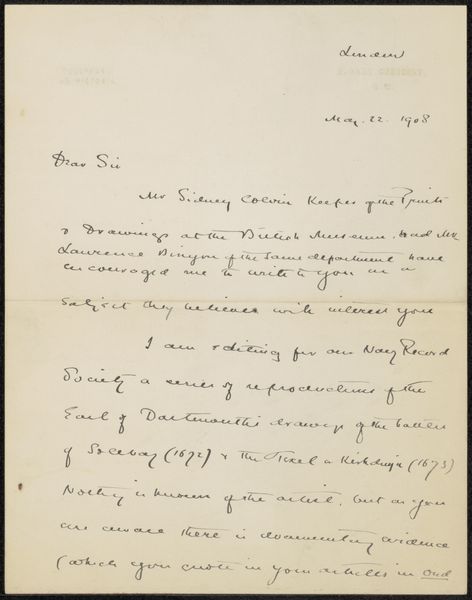
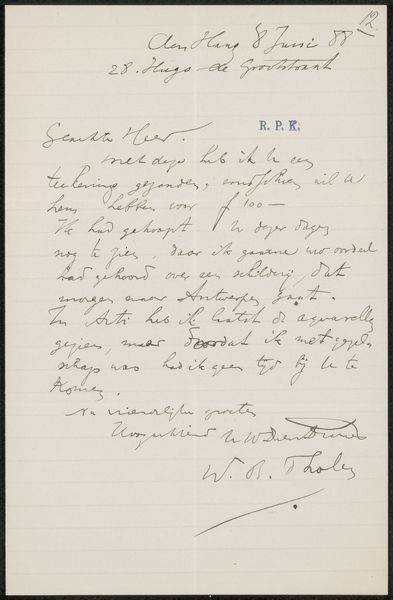
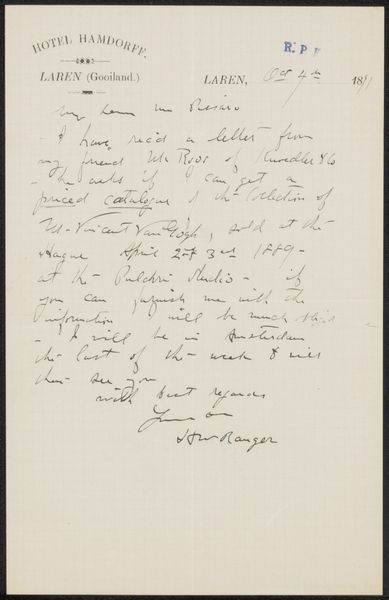
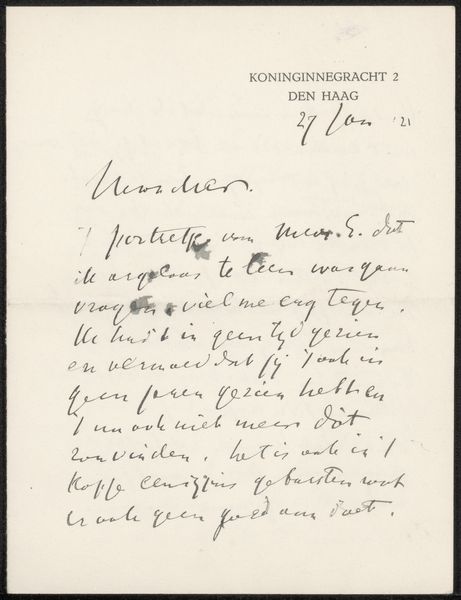
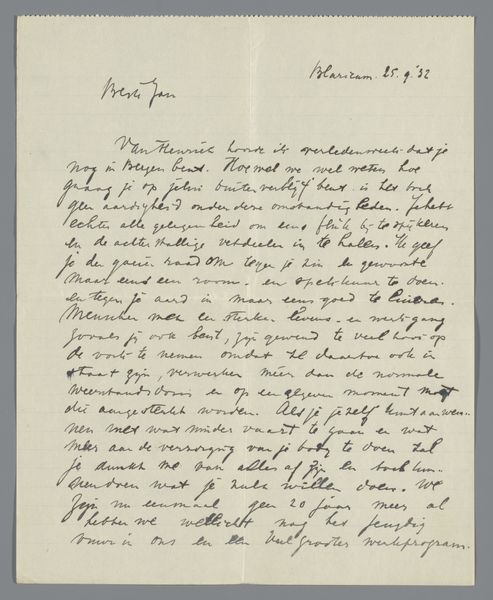
drawing, paper, ink
#
drawing
#
paper
#
ink
#
modernism
Copyright: Rijks Museum: Open Domain
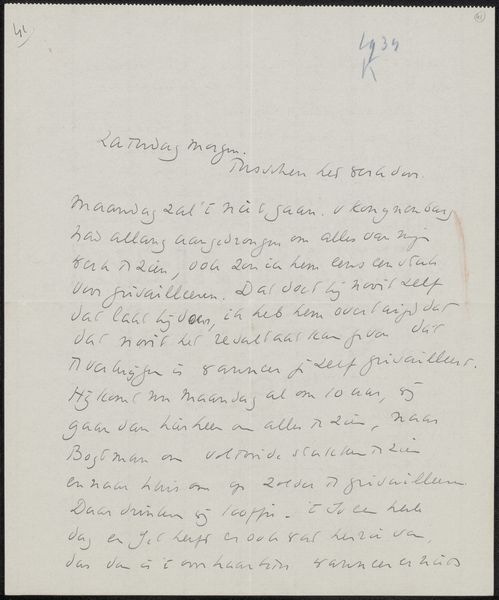
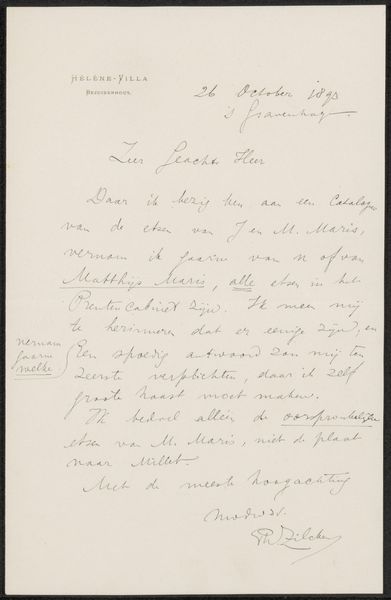
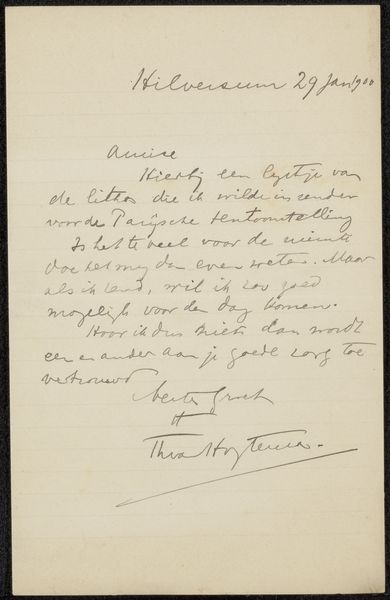
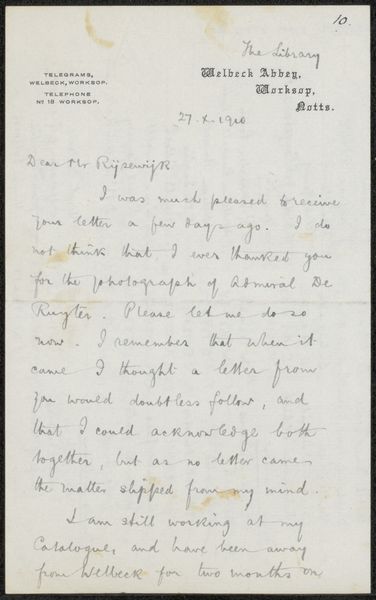
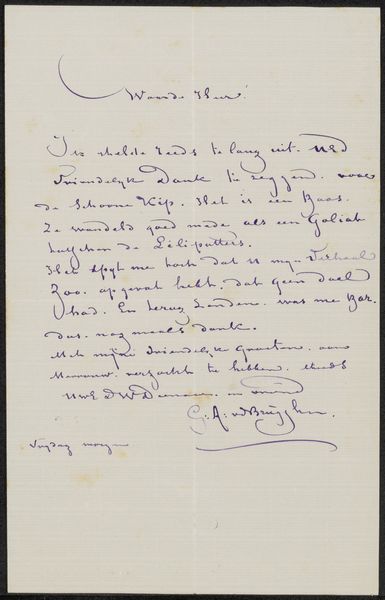
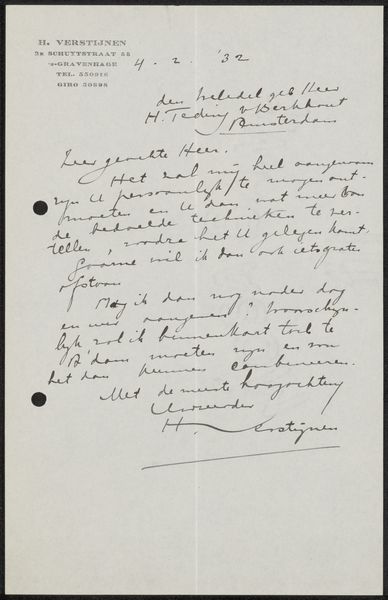
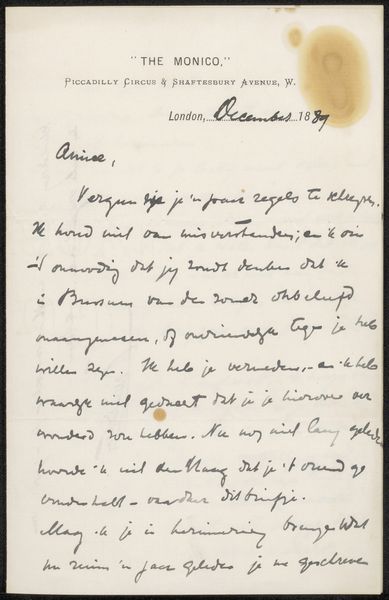
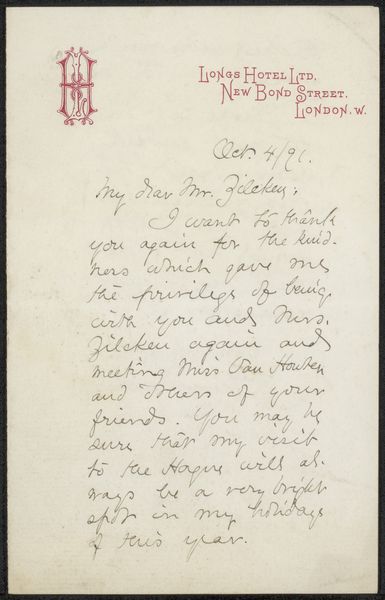
Editor: Here we have "Brief aan Pieter Haverkorn van Rijsewijk," possibly from 1910, executed in ink on paper. It looks like a handwritten letter. The mood is quite formal, yet intimate. I wonder, what stories do you think this artifact tells us? Curator: This isn’t just a simple note; it’s a glimpse into the networks of intellectual exchange that underpinned early modernism. Consider the date – possibly 1910. Modernism was coalescing. This letter points to a web of people actively researching, sharing, and interpreting emerging art forms. Who were these people and what circles were they a part of? Editor: So it's a node in a network? Curator: Precisely! "Whitechapel Catalogue” tells me that someone connected to this correspondence was deeply interested in that gallery. The gallery served a diverse community and frequently engaged with socially conscious art, particularly work addressing class and immigration. Is this letter evidence of the ways those emerging political themes and their potential influence might ripple outwards into society at large? Editor: That's fascinating! The letter seems to speak of sharing information from this catalogue and forwarding this information in a matter of days, so this correspondence felt fairly urgent. Curator: It really highlights the importance of these individuals connecting with one another and seeing these collections firsthand. If this letter reveals anything, it is how distribution and collaboration played significant roles in defining what was to become an established aesthetic for future generations of artists. Editor: I see. It wasn't just about individual genius, but about the conversations and shared knowledge that built something new. Thanks. I had thought it was simply an artifact with sentimental value, but I now realize the letter provides critical historical and cultural contexts for understanding a critical shift in art history.
Comments
No comments
Be the first to comment and join the conversation on the ultimate creative platform.
 Collect
 React
React Comment
More like this