About this artwork
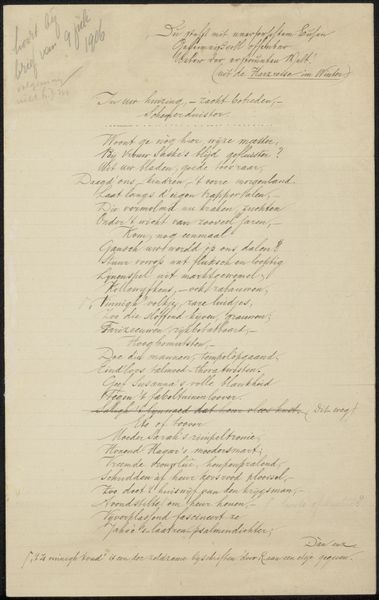
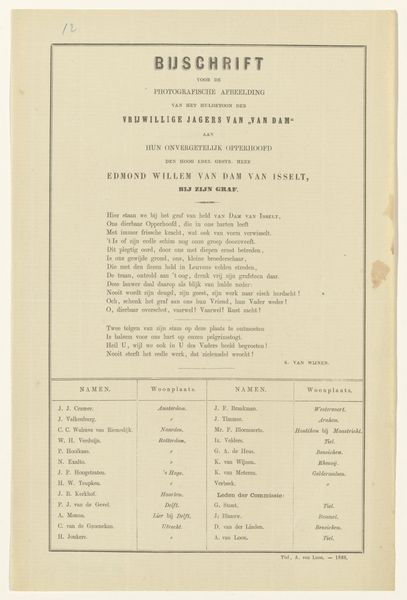
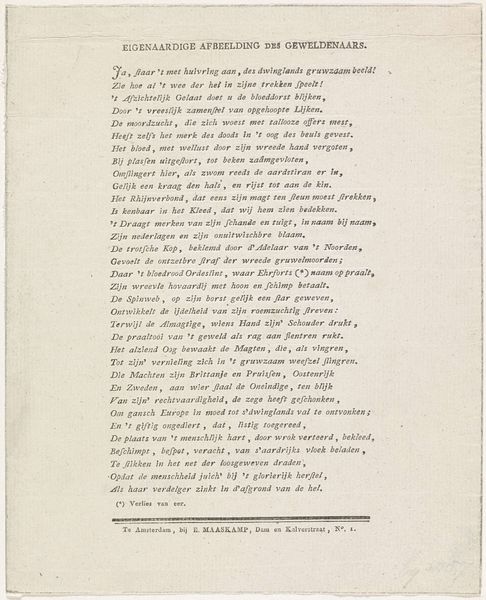
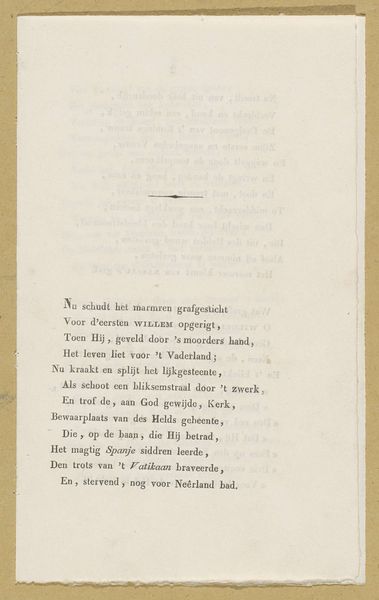
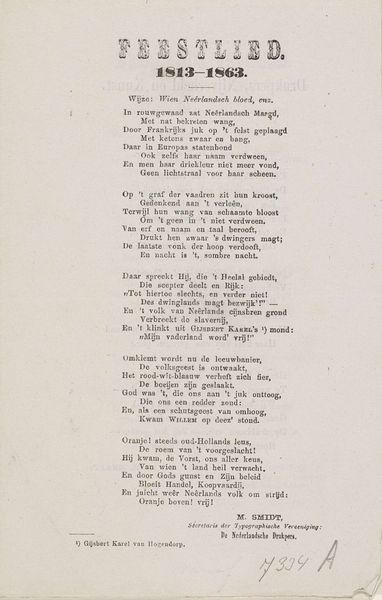
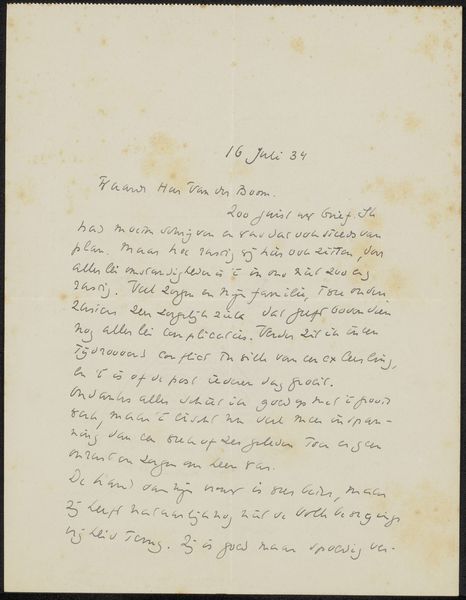
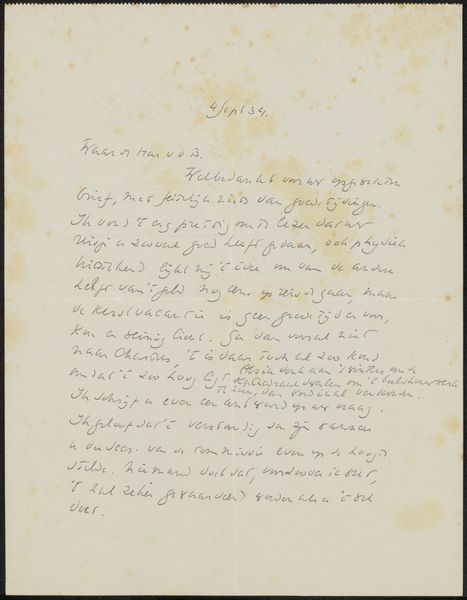
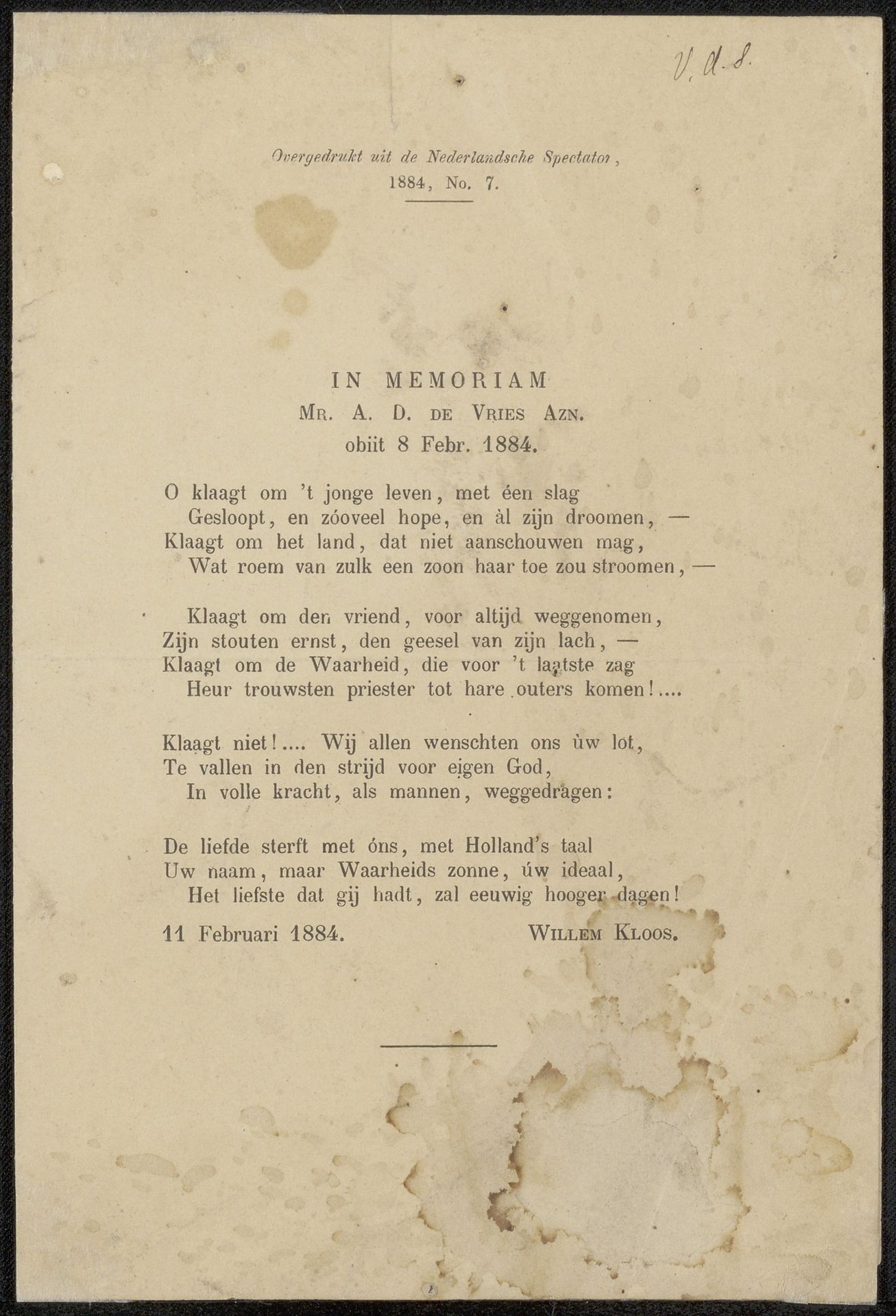
This commemorative poem was written by Willem Kloos in 1884. It is a lament for the passing of A. D. de Vries. Note the cyclical recurrence of lamentation and idealized hope. The poem invokes a shared sorrow, yet rises to the "Waarheids zonne", or sun of truth, to transcend individual loss, offering solace in the eternal. This idea of eternal return reminds me of Nietzsche, and even earlier, to ancient Greek tragedy, where mourning is ritualized, transforming personal grief into collective catharsis. Consider how the act of mourning can serve as a vital cultural function. By transforming loss into something beautiful or meaningful, we grapple with mortality, and give shape to the intangible. Like a potent dream, poetry channels our deepest fears and highest aspirations. The poem's cyclical structure mirrors this transformative process, inviting us to ponder the enduring power of memory and the resilience of the human spirit.
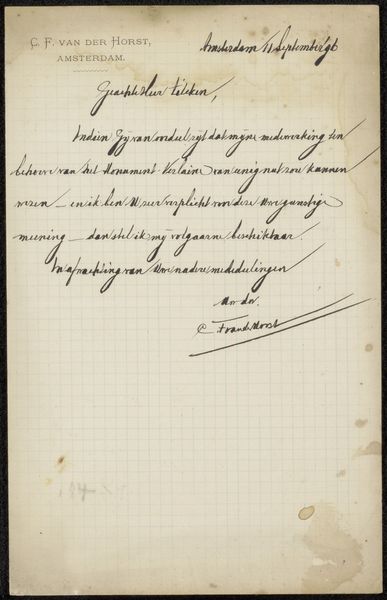
In memoriam Adrianus Daniël de Vries uit archief Jan Veth
Possibly 1884

Artwork details
- Copyright
- Rijks Museum: Open Domain
Comments
Be the first to share your thoughts about this work.
About this artwork
This commemorative poem was written by Willem Kloos in 1884. It is a lament for the passing of A. D. de Vries. Note the cyclical recurrence of lamentation and idealized hope. The poem invokes a shared sorrow, yet rises to the "Waarheids zonne", or sun of truth, to transcend individual loss, offering solace in the eternal. This idea of eternal return reminds me of Nietzsche, and even earlier, to ancient Greek tragedy, where mourning is ritualized, transforming personal grief into collective catharsis. Consider how the act of mourning can serve as a vital cultural function. By transforming loss into something beautiful or meaningful, we grapple with mortality, and give shape to the intangible. Like a potent dream, poetry channels our deepest fears and highest aspirations. The poem's cyclical structure mirrors this transformative process, inviting us to ponder the enduring power of memory and the resilience of the human spirit.
Comments
Be the first to share your thoughts about this work.