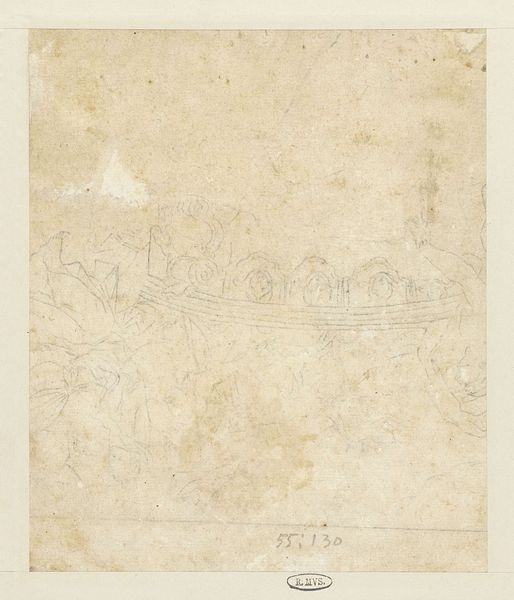
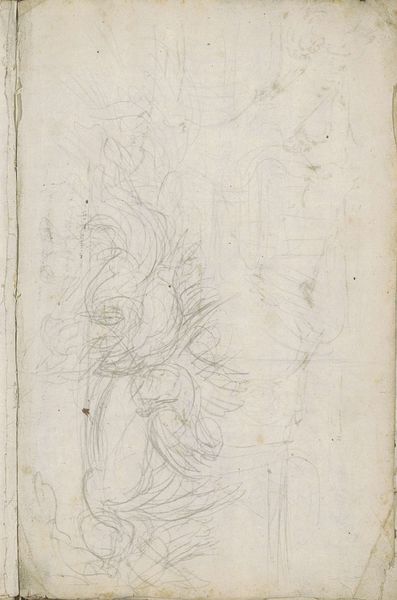
drawing, paper, pencil
#
drawing
#
light pencil work
#
landscape
#
figuration
#
paper
#
romanticism
#
pencil
Dimensions: height 307 mm, width 212 mm
Copyright: Rijks Museum: Open Domain
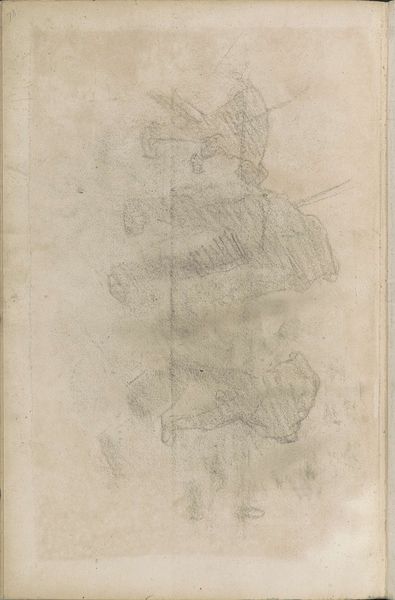
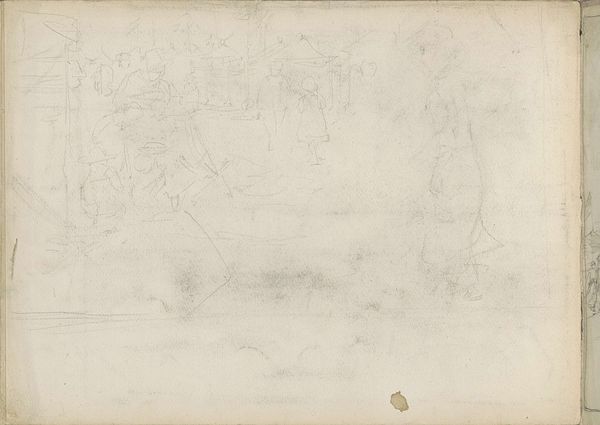
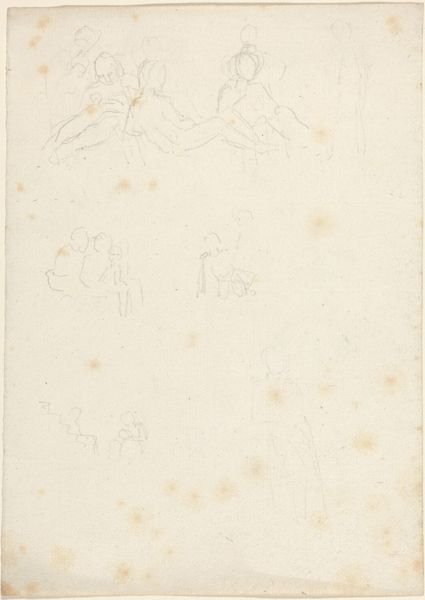
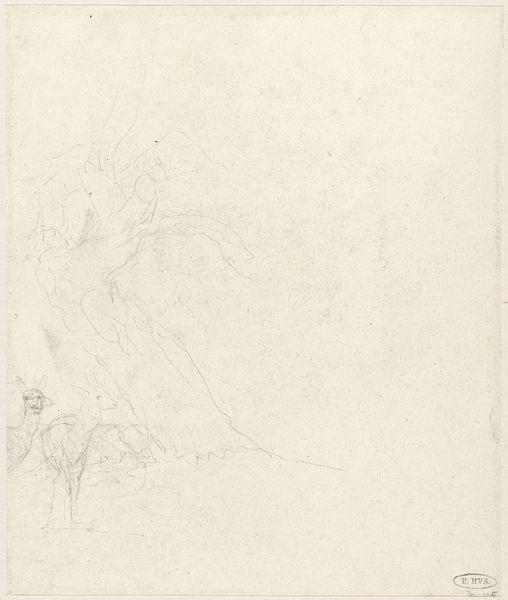
Editor: Here we have Pieter van Loon's "Sketch of a Herald with a Horse" from 1843, a delicate pencil drawing on paper. It's so faint, almost ghostly. What draws your attention when you look at it? Curator: I'm immediately struck by the artist's choice of pencil, a readily available and inexpensive material. It democratizes the artistic process, shifting away from the exclusive realm of oil paints and grand narratives. Think about the labor involved – the careful layering of graphite to create form and shadow, a deliberate and repetitive action. How does this impact our reading of Romanticism? Editor: That's interesting. I hadn't thought about the pencil itself as part of the meaning. I guess Romanticism is often associated with these huge, dramatic landscapes. But the humble materials seem at odds with that. Curator: Precisely. Van Loon utilizes a common medium, disrupting the hierarchy between 'high art' and everyday sketching. The paper itself becomes significant; its texture and availability inform the artwork's production. Consider the potential socio-economic context—was paper easily accessible, or did its acquisition also require negotiation? Editor: So you're saying the choice of materials isn't just aesthetic, but speaks to broader issues of access and the artist's relationship to his environment? Curator: Absolutely! And think about the subject - a herald with a horse, figures tied to communication and labor. This isn't a glorified battle scene, but a study of everyday life and its associated materials. How can we read these combined aspects? Editor: Wow, I never considered that material choices could tell you so much about an artwork and its time! Thanks! Curator: Indeed. Analyzing art through the lens of materials and production opens up new avenues for understanding its cultural significance.
Comments
No comments
Be the first to comment and join the conversation on the ultimate creative platform.
 Collect
 React
React Comment
More like this