Possibly 2008 - 2014
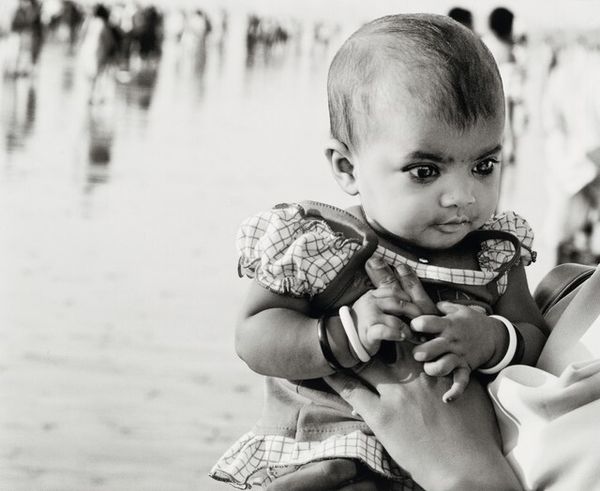
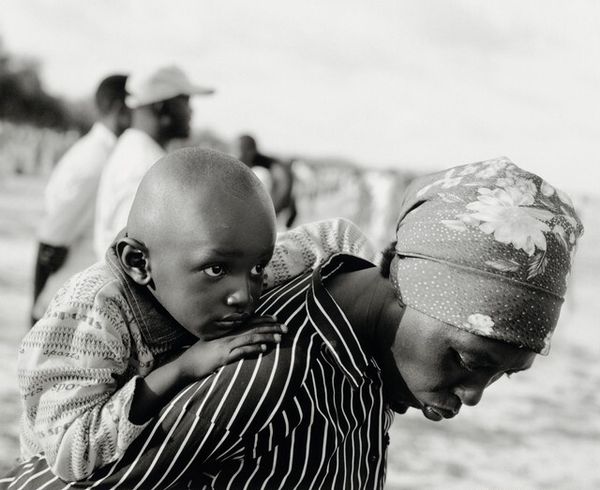
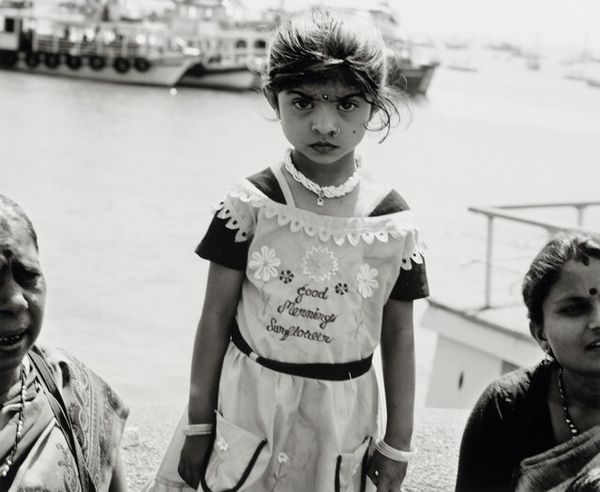
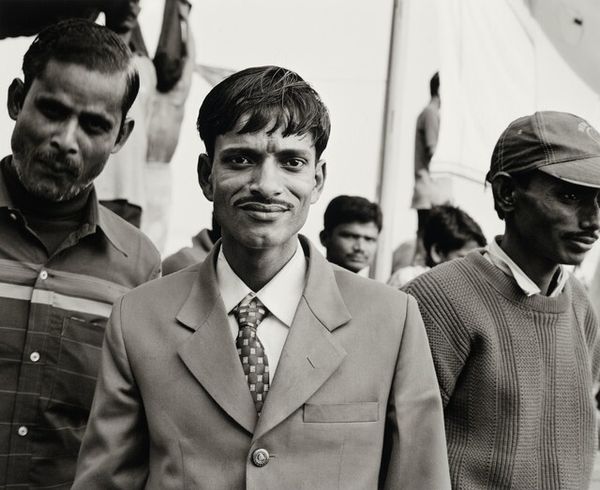
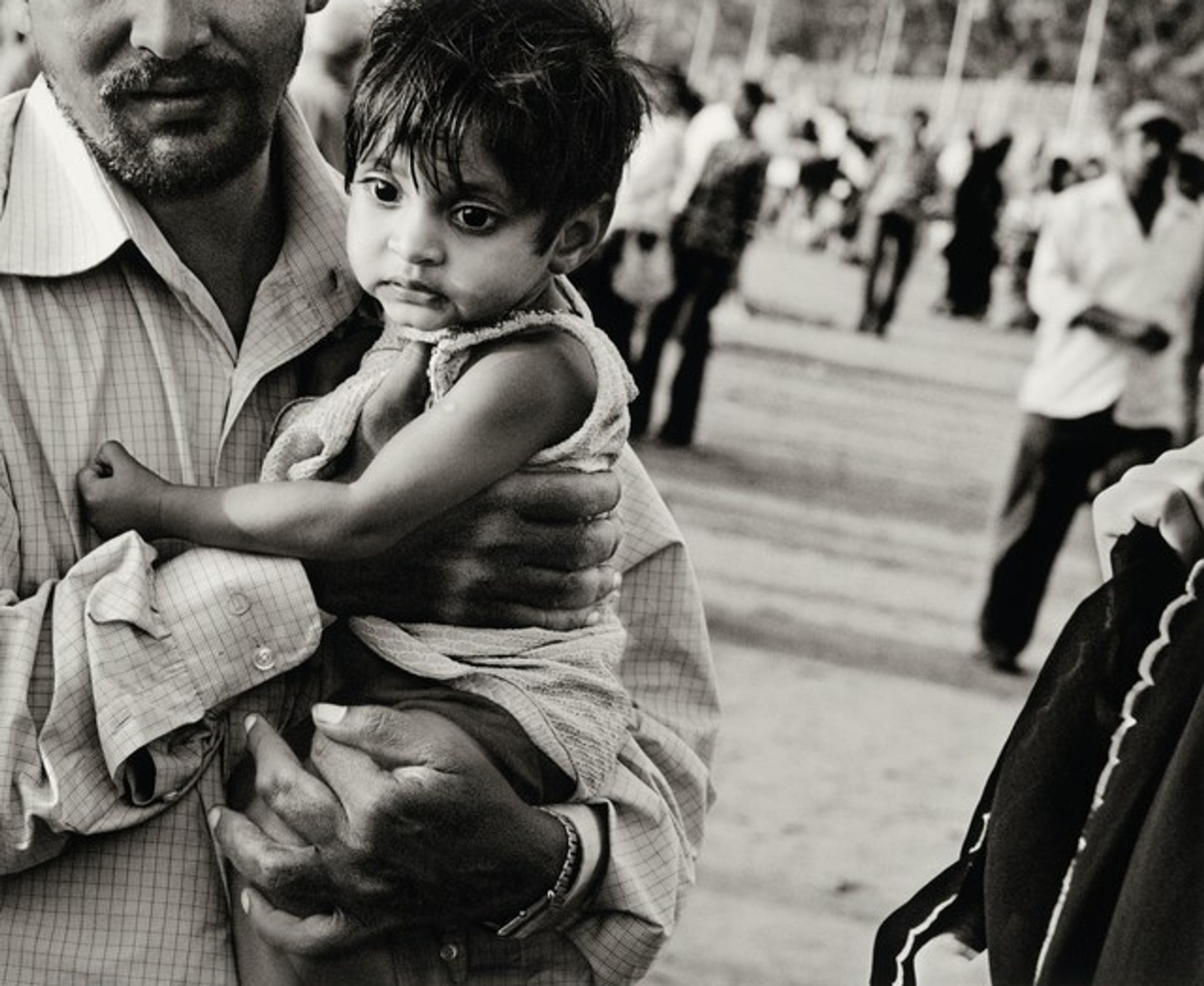
Bombay, 2008, on Juhu Beach


Listen to curator's interpretation
Curatorial notes
Editor: This photograph, “Bombay, 2008, on Juhu Beach” by Leo Rubinfien, taken sometime between 2008 and 2014, is incredibly striking. It’s a monochrome portrait of a father holding his child on a crowded beach. The texture of the man's shirt and the child's worn clothing is so vivid. What does this materiality communicate to you? Curator: Well, consider the context: Bombay, a place of immense social stratification. The black and white photography itself strips away color, forcing us to confront the raw textures and forms – the *materiality* – that you've noticed. Look at the father's worn shirt, likely mass-produced, inexpensive cotton. It speaks volumes about his socioeconomic standing, the labor conditions inherent in textile production, and the cycle of consumption. Editor: So, the everyday material becomes a signifier of larger economic forces? Curator: Precisely. And think about Juhu Beach. It's a public space, a site of leisure, yet even here, economic realities intrude. The worn clothing becomes a marker of distinction amidst the crowd, a visual shorthand for the subject’s experience within the broader societal framework. How might the choices in photographic paper, the development process, play a role in highlighting these textures? Editor: That's fascinating. I hadn’t considered how even the *making* of the photograph—the specific choices of materials in its creation—emphasizes these social divisions through texture and form. Curator: Exactly! It encourages us to question not just what we see, but how it came to be, and what materials shape its meaning. Editor: I’ll never look at a simple portrait the same way again. Thinking about the process and the materials truly opens up the image.