drawing, print, etching, ink
#
drawing
#
blue ink drawing
# print
#
etching
#
ink
#
cityscape
#
watercolour illustration
#
history-painting
#
realism
Dimensions: height 395 mm, width 327 mm
Copyright: Rijks Museum: Open Domain
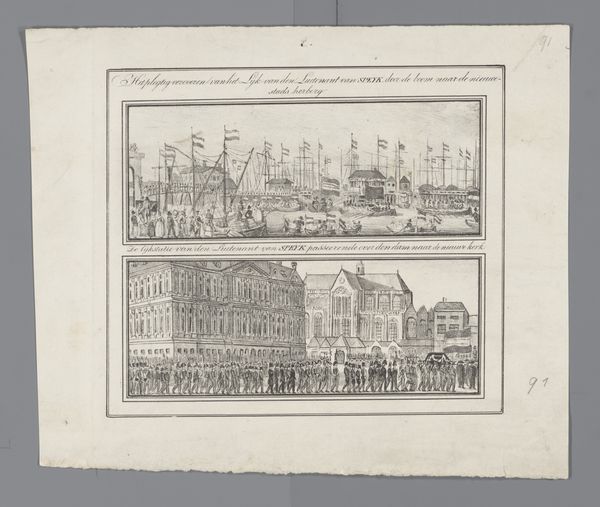
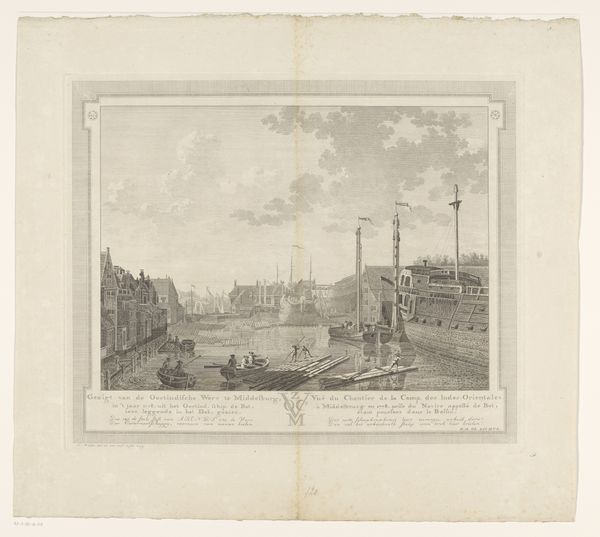
Editor: This is Jan Oortman’s print titled "Het oude stadhuis van Rotterdam / De kraan te Rotterdam", dating from 1833 to 1856. It's rendered with etching and ink, showing two Rotterdam scenes, each framed distinctly. The quaint portrayal really strikes me; what are your initial thoughts? Curator: Immediately, I'm drawn to how the composition contrasts the civic grandeur of the old city hall with the bustling port activity. Buildings rendered in yellows, but framed separately. This juxtaposition speaks volumes about Rotterdam’s identity being shaped both by established authority and commercial power, right? What do you see in the visual symbolism? Editor: I notice the crane is such a prominent figure, almost personified. Curator: Precisely. The crane as an architectural and functional element transforms into a visual emblem of trade. Think about it: Rotterdam literally rebuilding itself through maritime commerce! Also, consider the upward reaching spire against the gantry’s reaching arm - What’s evoked? Editor: Maybe aspiration and labour? One pointing to the heavens, the other physically moving the city's wealth? Curator: Yes, and note how the artist chose to depict them together. This wasn't just documentary; it’s about visually constructing the city's narrative of ambition and industry through symbolically loaded images for future inhabitants. How might cultural memory be formed here? Editor: The choice of scenes, especially how ordinary the crane image is, anchors the grand history in everyday life. Later generations looking at this would find meaning in the past. Thank you for pointing that out! Curator: My pleasure! Images really do contain layers and layers of memory and meaning.
Comments
No comments
Be the first to comment and join the conversation on the ultimate creative platform.
 Collect
 React
React Comment
More like this