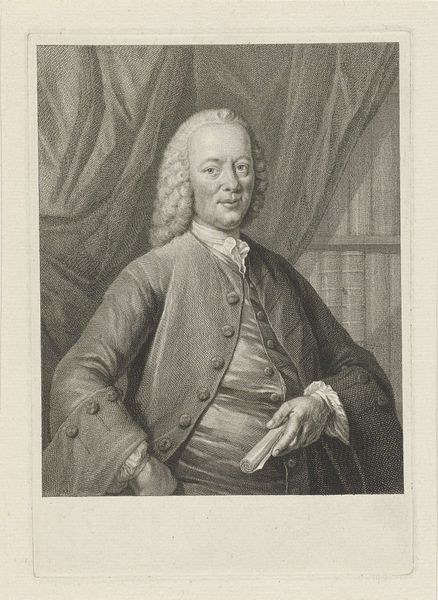
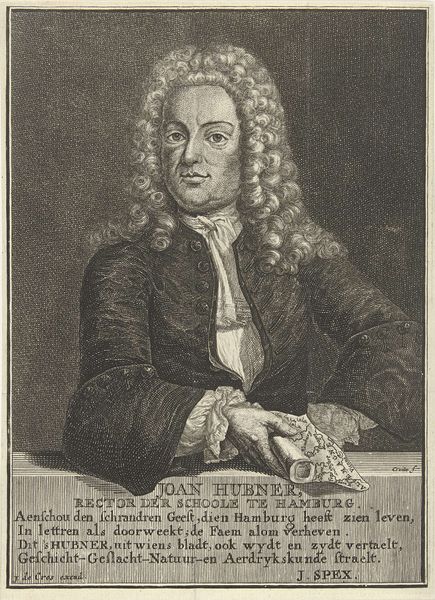
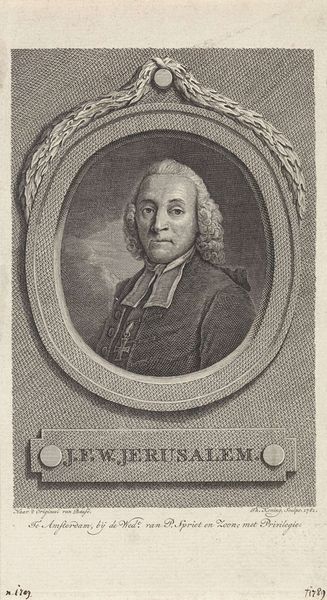
print, engraving
#
portrait
#
baroque
# print
#
old engraving style
#
portrait reference
#
line
#
engraving
Dimensions: height 182 mm, width 117 mm
Copyright: Rijks Museum: Open Domain
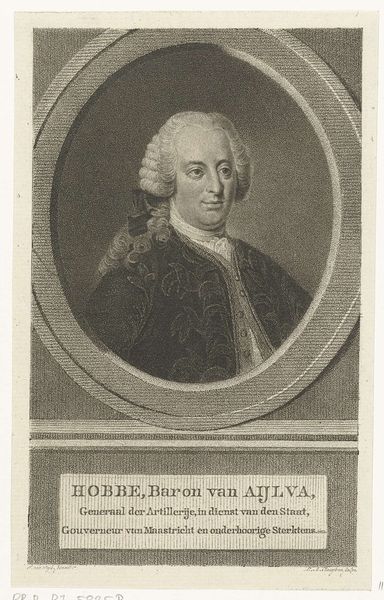
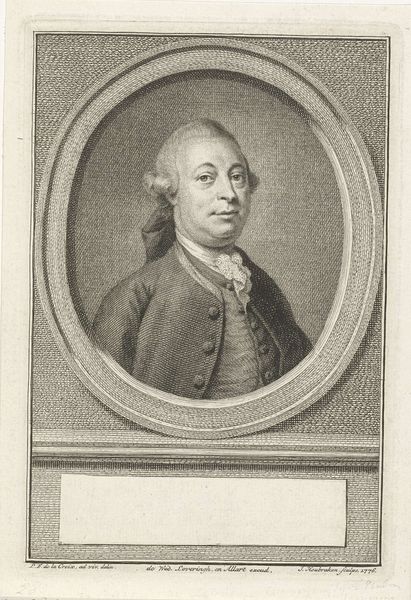
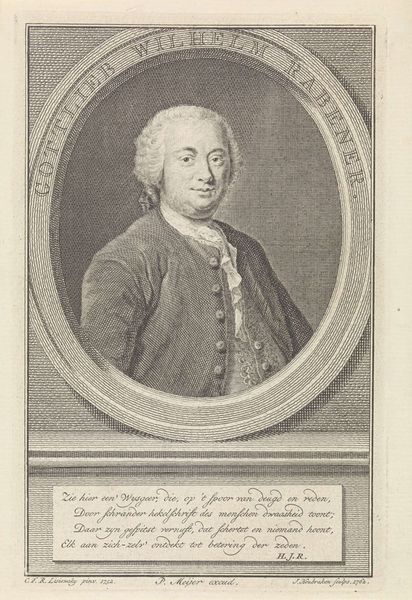
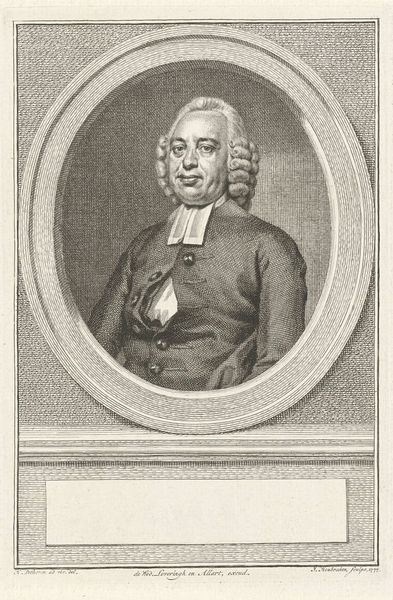
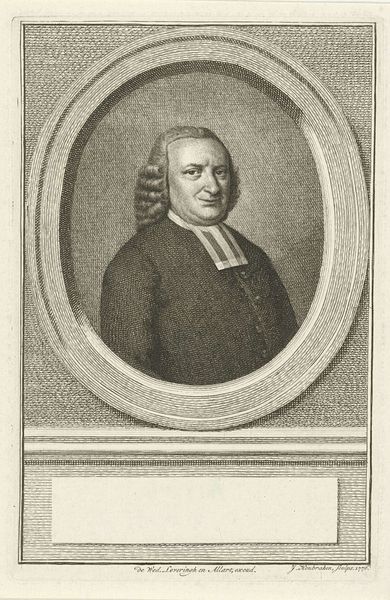
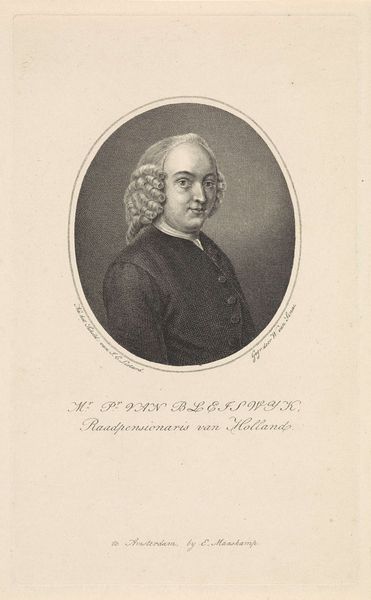
Curator: The direct gaze in this portrait is really compelling. It feels very immediate, almost confrontational despite being rendered in delicate lines. Editor: Indeed. What we’re looking at is Jacob Houbraken's “Portret van Jacob Gillis.” Created sometime between 1749 and 1759, it's an engraving, a type of print, currently held at the Rijksmuseum. Curator: I’m interested in how that directness shapes our reading of Jacob Gillis. I notice how the frame isolates him, and that gaze almost challenges our own separation from his space. Does the historical context shed any light on how we might have seen this image when it was made? Editor: Certainly. Consider the social function of portraiture in the 18th century. It was about asserting status and constructing identity. The subject, Jacob Gilles, was the Grand Pensionary of Holland. Therefore, Houbraken’s engraving serves as a visual statement of authority and respectability. Notice his clothes, the way he carries himself. All those markers would've signaled prestige to contemporaries. Curator: And the wig! An absolute forest of white curls. The wig serves as more than fashion. It's a powerful visual cue communicating position and affluence. Editor: Absolutely, although prints like these also served a very specific purpose. Before photography, engravings disseminated images of important people. It allowed their likeness to circulate widely, almost democratizing access, if not necessarily ownership, of their image. Curator: It also makes you wonder about the source image. I assume Houbraken based this on a painting, probably a larger and more elaborate one? Editor: Very likely. These prints are often interpretations, designed for a different market and a wider audience than a single painted portrait could reach. Consider them early forms of mass media. Curator: The act of translation itself interests me – the painter to the engraver. The hand of the artist transforming it all through material and symbol. Editor: It is a compelling reminder that art and image always participate in, reflect, and construct social realities. Curator: A sentiment I thoroughly endorse. This piece captures something profound about status, representation, and, ultimately, the cultural life of images.
Comments
No comments
Be the first to comment and join the conversation on the ultimate creative platform.
 Collect
 React
React Comment
More like this