1834
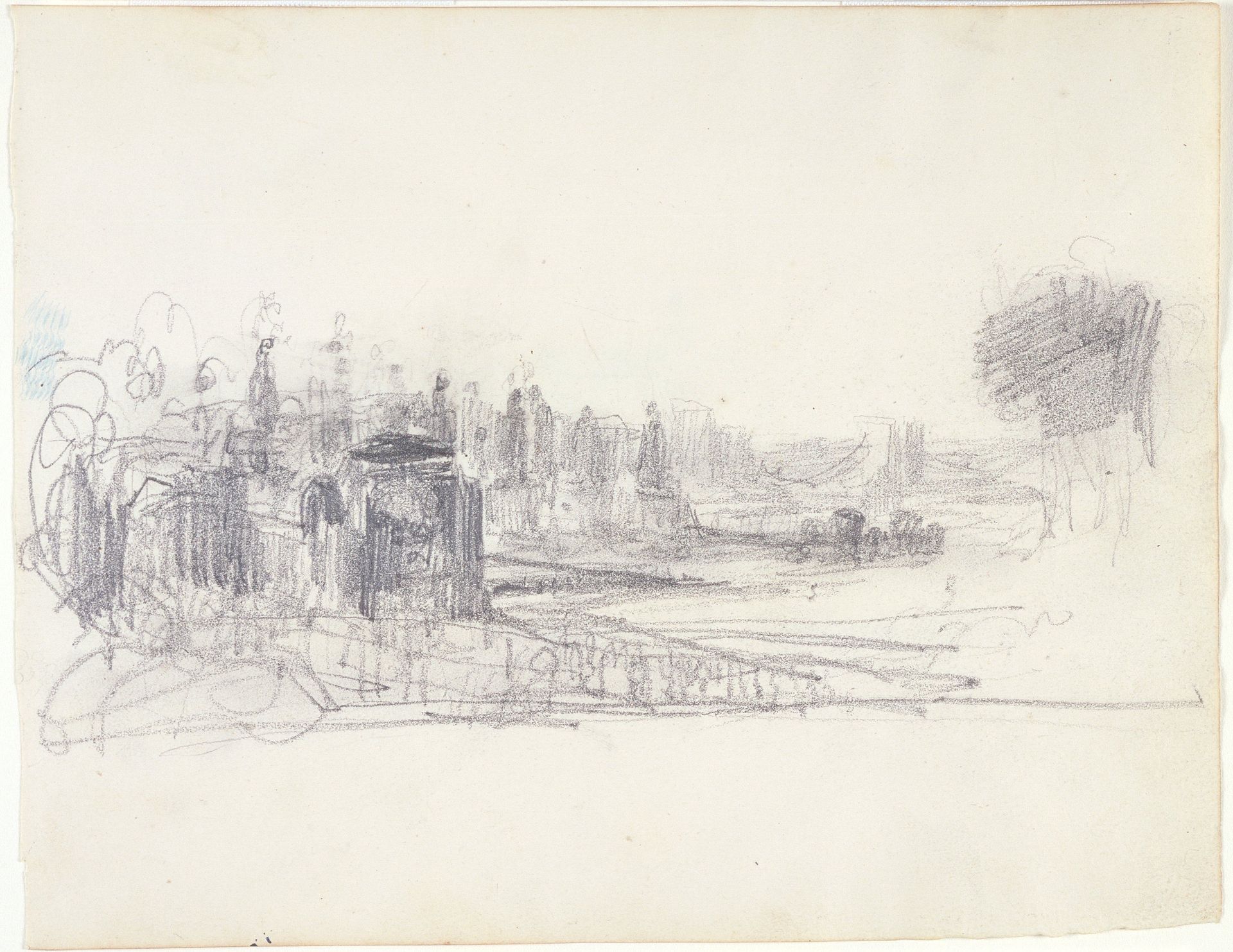
Landscape


Listen to curator's interpretation
Curatorial notes
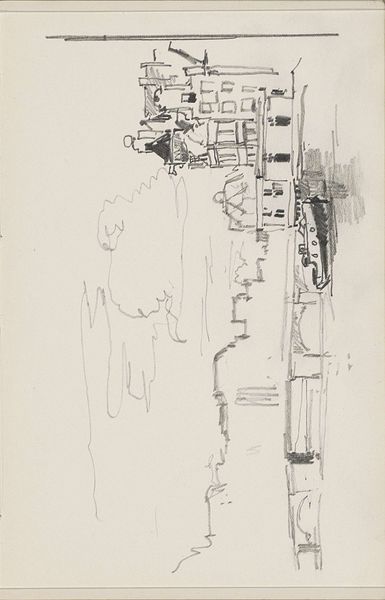
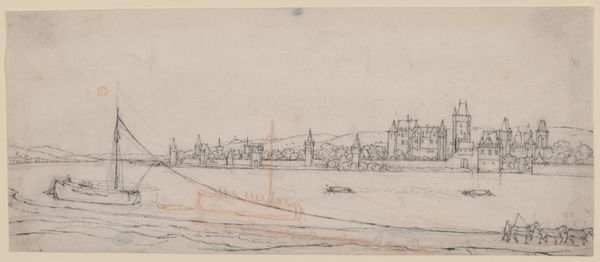
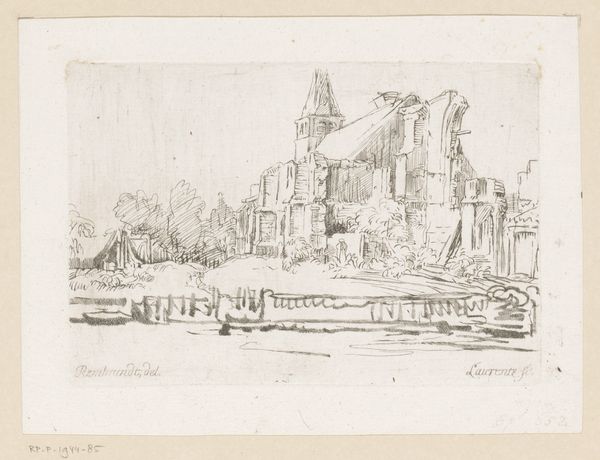
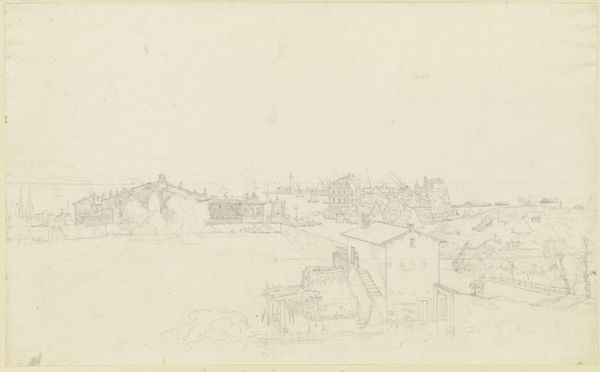
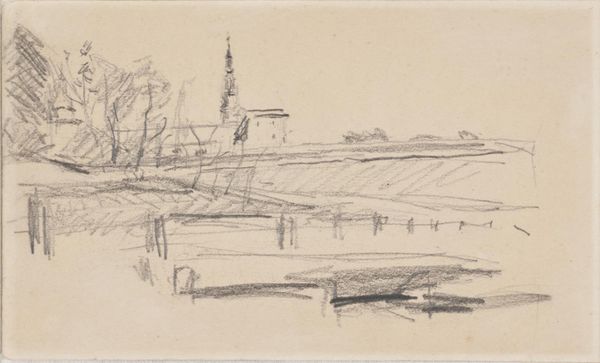
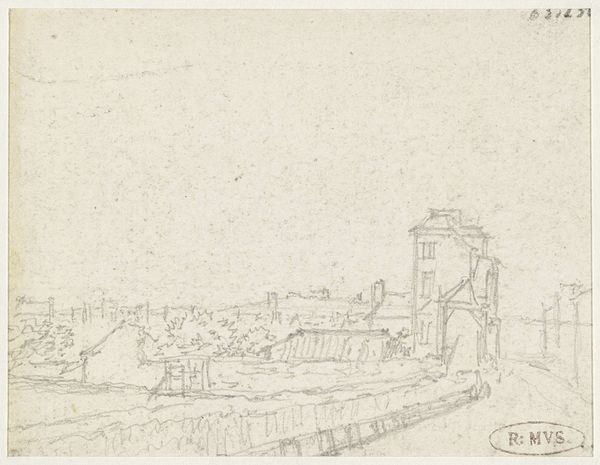
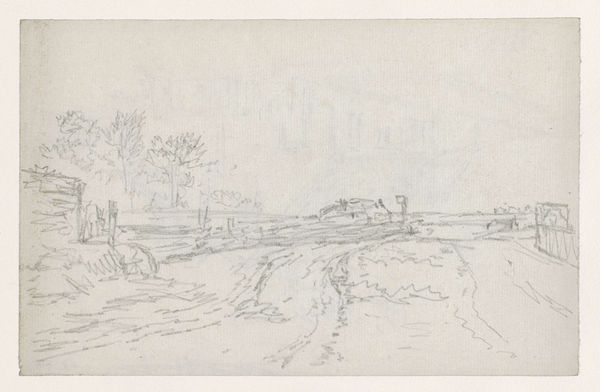
Editor: This is Theodore Rousseau's "Landscape," a pencil drawing from 1834, currently residing at the Minneapolis Institute of Art. It feels...ethereal, almost a dreamscape fading at the edges. What can you tell me about this work? Curator: Well, dreams and landscapes aren’t that different from each other, wouldn't you say? Look at the symbols emerging—almost struggling—from the paper. We have a suggestion of architecture, perhaps civilization itself. But is it rising or crumbling? Look closely at the tree, a gathering of emotional shading more than arboreal realism. Where do you imagine the landscape is located and what meaning could nature in this state have to people observing it? Editor: I hadn't considered the duality. It does feel transitional, doesn’t it? It could be anywhere, I guess, and nowhere in particular; it's as if this single tree represents solitude within civilization and wilderness and taming merging together as memory. It seems like more than just a depiction of nature; it's reflecting something deeper. Curator: Precisely. In Romanticism, nature becomes a mirror to the soul. Landscapes weren’t simply pretty scenes, they echoed emotional and psychological states. Notice how Rousseau uses the pencil almost as if he’s sketching the memory of a place, softened, with a kind of melancholy baked in. In which ways can memory and its distortion influence not only a person´s perception but their sense of belonging? Editor: It's fascinating how a simple pencil sketch can carry so much cultural weight. The way you described memory actually reshaped how I interpreted the buildings depicted. I came here for an understanding of the artwork and it shifted me towards cultural context and emotional resonance. Curator: And perhaps also that art carries symbols from shared experience and these can always lead us toward better understanding.