About this artwork
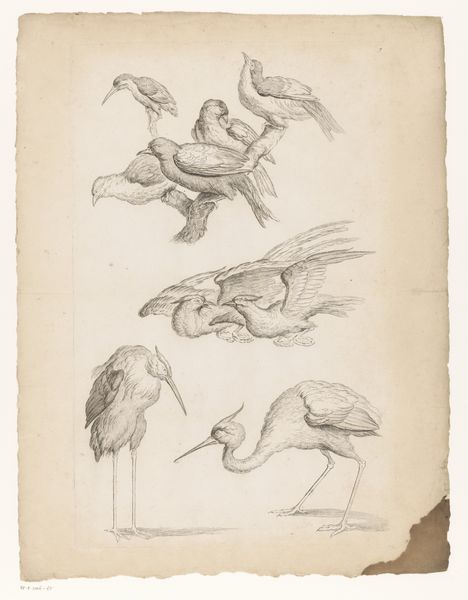
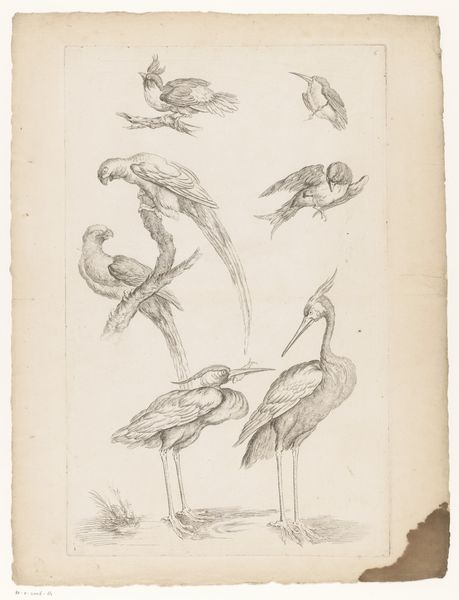
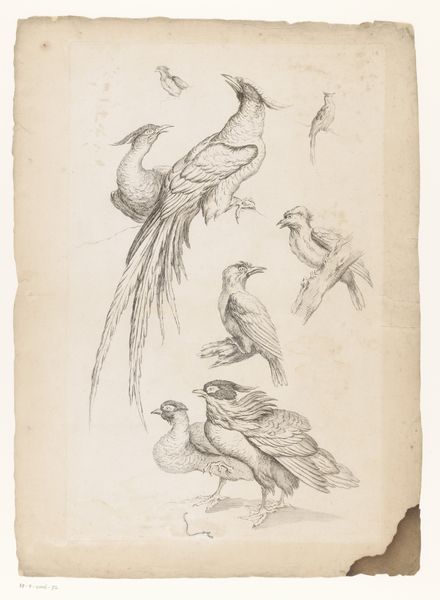
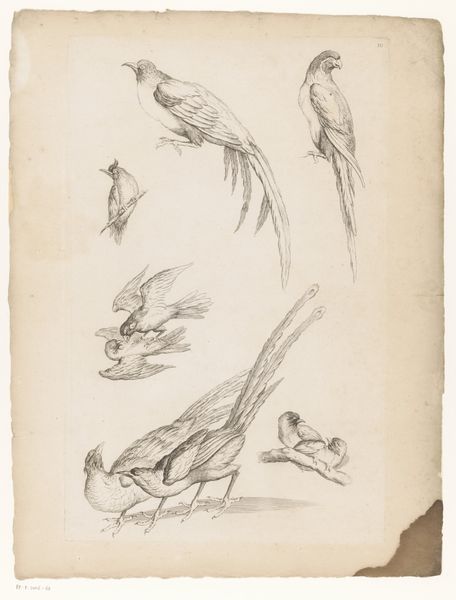
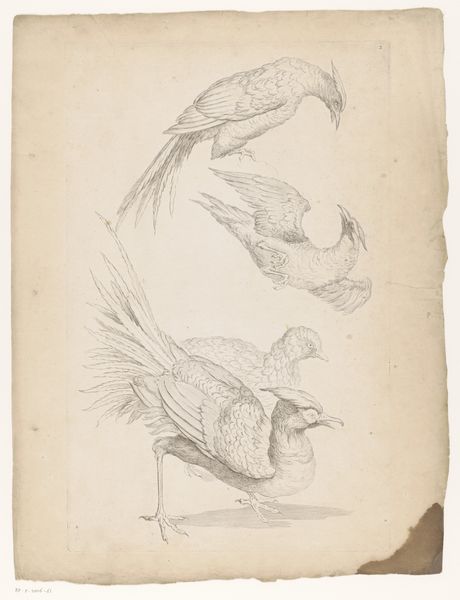
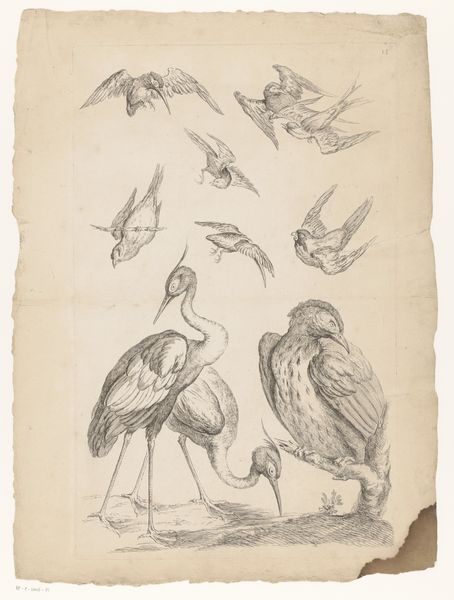
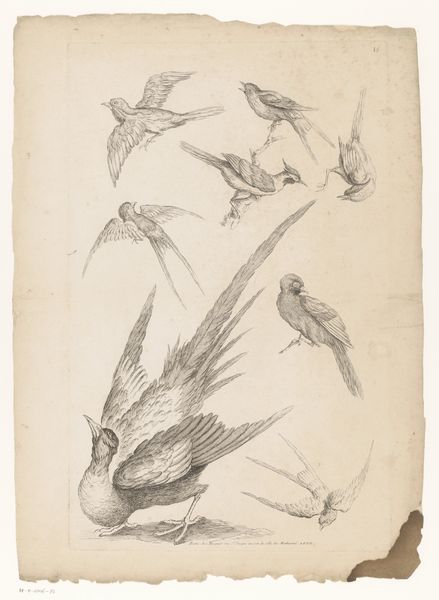
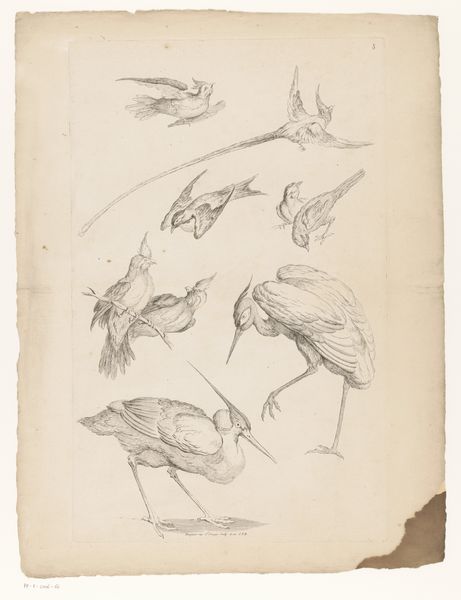
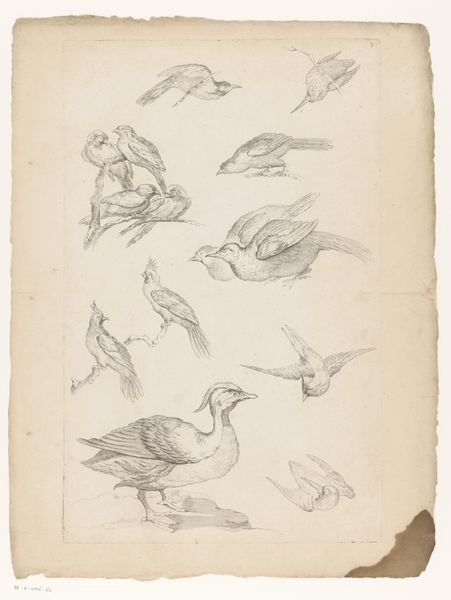
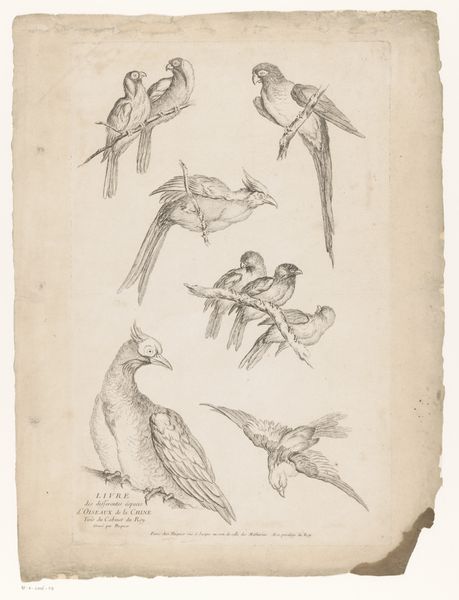
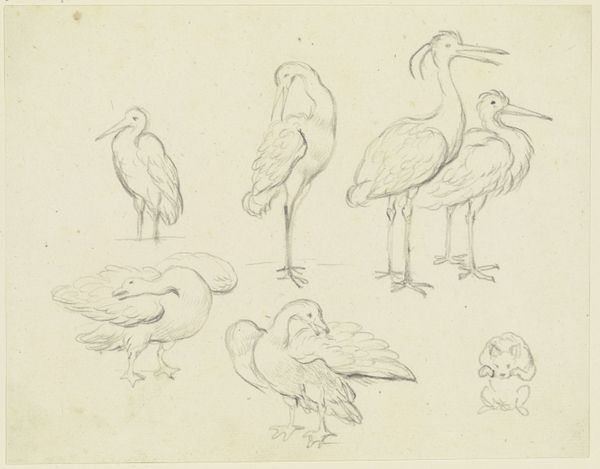
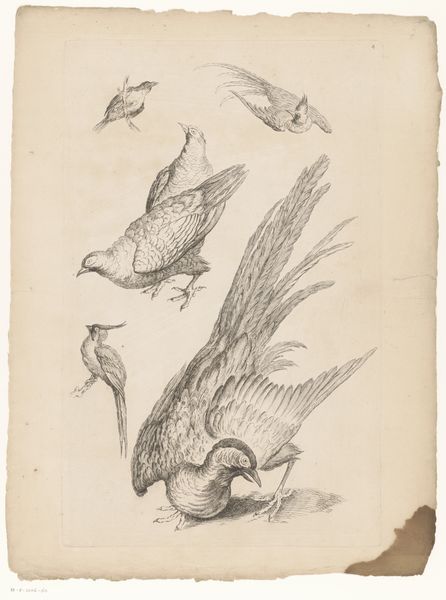
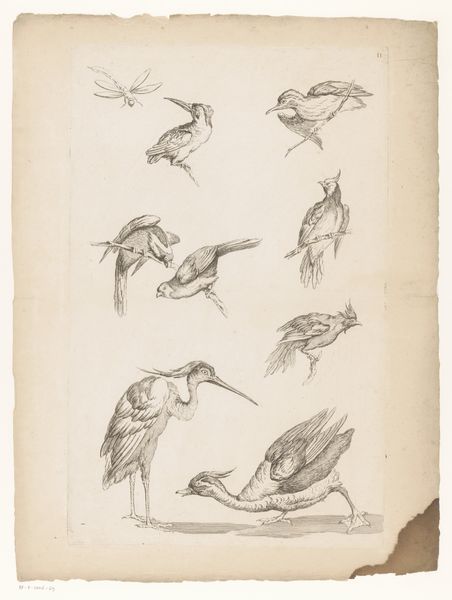
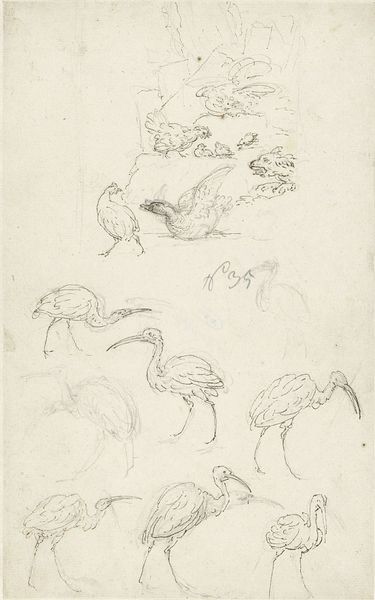
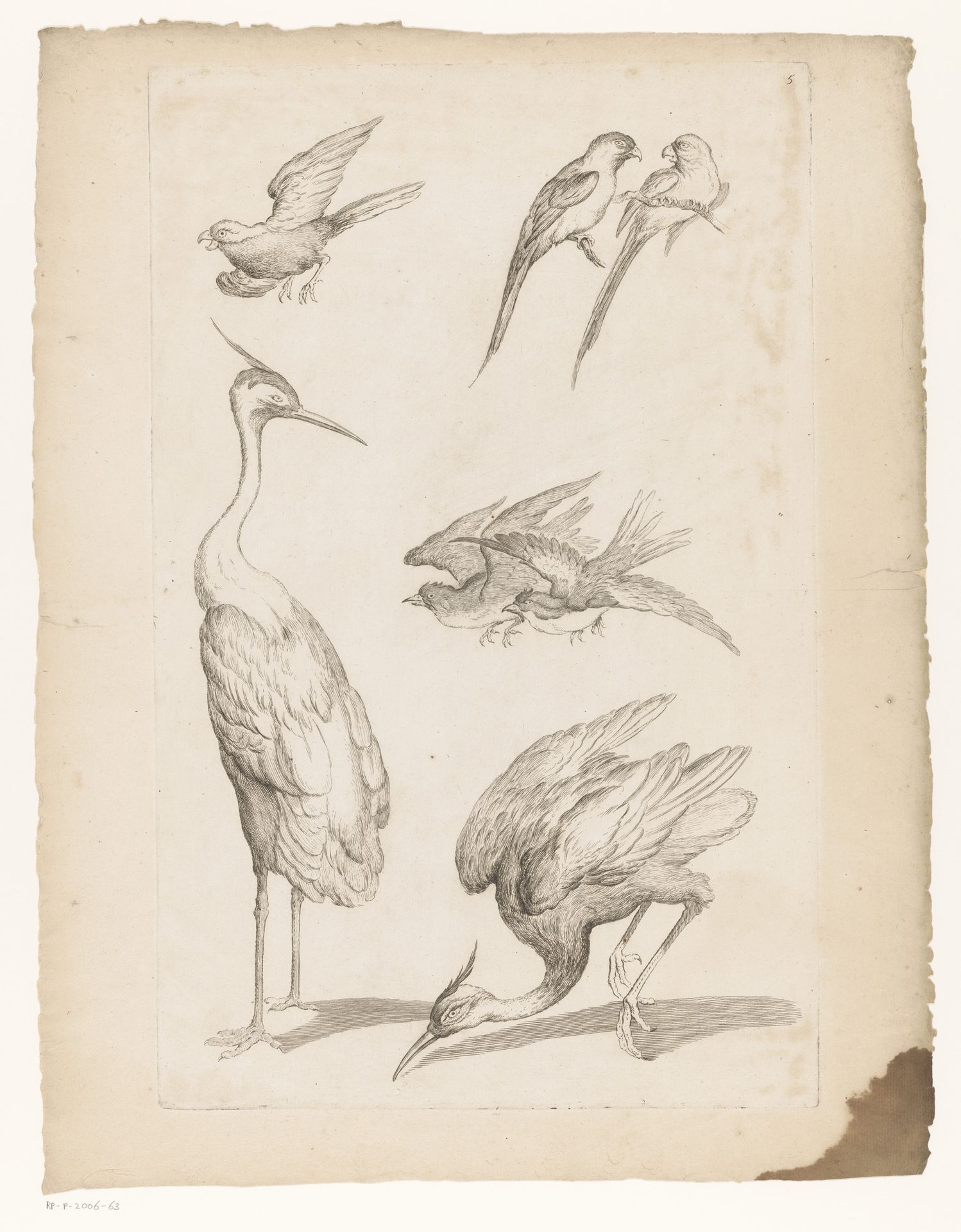
Gabriel Huquier made this drawing of seven Chinese birds, including herons and parrots, sometime before 1772. The composition is organised as a collection of studies, each bird meticulously rendered in delicate lines and subtle shading, against the flatness of the page. Huquier's arrangement invites us to consider the taxonomy of form, the relationship between the particular and the general. The absence of colour directs our attention to the structure inherent in the birds’ anatomy, to the variations in posture, and to the interplay of line and space. Each bird occupies its domain, yet their co-presence on the sheet suggests a unified ecosystem. Consider how the artist destabilizes the traditional hierarchy between art and nature. By using a seemingly objective approach, Huquier implies a deeper engagement with the systems of representation that govern how we perceive and classify the world. Ultimately, this drawing serves not only as an aesthetic object but also as an essay on the act of observation.
Zeven Chinese vogels, waaronder reigers en papegaaiachtigen
1742 - 1750

Gabriel Huquier
1695 - 1772Location
RijksmuseumArtwork details
- Medium
- drawing, paper, ink, pen
- Dimensions
- height 540 mm, width 343 mm
- Location
- Rijksmuseum
- Copyright
- Rijks Museum: Open Domain
Tags
Comments
Share your thoughts
About this artwork
Gabriel Huquier made this drawing of seven Chinese birds, including herons and parrots, sometime before 1772. The composition is organised as a collection of studies, each bird meticulously rendered in delicate lines and subtle shading, against the flatness of the page. Huquier's arrangement invites us to consider the taxonomy of form, the relationship between the particular and the general. The absence of colour directs our attention to the structure inherent in the birds’ anatomy, to the variations in posture, and to the interplay of line and space. Each bird occupies its domain, yet their co-presence on the sheet suggests a unified ecosystem. Consider how the artist destabilizes the traditional hierarchy between art and nature. By using a seemingly objective approach, Huquier implies a deeper engagement with the systems of representation that govern how we perceive and classify the world. Ultimately, this drawing serves not only as an aesthetic object but also as an essay on the act of observation.
Comments
Share your thoughts