

1891
Antoine-Laurent de Lavoisier (1743-1794)


Listen to curator's interpretation
Curatorial notes
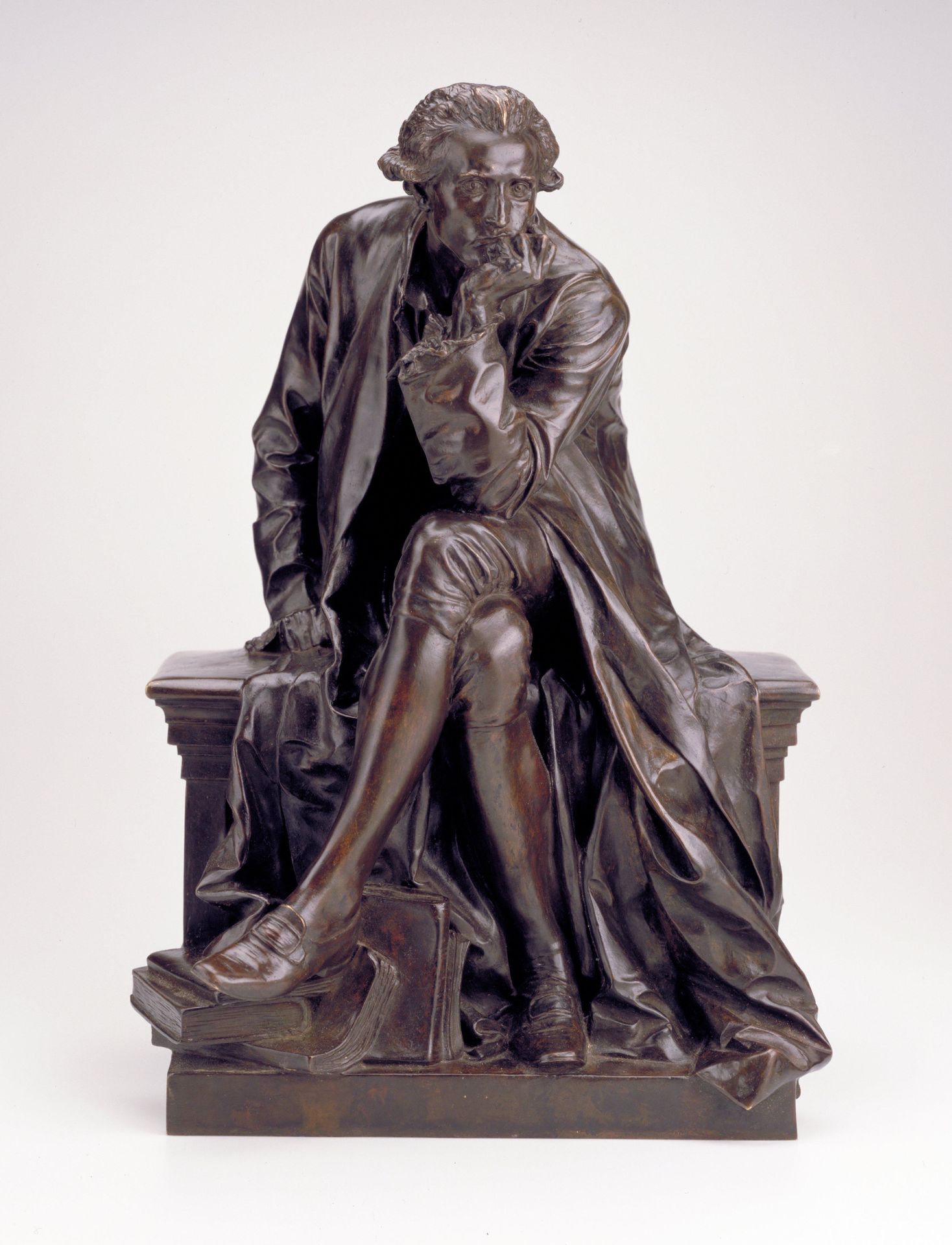
Editor: This is Aimé-Jules Dalou's bronze sculpture of Antoine-Laurent de Lavoisier, created in 1891. He looks so contemplative, almost burdened, sitting there with his hand to his face. What's your interpretation of this work? Curator: This piece is powerful because it captures Lavoisier, a key figure of the Enlightenment, just a few years before his execution during the French Revolution. The pose conveys deep thought, yes, but within the context of revolutionary fervor, we see something more complex. Editor: Complex how? Curator: Consider his attire, typical of the French aristocracy, but also a symbol of privilege in a society rapidly overturning its hierarchies. What does it mean to memorialize him at this particular moment? Editor: I guess it highlights the tension between his scientific contributions and his social position. Was Dalou trying to make a statement? Curator: Perhaps. Dalou, though not overtly political in all his works, certainly understood the power of art to commemorate and even question historical narratives. Placing Lavoisier seated—notice how his foot rests upon a book—elevates intellect and contribution even as his fate looms large. Does that positioning suggest a statement to you? Editor: That makes sense. It seems to be saying even if the revolution takes everything else, it can’t take away what he accomplished, what he contributed to science. I had only seen it as a portrait, but it feels heavier now, burdened by history. Curator: Precisely. Understanding that context opens up a far richer appreciation. There’s so much dialogue between art and socio-political events. Editor: This has been an insightful look into art, history, and politics all in one place. Curator: Indeed. The intersectional lens enriches our understanding and hopefully our future inquiries.
