


Curatorial notes
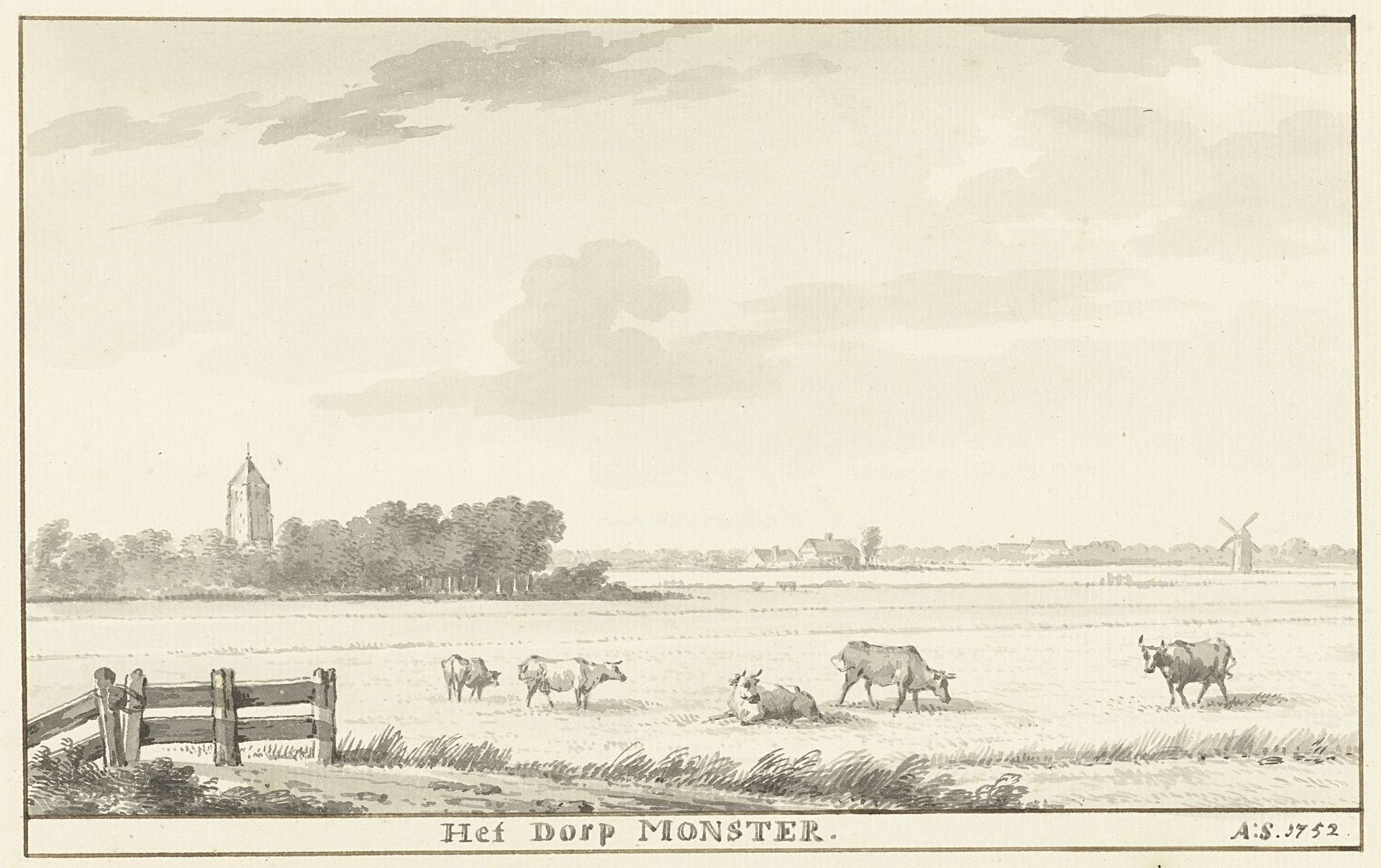
Curator: Before us, we have Aert Schouman's "Monster," a drawing created around 1752, here in the Rijksmuseum collection. Editor: It's understated, almost bleached of color. It projects this remarkable calm—a pastoral scene in monochrome. I immediately notice the texture of the paper and the restrained lines of the ink. Curator: Absolutely, let’s consider Schouman's handling of materials here. The application of ink on paper isn't about illusionism; it is deliberately drawing attention to its creation as a drawing, a constructed image. Dutch Golden Age landscapes usually focused on grand sweeping scenes. What’s significant about the use of drawings such as this is their portability and affordability, allowing art production to proliferate, influencing cultural values related to ownership and the increasing commercialization of art. Editor: It's more than a peaceful depiction. The Dutch landscape tradition is rooted in claiming territory, in asserting dominion. The placid cows are indicative of ownership, they symbolize a controlled environment. A tower in the background pierces the landscape, asserting civic and religious power, and, indeed, the title 'Monster' invites us to question these subtle yet pervasive acts of territorial control. What is monstrous? The town? The assertion of property? The exploitation of labor inherent in this pastoral scene? Curator: Intriguing to consider “Monster” as potentially questioning power. I lean toward seeing it as documenting material reality. Ink and paper, readily available. This isn't about luxury but reflecting everyday scenes available for a rising bourgeois audience. And regarding labor—look at the economy of line! Schouman is efficient. The process celebrates how relatively quickly and inexpensively these images could be reproduced and circulated. The value isn't just in representation, but in art's increased material accessibility and circulation. Editor: I agree there's an inherent democratizing element to it. Still, even with this technique's wider accessibility, it represents, or maybe romanticizes, existing power structures—agricultural land being efficiently exploited for capital. Even those placid cows become a resource. We need to see art in the context of its creation and understand that art rarely, if ever, occurs in a vacuum outside of social structures. Curator: True enough. Schouman shows how, by embracing more accessible mediums, the production of images enters different echelons of society, both representing and subtly shaping cultural and economic change. Editor: Which is all beautifully underlined through its subdued color and restrained portrayal of the "Monster." The piece allows us, in a sense, to examine who has the power to narrate—and possess—a landscape.