drawing
#
drawing
#
toned paper
#
light pencil work
#
caricature
#
charcoal drawing
#
possibly oil pastel
#
coloured pencil
#
underpainting
#
portrait drawing
#
watercolour illustration
#
watercolor
Dimensions: overall: 50.6 x 38.1 cm (19 15/16 x 15 in.)
Copyright: National Gallery of Art: CC0 1.0
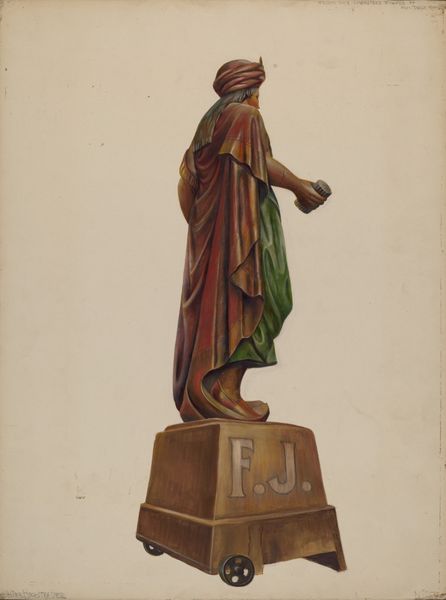
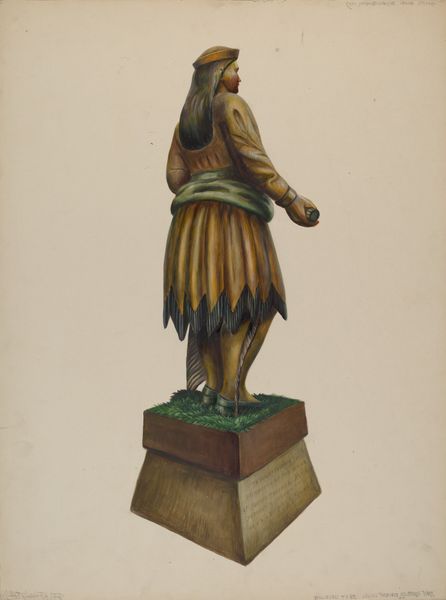
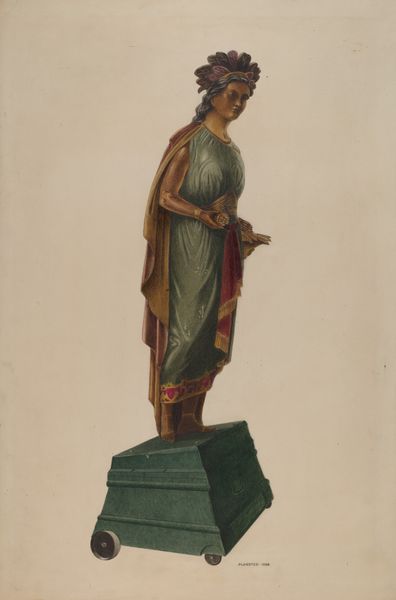
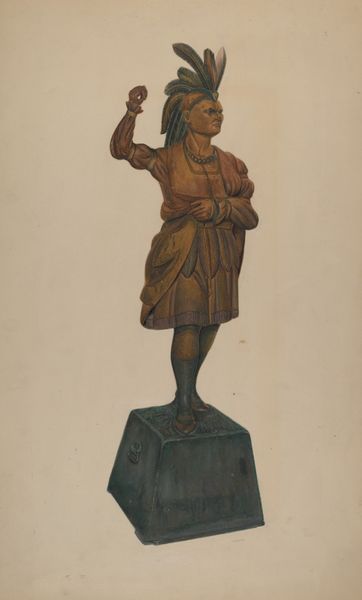
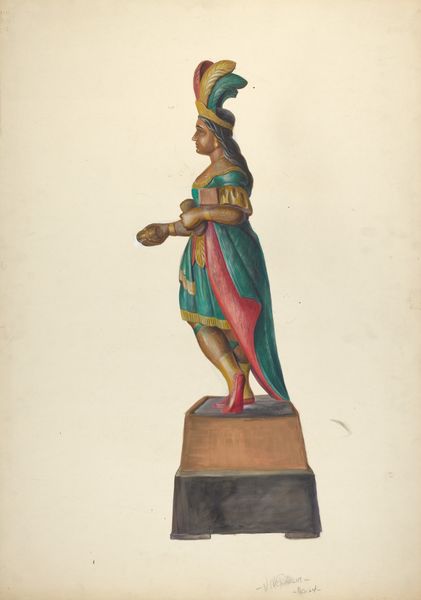
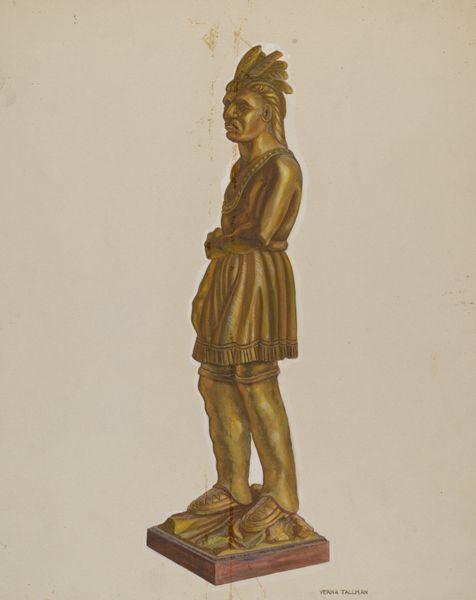
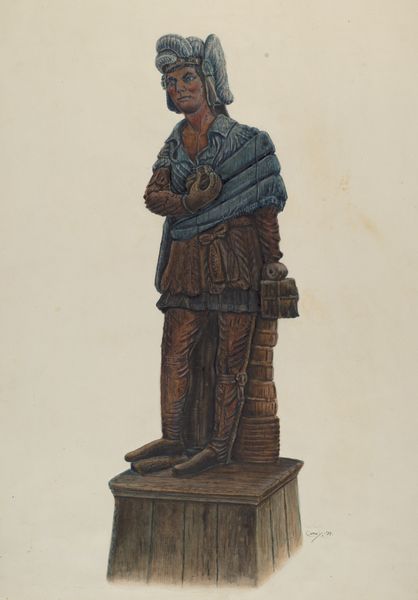
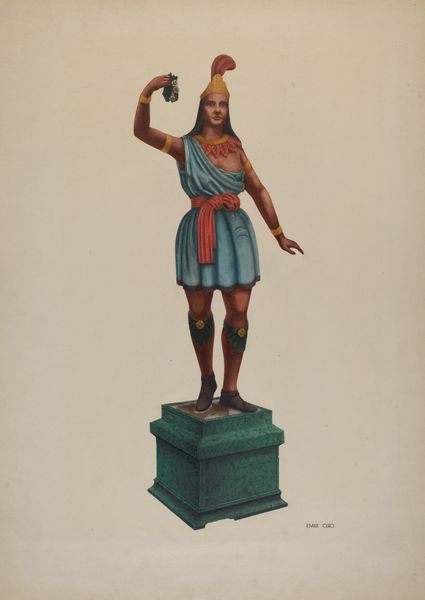
Editor: This is Walter Hochstrasser’s "Cigar Store Figure," created around 1937. It appears to be a drawing, maybe with watercolors. The figure has this old-world charm, but the style feels a bit like a caricature. I’m curious, how would you interpret a piece like this in its historical context? Curator: This drawing is a study for, or record of, a 'cigar store Indian,' an advertising figure common in the 19th and early 20th centuries, often placed outside tobacconists. Think about what it meant to use Indigenous figures to sell a product deeply implicated in colonization and exploitation. Does that context shift your initial reaction? Editor: Absolutely, it changes things quite a bit. I was focused on the almost romantic portrayal, but understanding the origin as a commercial advertisement tied to such a problematic history makes me see it very differently. What’s your take on the composition itself? Curator: The figure is elevated, almost idealized, yet it’s also quite static. The drawing's formality suggests a level of respect, or perhaps even appropriation, that disguises the exploitative reality behind the object. Also consider the date, 1937. What was happening in America then that could have shaped Hochstrasser’s portrayal? Editor: That's true, the Depression era... maybe Hochstrasser was commenting on commercialism during difficult times, or perhaps even subtly critiquing these outdated symbols. Curator: Precisely. The historical baggage combined with the context of its creation pushes us to reconsider how these figures function culturally. Art doesn’t exist in a vacuum. Editor: I see it now. What seemed like a simple, slightly odd drawing opens up to questions about cultural appropriation, historical context, and the ethics of representation. It makes you question the intent behind its original commercial use and how that impacts our view today. Curator: Indeed, by understanding the public role of art, especially commercial art, we begin to understand how it shapes—and reflects—society's values.
Comments
No comments
Be the first to comment and join the conversation on the ultimate creative platform.
 Collect
 React
React Comment
More like this