1833 - 1900
Figuren en bezigheden

Jacob Plügger
1795 - 1871Location
RijksmuseumListen to curator's interpretation
Curatorial notes
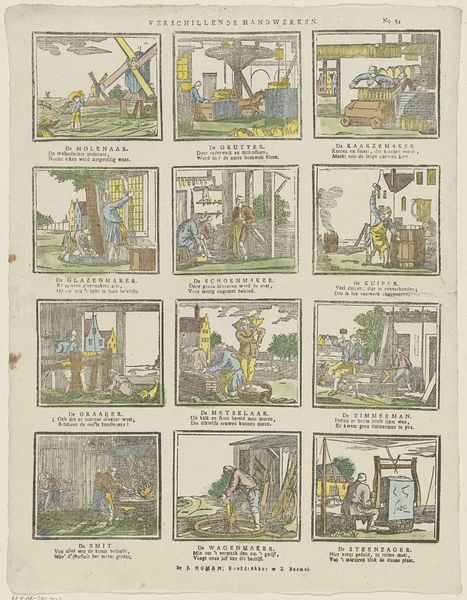
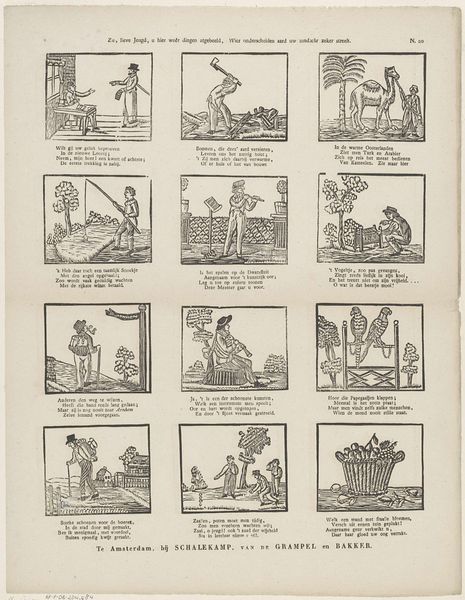
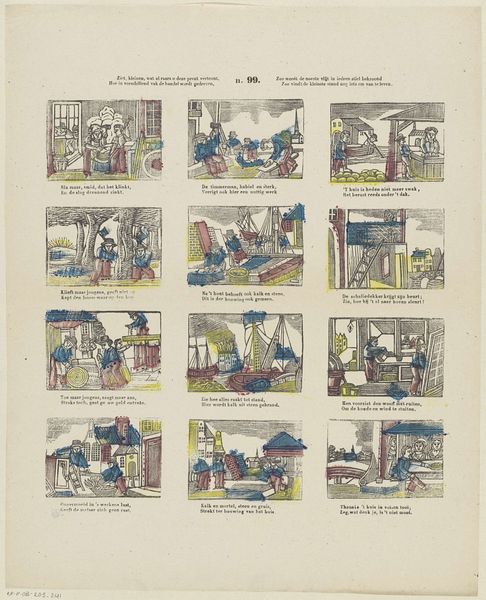
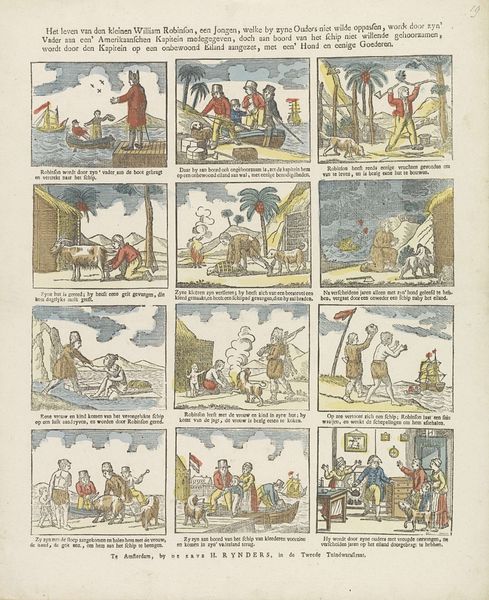
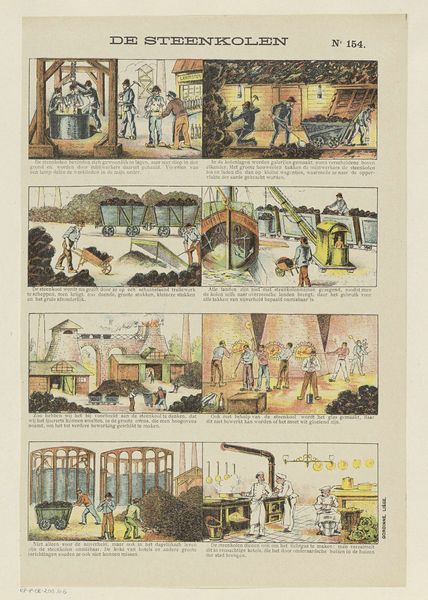
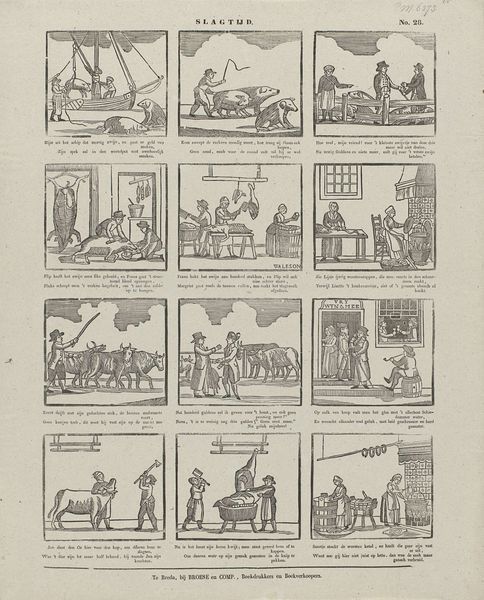
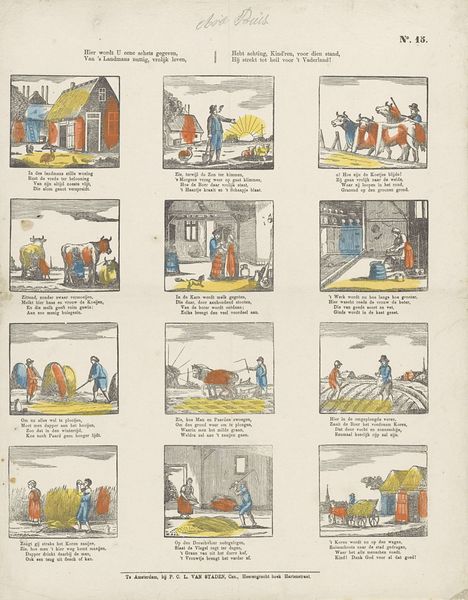
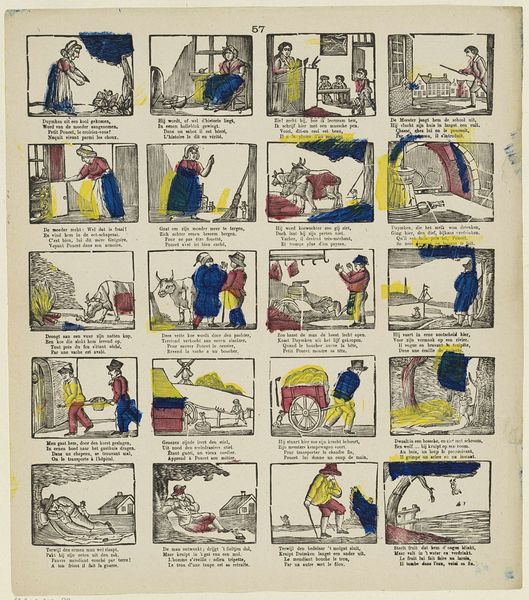
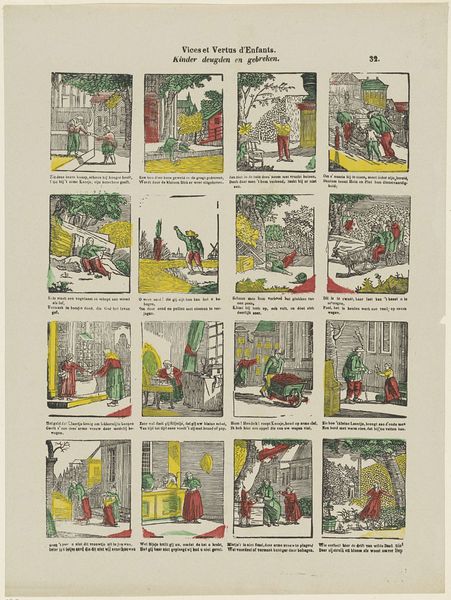
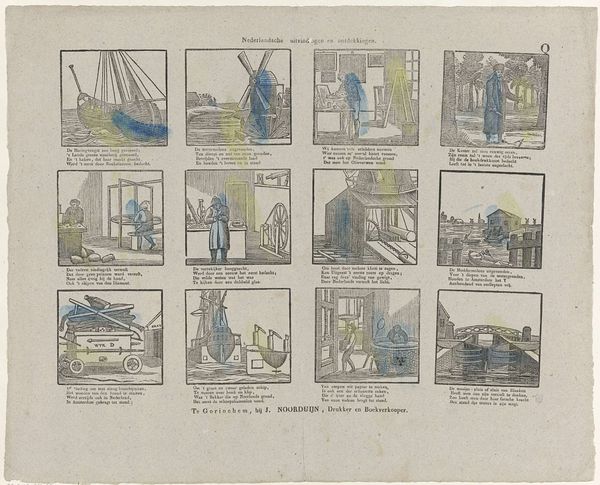
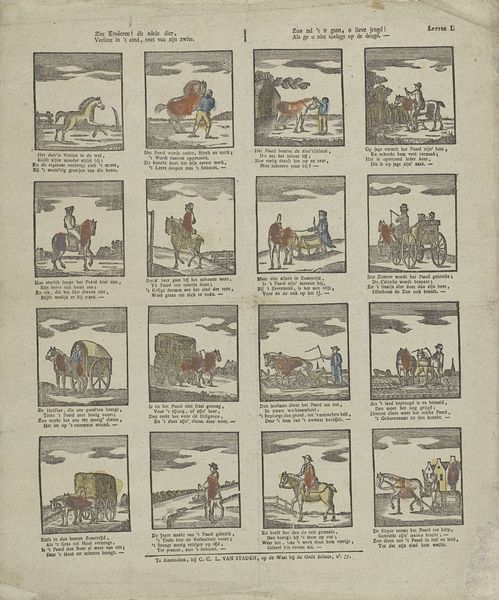
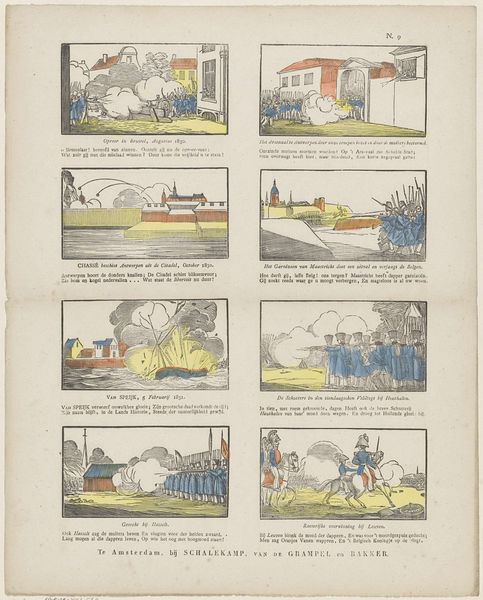
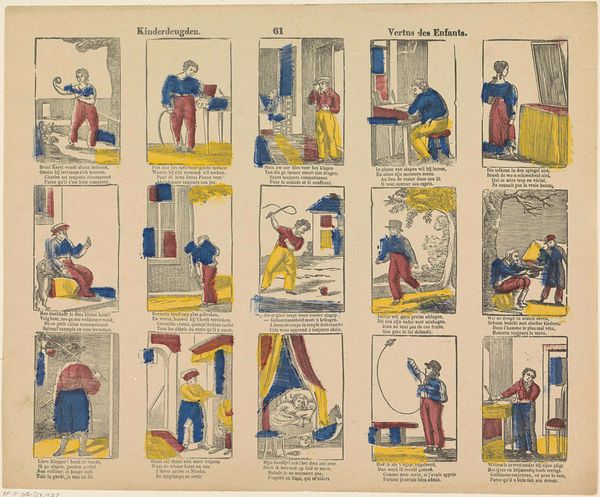
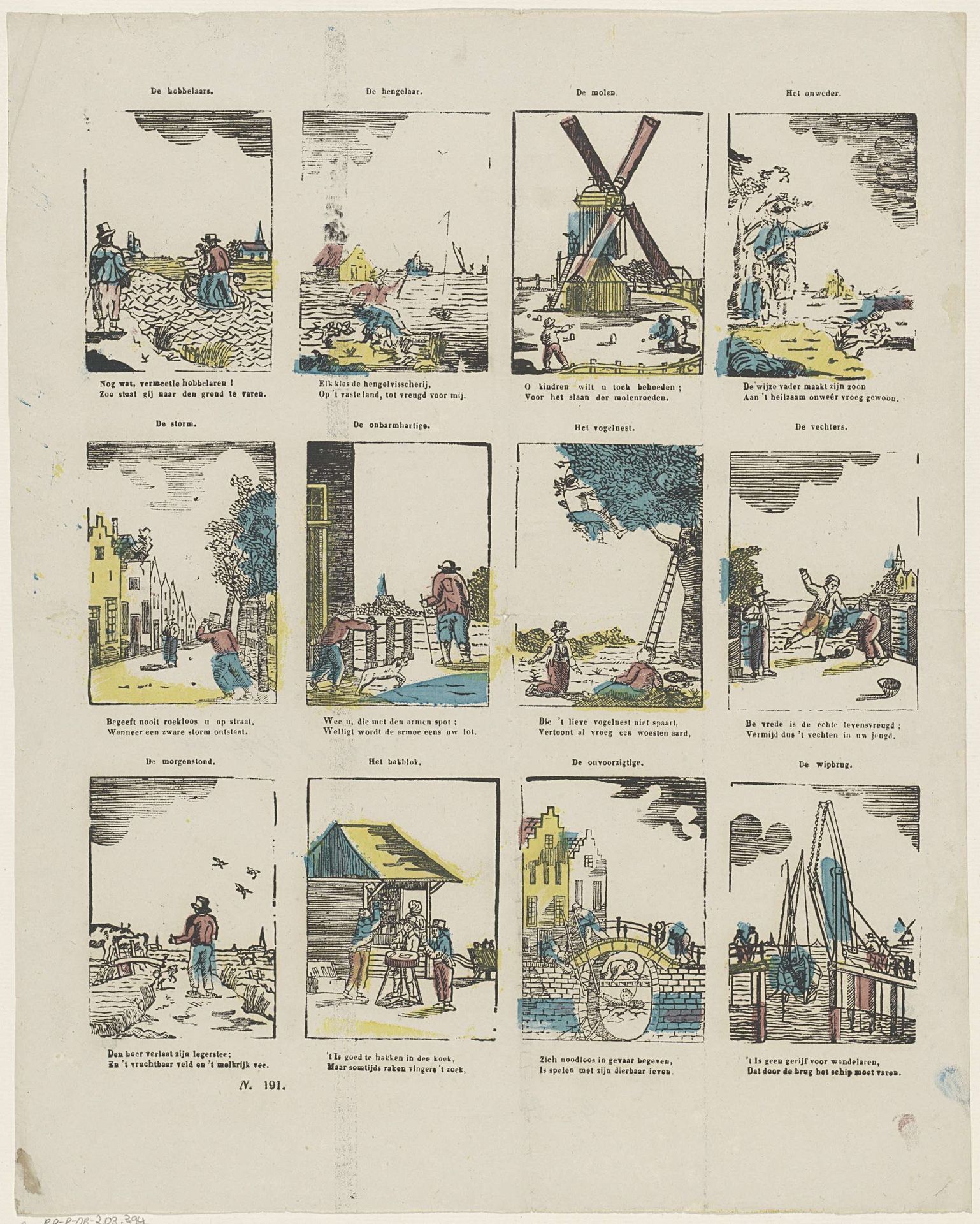
Curator: Here we have "Figuren en bezigheden," or "Figures and Activities," a print dating roughly from 1833 to 1900. It’s part of the Rijksmuseum's collection, offering us a glimpse into everyday life during that period, viewed through the lens of genre painting and folk art. Editor: My first thought? Whimsy! It’s like a proto-comic strip, with all these little vignettes packed together. There's a certain naive charm to the drawing, the aged paper just adds to that feeling. Curator: Precisely. Each scene, although small, encapsulates a particular activity or moment. We see people working, playing, interacting with the landscape. The images, when read collectively, tell stories reflecting societal values and the realities of labor and leisure in 19th century Netherlands. The narrative-art element is key here. Editor: I’m particularly drawn to the scene with the windmill. The awkward perspective almost makes it dreamlike. And then you have that little guy throwing something into the air - such a simple moment but so full of life! I imagine I could write a hundred poems inspired by each one of these miniature scenes. Curator: Well, think about the context too. As graphic art, consider how prints like these were circulated, shaping perceptions of national identity and shared experience amongst a potentially wide audience. How did these visual narratives influence the socio-cultural understanding of work, family and community life at that time? Editor: It’s amazing how a seemingly simple print can hold such depth. Curator: Indeed, and reflecting on the class dynamics, the roles of labor, even just the modes of communication at that period allows for critical reflections today, doesn't it? Editor: It does. This reminds me that every picture, no matter how simple, is connected to bigger ideas, deeper feelings. A little seed for grand contemplation, just delightful.