

before 1898
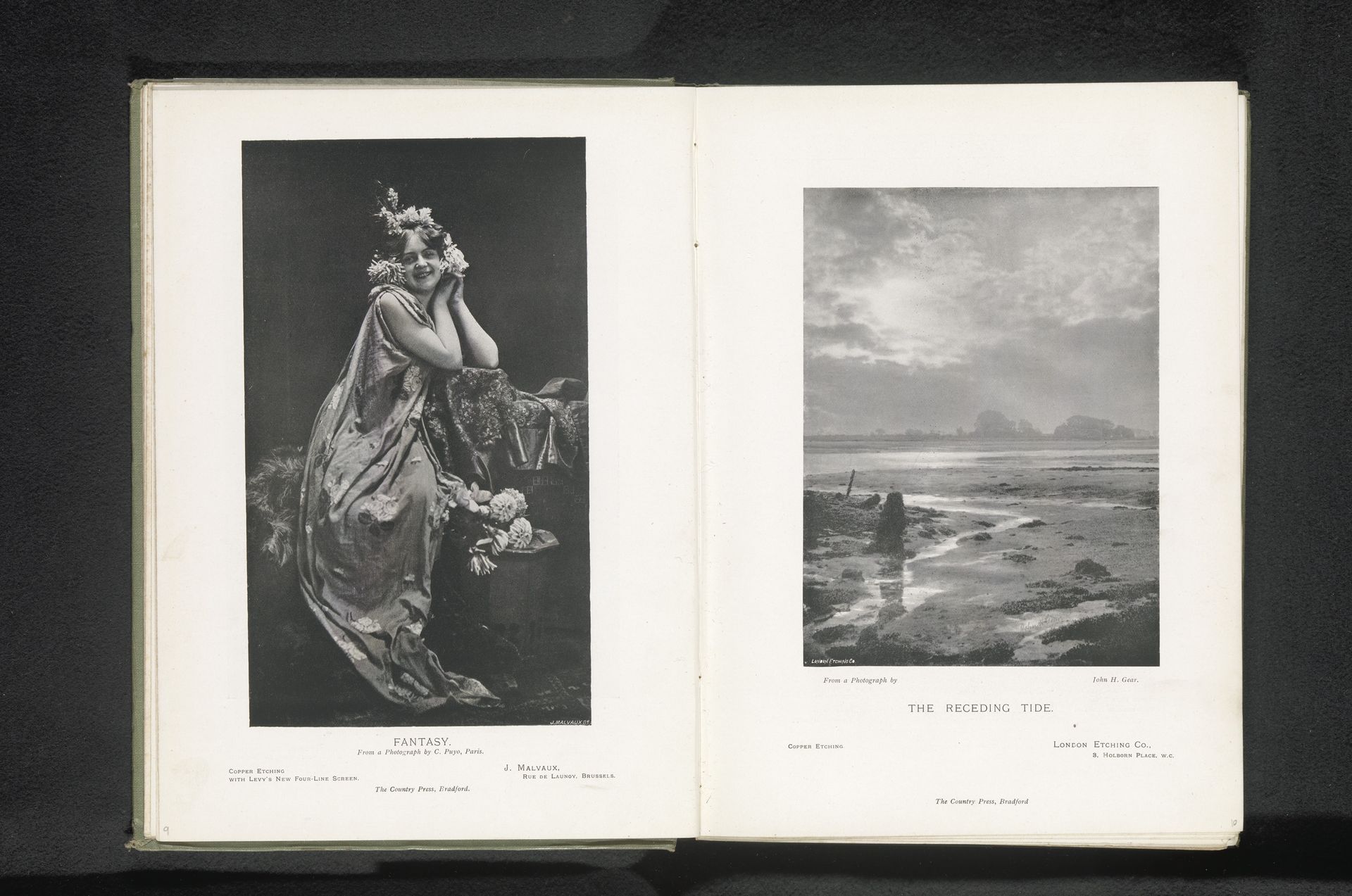
Portret van een onbekende vrouw

Listen to curator's interpretation
Curatorial notes
Curator: Right, let’s discuss this intriguing photograph, "Portret van een onbekende vrouw," by Constant Puyo, likely created before 1898. It’s a gelatin silver print, showcasing the soft-focus aesthetic characteristic of Pictorialism. Editor: My first impression is of a rather stagey tableau. There’s a constructed softness, a kind of wistful gauze over everything, like a hazy memory or dream. Curator: The dreamlike quality certainly resonates with the Impressionistic movement, which Puyo embraced. Considering the era, we might explore how this “unknown woman” embodies or perhaps challenges conventional ideals of feminine representation at the time. The staging does suggest a certain level of artifice, but one must consider the photographer's deliberate effort to communicate. Editor: Exactly. And it's fascinating to analyze how Puyo uses tonality to construct that dreamy effect. Notice how the subtle gradations of gray—the strategic deployment of chiaroscuro—creates a mood that almost transcends the subject matter itself. The flowers almost become pure form. Curator: Agreed. Puyo wasn't merely documenting; he was actively manipulating the photographic medium to express artistic intention, to communicate certain philosophical frameworks of thought related to beauty, or idealized versions of what femininity is at the time. These are highly controlled circumstances that require the woman, posed carefully, likely following a rigid framework from which she should create these representations, reflecting or perhaps subtly subverting. Editor: Yes. Think of how that light reflects off the gown—almost sculptural. The material gathers and pools, guiding the eye through a dynamic, considered composition. Curator: So, we have to recognize that this image serves as a fascinating record. It invites conversations about performance, identity, and even the political implications of seeing and being seen. Editor: A rich image indeed. I leave with a stronger sense of its formal mastery, a new perspective on the soft-focus aesthetic of the era. Curator: Absolutely. For me, understanding its broader socio-cultural impact makes viewing "Portret van een onbekende vrouw" today even more potent.