About this artwork
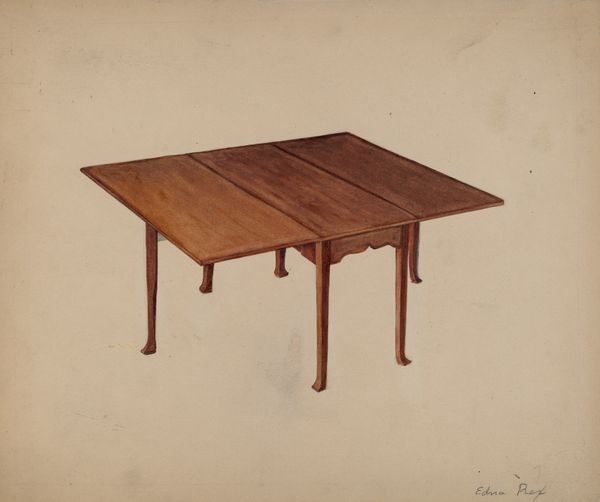
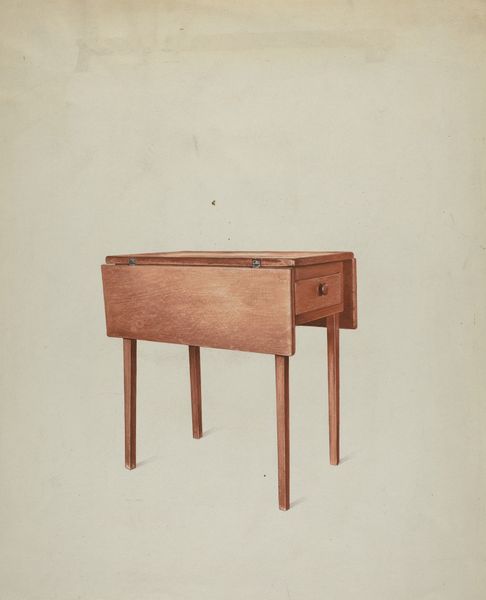
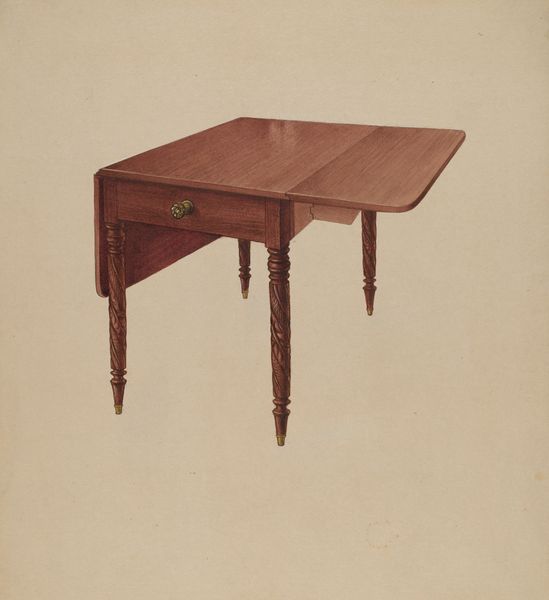
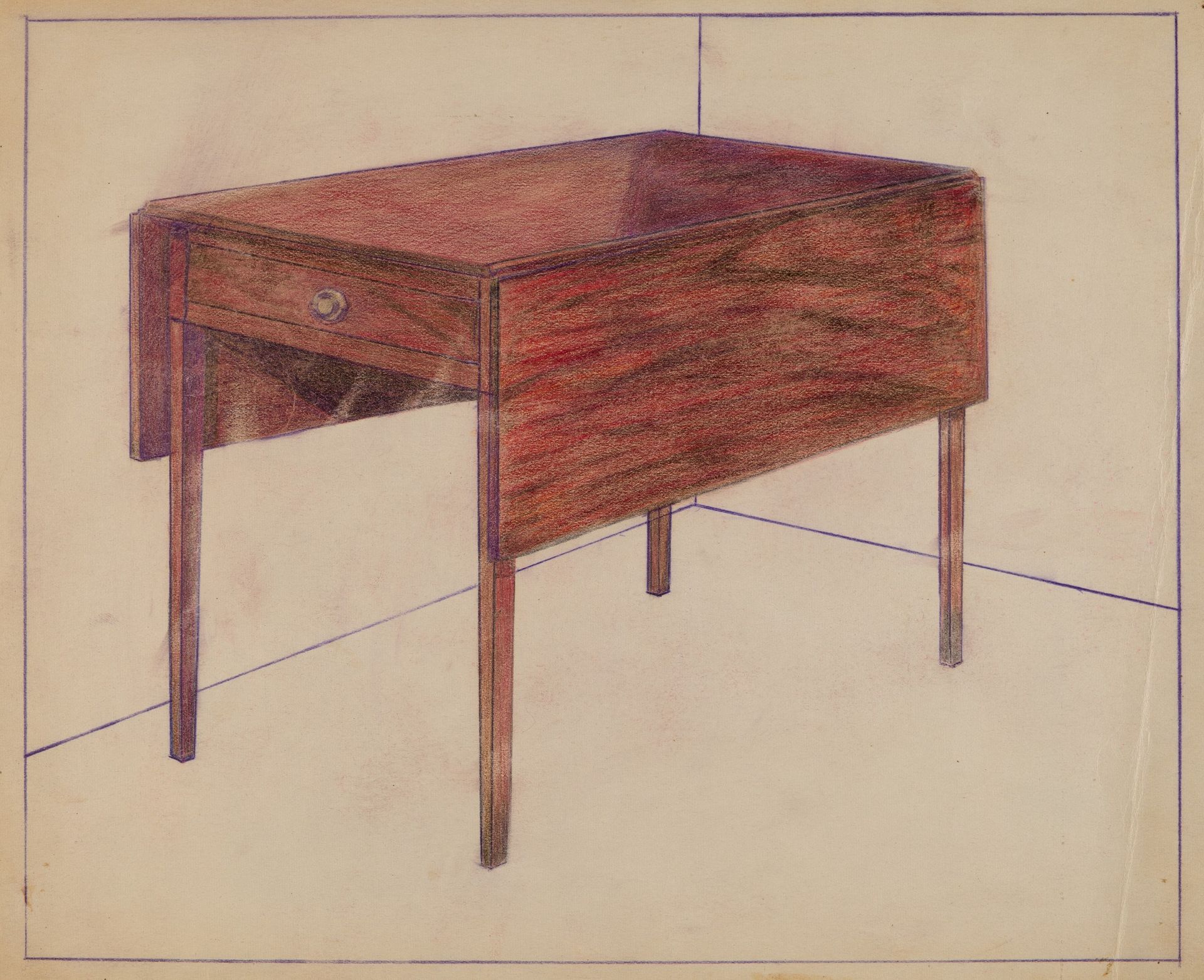
Charles Charon created this drawing of a Drop-leaf Table, using pencil on paper. Notice how the artist frames the table within a simple, almost clinical, blue-lined room. This minimalist setting throws into sharp relief the wood grain and the table's structure. The table itself is rendered with a warm palette of browns and reds, giving it a tactile, almost sensual quality. Charon's use of line is particularly interesting. The straight, unwavering lines define the table's edges and its geometrical form, while the subtle gradations of color suggest the play of light across its surface. The composition is structured to emphasize the volume of the object against the sharp lines of the wall, creating a dialogue between form and space. It's worth considering how this rendering, more than just a depiction of furniture, delves into the very essence of objecthood. The artist makes us consider the interplay between utility and aesthetics, between line and colour.


Artwork details
- Medium
- drawing, coloured-pencil, pencil
- Dimensions
- overall: 22.7 x 28.9 cm (8 15/16 x 11 3/8 in.) Original IAD Object: 29"high; 33"wide; 21 1/2"deep
- Copyright
- National Gallery of Art: CC0 1.0
Tags
drawing
coloured-pencil
geometric
pencil
Comments
No comments
About this artwork
Charles Charon created this drawing of a Drop-leaf Table, using pencil on paper. Notice how the artist frames the table within a simple, almost clinical, blue-lined room. This minimalist setting throws into sharp relief the wood grain and the table's structure. The table itself is rendered with a warm palette of browns and reds, giving it a tactile, almost sensual quality. Charon's use of line is particularly interesting. The straight, unwavering lines define the table's edges and its geometrical form, while the subtle gradations of color suggest the play of light across its surface. The composition is structured to emphasize the volume of the object against the sharp lines of the wall, creating a dialogue between form and space. It's worth considering how this rendering, more than just a depiction of furniture, delves into the very essence of objecthood. The artist makes us consider the interplay between utility and aesthetics, between line and colour.
Comments
No comments