c. 3th century
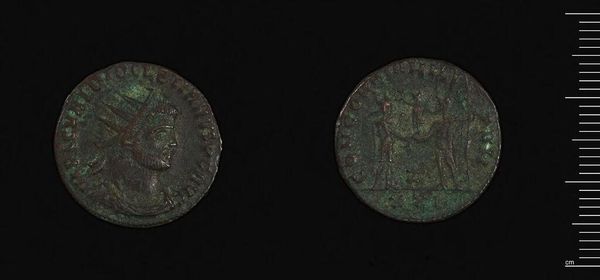
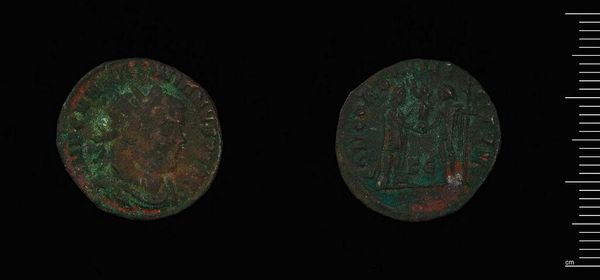
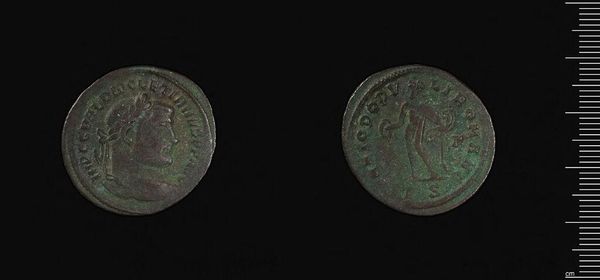
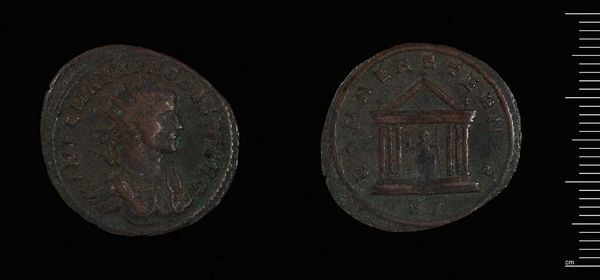
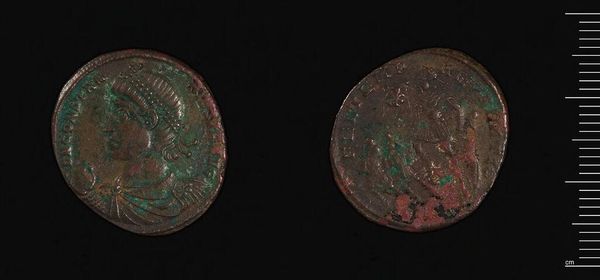
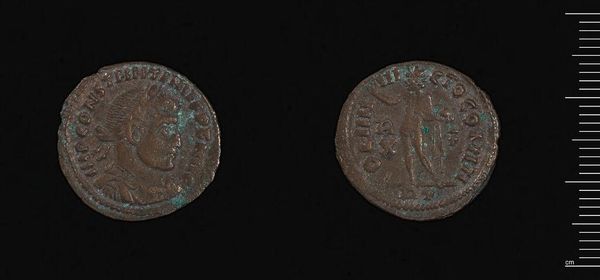
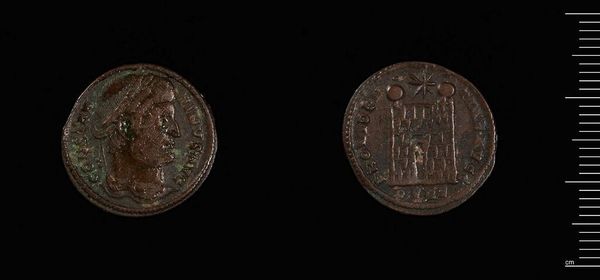
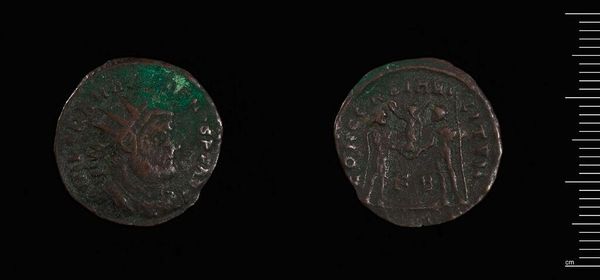
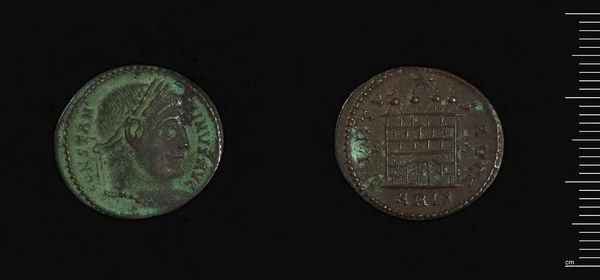
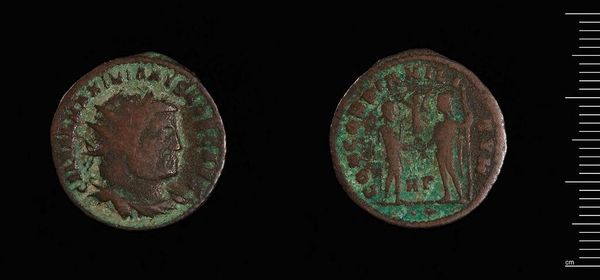
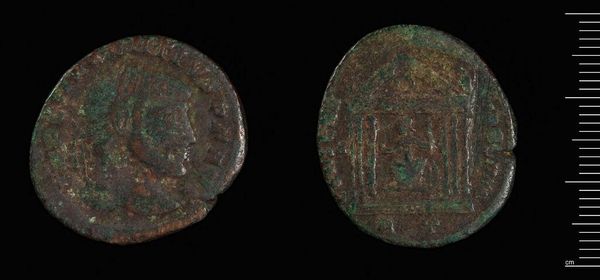
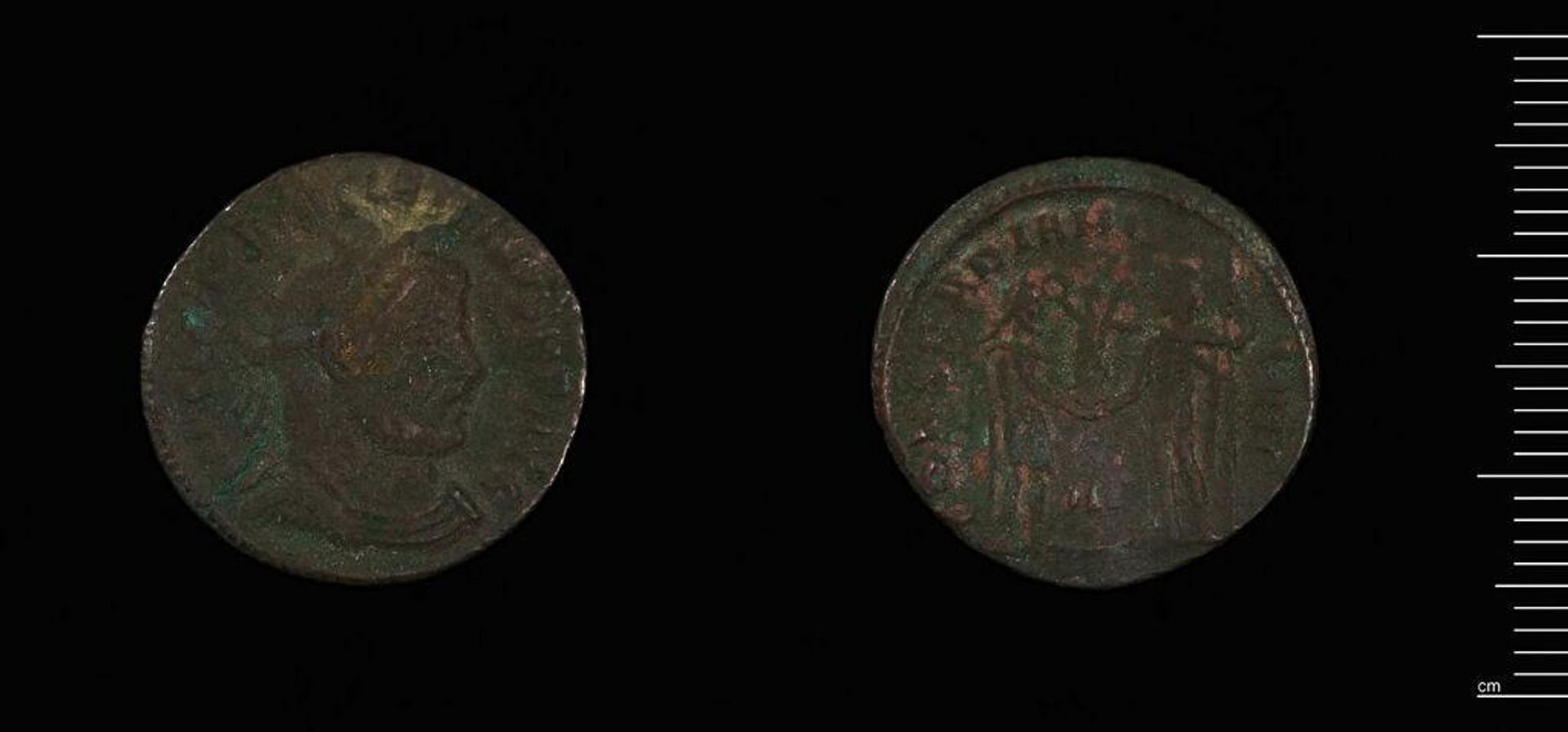
Antoninianus of Diocletian, Heraclea

Listen to curator's interpretation
Curatorial notes
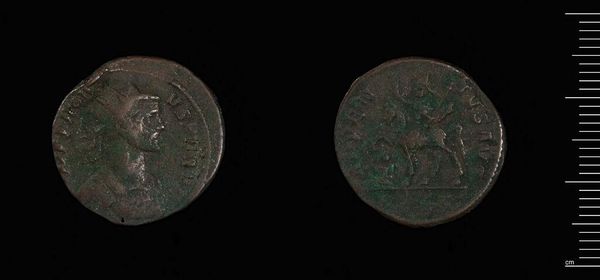
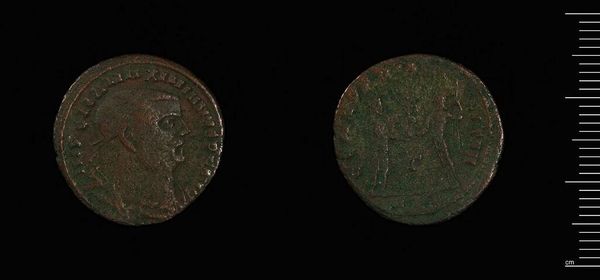
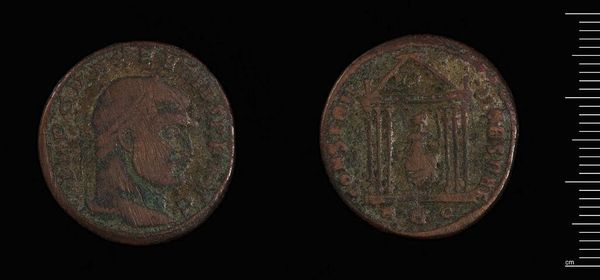
Curator: Here we have an Antoninianus of Diocletian, minted in Heraclea. This coin, currently residing in the Harvard Art Museums, offers a glimpse into the economic and political landscape of the Roman Empire. Editor: It's remarkable how this small, worn coin carries so much history. The texture alone speaks volumes of its journey through time and trade. Curator: Absolutely. The Antoninianus was introduced as a response to economic instability, and seeing it now, we can trace Diocletian's efforts to stabilize the empire through monetary reform. Editor: And that debasement! Notice how little silver it actually contains. An emperor's portrait rendered in increasingly base metals – a potent symbol of power in decline, or perhaps adaptation? Curator: Precisely. The imagery, though faded, reveals clues about imperial propaganda and how rulers wished to be perceived. Editor: Seeing the wear on this material, considering the hands it passed through, it’s a tangible link to everyday life under Diocletian. Currency as a material witness. Curator: It's a poignant reminder that even the smallest objects can illuminate the grand narratives of history. Editor: Indeed. Each coin tells a story not just of emperors, but of the society that forged and used them.