before 1908
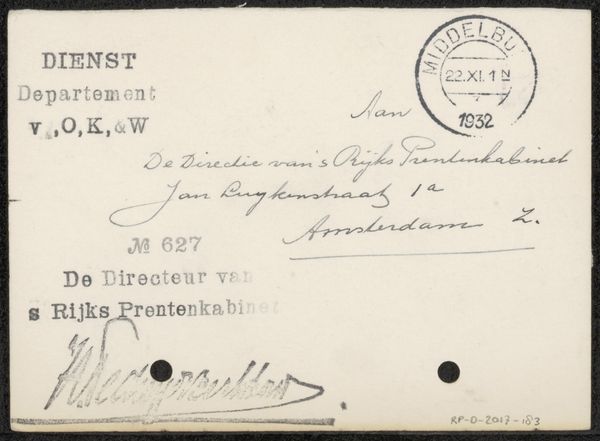
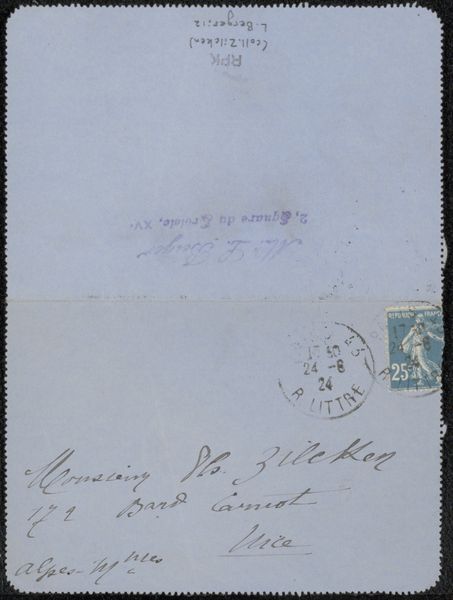
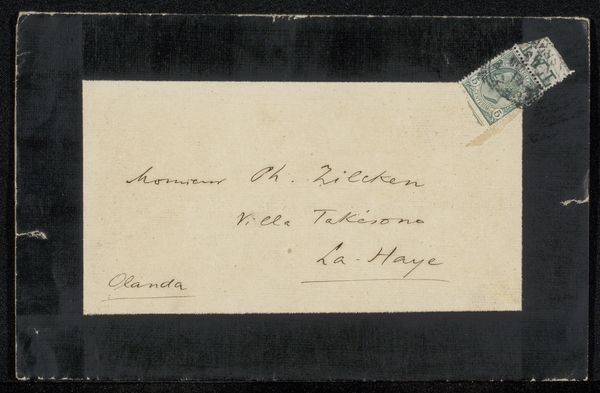
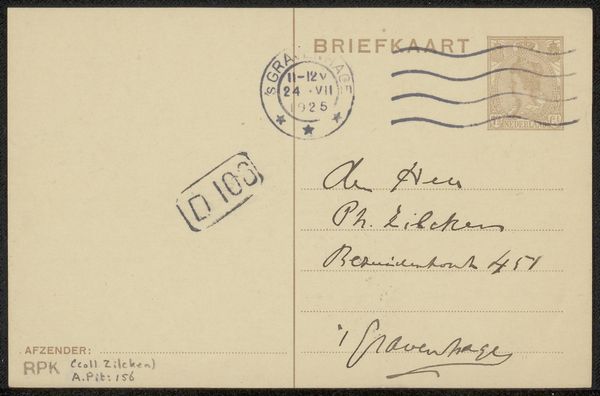
Briefkaart aan Philip Zilcken

Listen to curator's interpretation
Curatorial notes
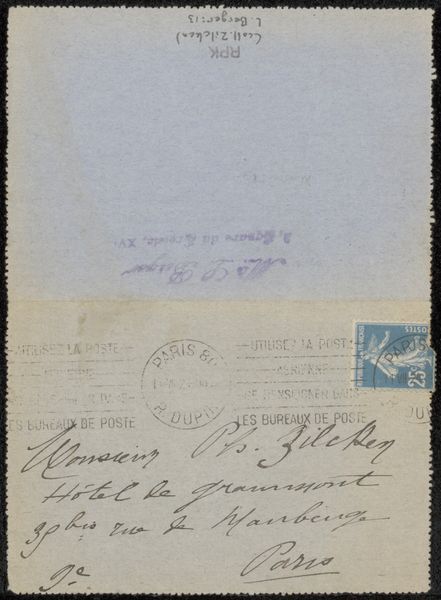
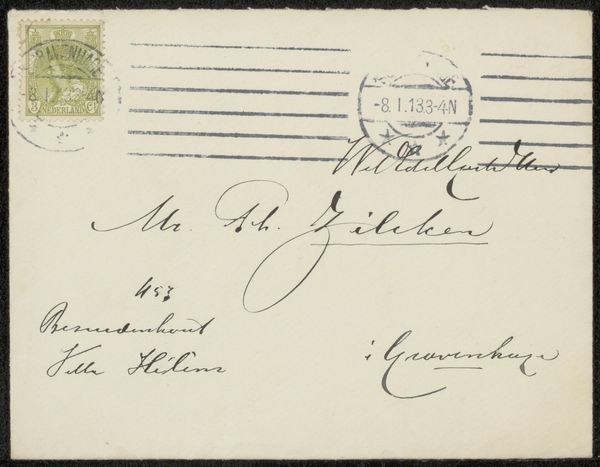
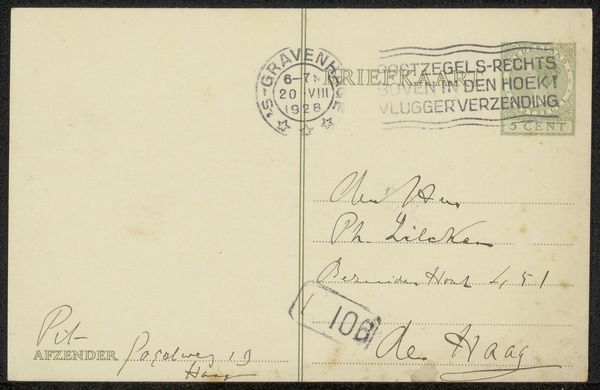
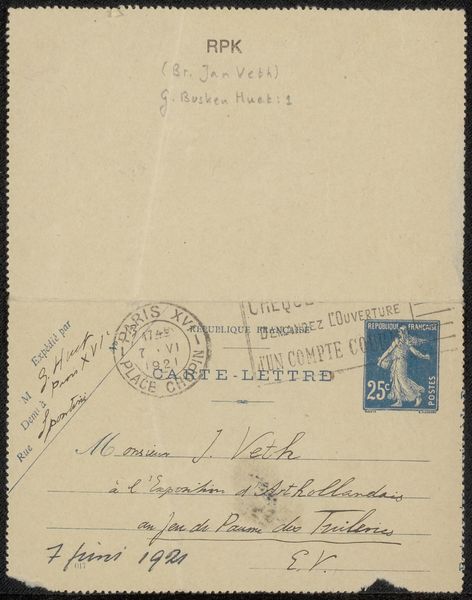
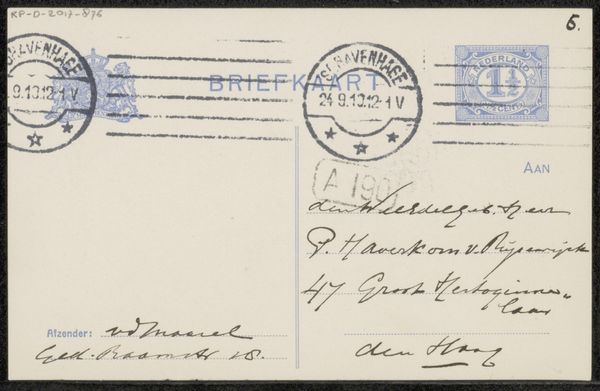
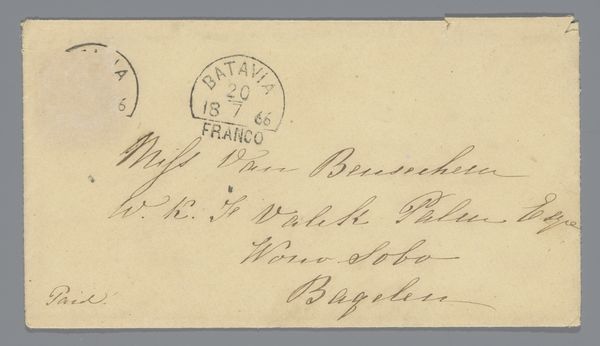
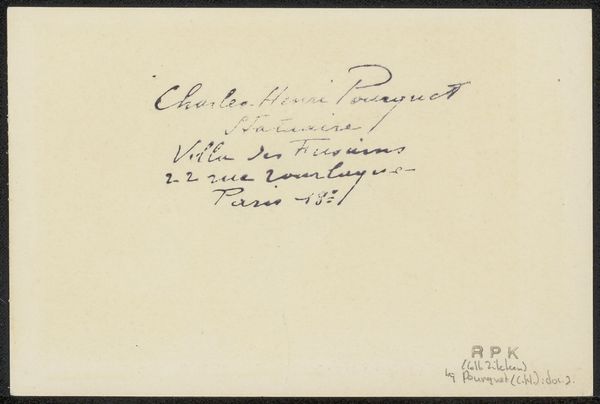
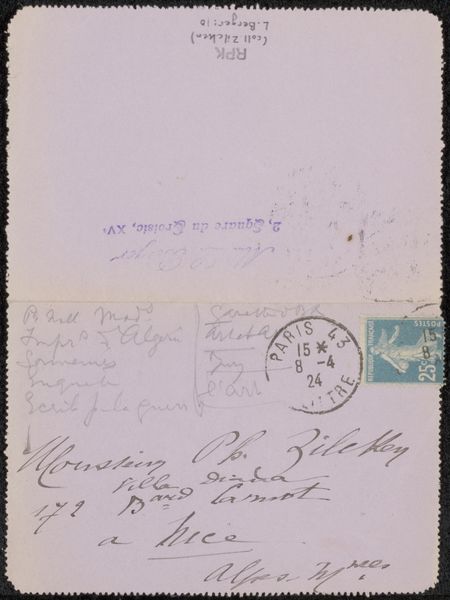
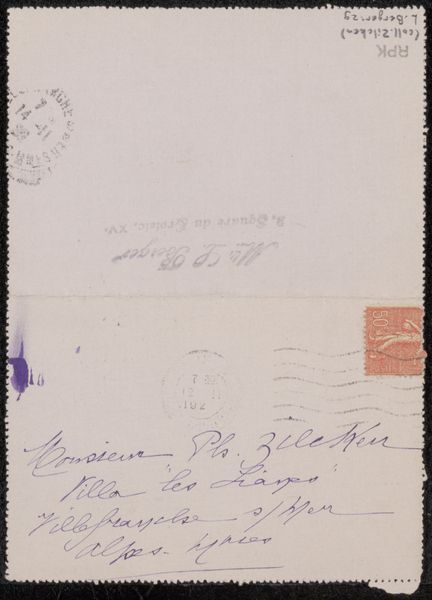
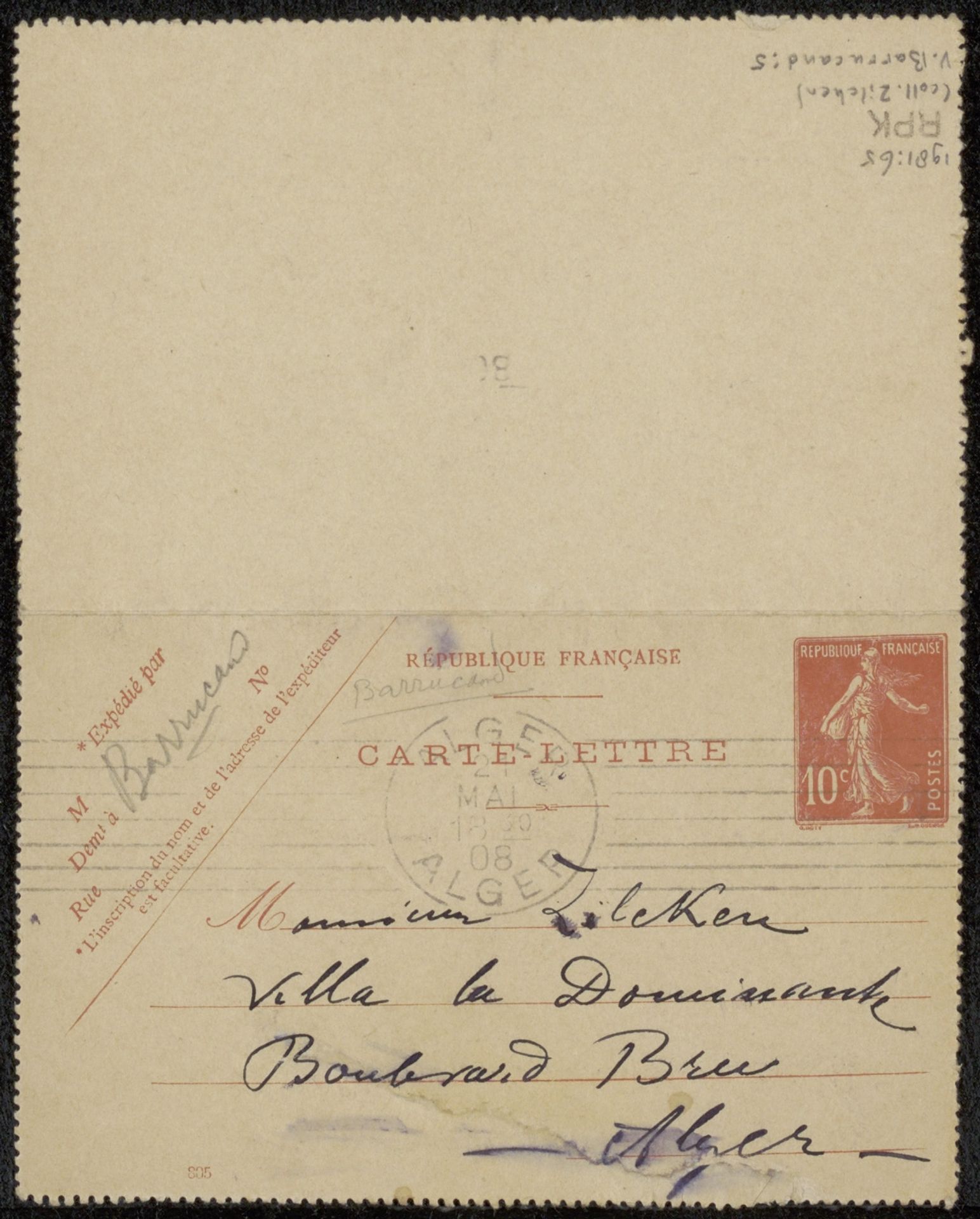
Curator: Let's discuss this intriguing postcard, "Briefkaart aan Philip Zilcken," likely crafted before 1908 by Victor Barrucand. We see ink applied to paper, a seemingly simple pairing. Editor: My eye is immediately drawn to the cursive script, like an intimate relic from a slower age. It's a document and a delicate gesture made of pulp, fiber, ink, labor, and human intent all bound together. Curator: Absolutely. Barrucand, likely a member of a vibrant intellectual circle corresponding with Zilcken, chose this medium to transcend geographical constraints of fin-de-siècle Europe. These everyday items reveal the social networks of artistic patronage. Editor: And think about the deliberate act of applying ink to paper! A far cry from today's fleeting digital communication. It's an assertion, a statement literally pressed into the physical world that resists the instantaneous ephemeral character of messages today. Each pen stroke bears the trace of the artist. Curator: The printed Carte-Lettre format, a common postal service element, democratizes this mode of communication, allowing easier dissemination and connection across social classes. This underscores a subtle politic of communication, pushing past elites of written language. Editor: Observe the postal stamp too—a French Marianne—a tiny emblem of nationhood on a small scale, juxtaposed against this private, personalized message. What type of socio-political relationship is struck through it's visual tension and compositional play with words? Curator: Consider this correspondence in the wider art historical context. How might this mundane postcard, dispatched across Algeria, relate to grander narratives of Orientalism and French colonialism? Editor: Right, the very materiality argues against simplistic notions of high and low art. Even this functional card speaks of artistic practice and is evidence, of both, a commercialized process and an intimate creation of meaning, that in combination, carries great meaning. Curator: It shows art exists in everything, from exhibition paintings to ephemeral mail art. The politics, economy and intimate exchange exist within all three to various degree. Editor: Precisely. A postal whisper across time, indeed, reminds us the tangible echoes we risk overlooking, in today's clamor of clicks.