c. 1729 - 1730
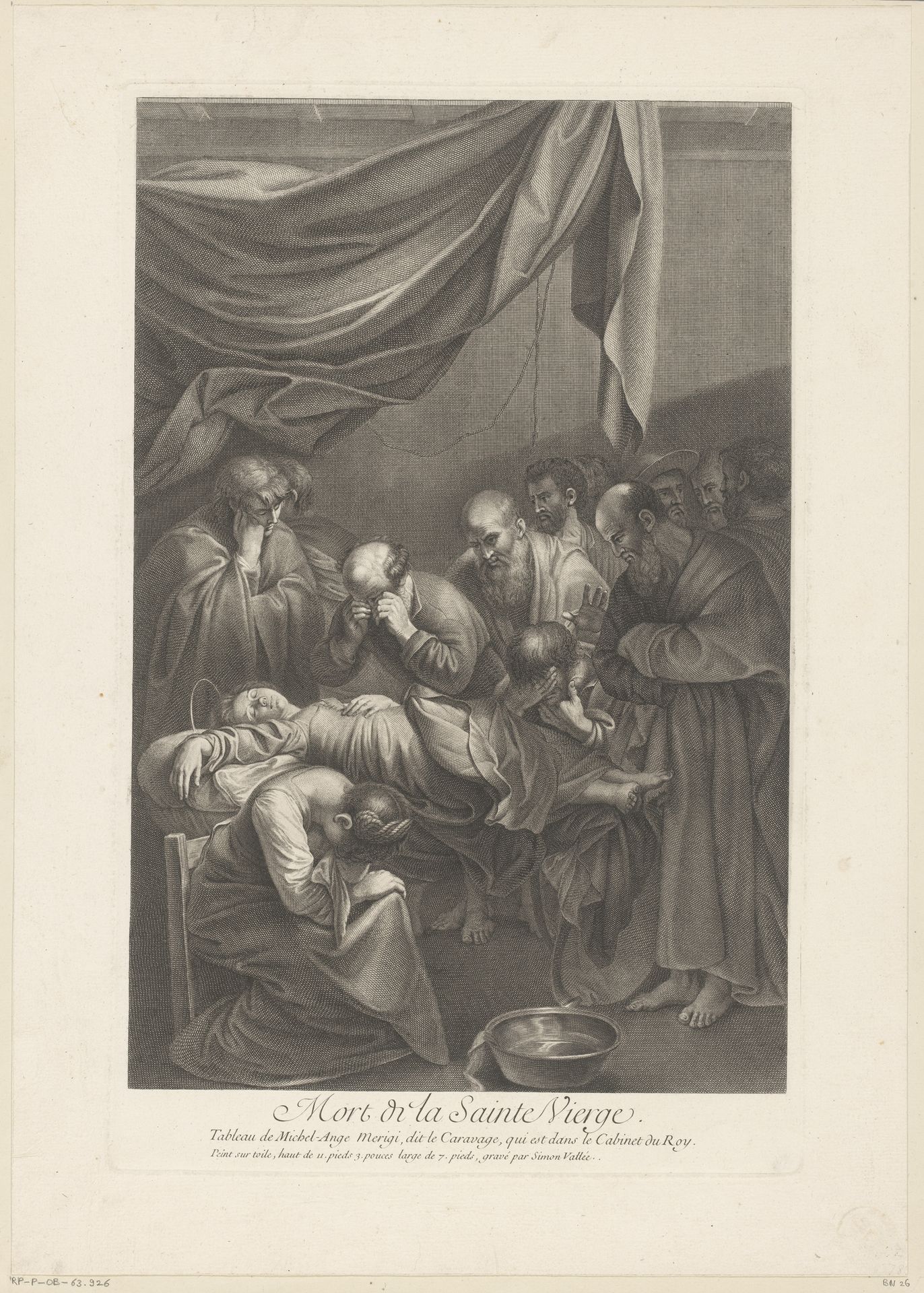
Sterfbed van Maria

Simon de la Vallée
1700Location
RijksmuseumListen to curator's interpretation
Curatorial notes
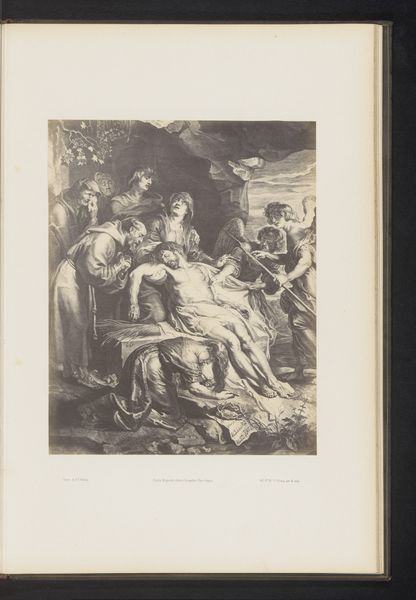
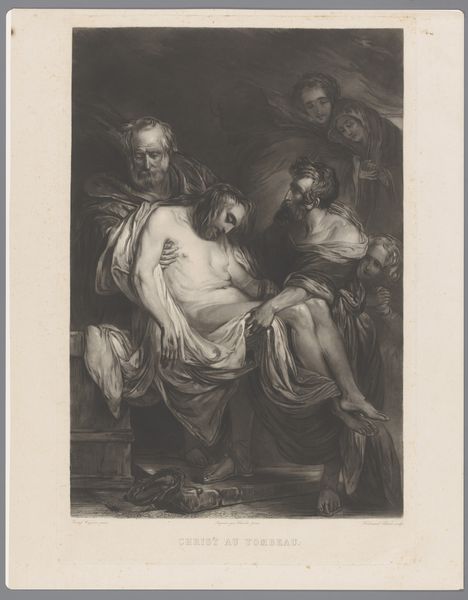
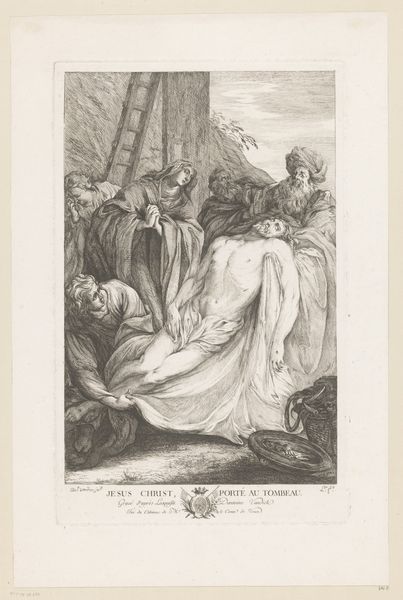
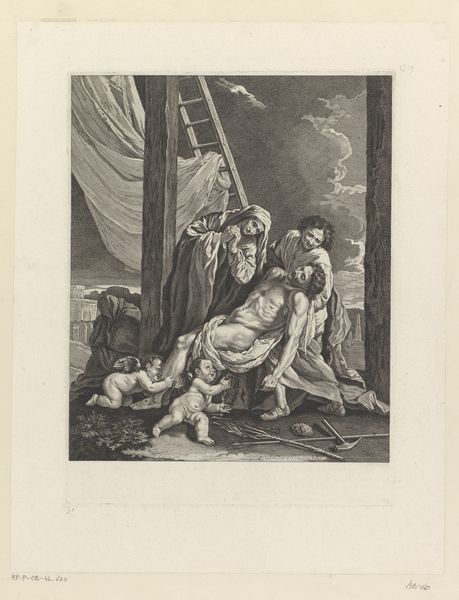
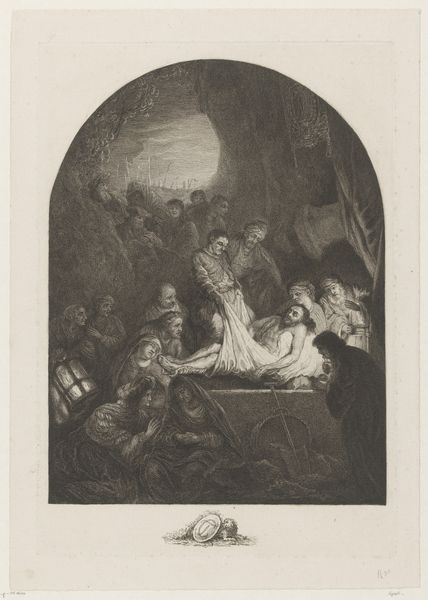
Curator: There's such a stark and moving scene unfolding in "Sterfbed van Maria," or "Death of the Virgin," an engraving made around 1729-1730 by Simon de la Vallée, currently residing at the Rijksmuseum. Editor: My immediate reaction is the weight of grief, etched in every line. The drooping heads, the concealed faces. It's almost theatrical, this outpouring of sorrow. Curator: It is intensely theatrical. Notice the deliberate arrangement of figures; they seem caught between public mourning and private anguish. This derives, in part, from its origins as a copy of a painting by Caravaggio. De la Vallée translated that theatrical drama to printmaking, a fantastic feat. Editor: Indeed. Engraving, with its inherent precision, adds another layer to the composition. Each line, carefully placed, seems to emphasize the emotional texture. What's interesting to me is how death is framed here: the visual absence of struggle allows reflection, and for that grief to blossom. Curator: And the details reinforce that solemn mood: the basin of water for cleansing rituals, the somber drapery hanging above… each detail signifies loss, but also echoes the visual language associated with Baroque drama and spectacle. Editor: It reminds me how loss is a communal experience. Everyone surrounding Mary isn't merely observing; they're participants in her story, feeling the ripple effects of this profound moment. See how light and shadow become characters in themselves. It adds a psychological complexity. Curator: Exactly. In these history-painting type works, Baroque artists sought to affect and move the viewers. The cross-cultural appeal speaks to the universality of death and grief, made especially poignant through this intimate, albeit public, depiction. Editor: And the permanence of the print amplifies that effect—it memorializes the moment, making it available to viewers centuries later. A still moment of shared human vulnerability, captured for us. It speaks to the lasting resonance of grief, doesn’t it? Curator: I completely agree, what strikes me most is the way the image merges Baroque sensibility with human empathy, reminding us that art transcends time by mirroring fundamental aspects of existence.