

1743
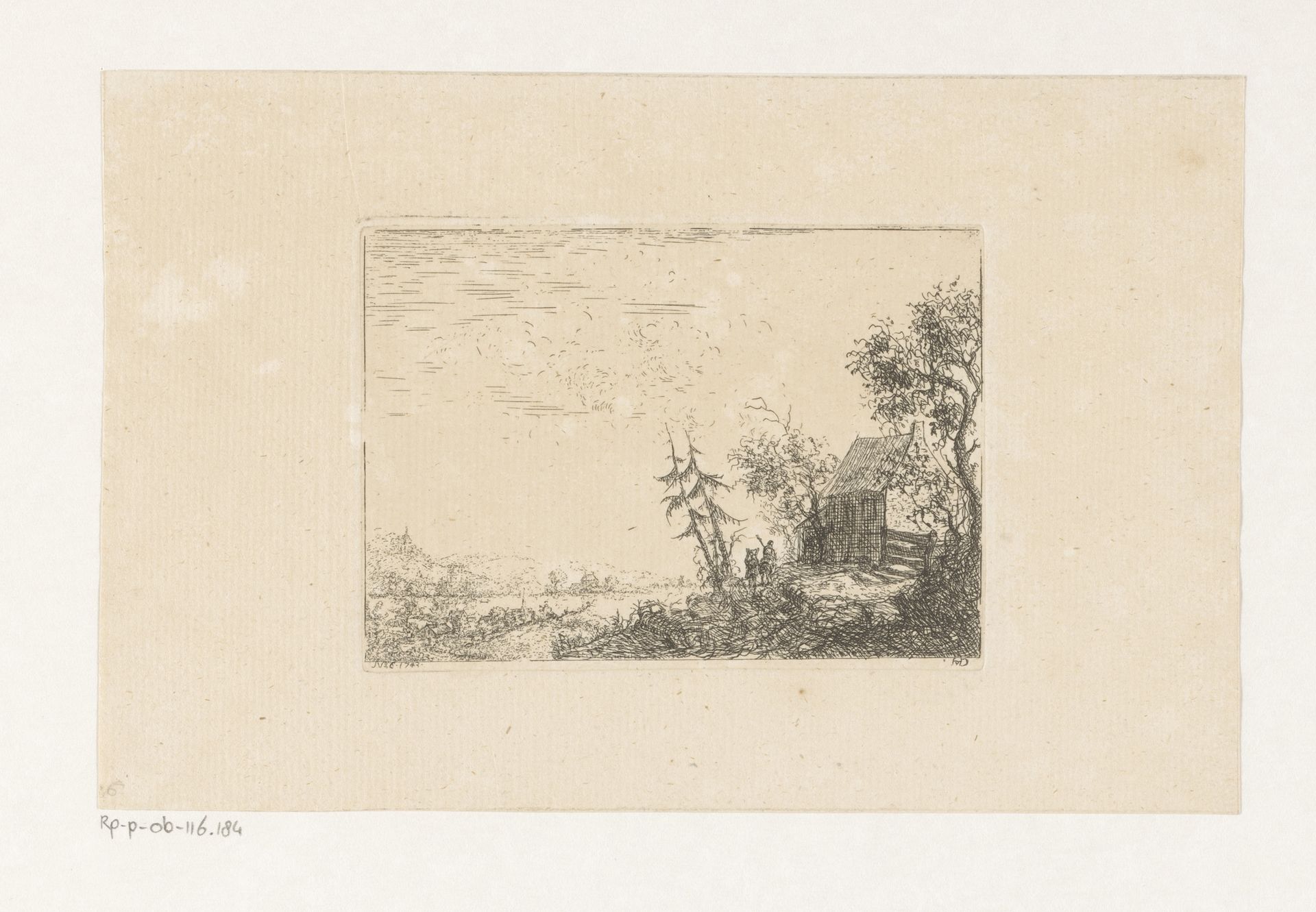
Landschap met rechts een huis en een dorp in de verte

Christian Ludwig von Hagedorn
1712 - 1780Location
RijksmuseumListen to curator's interpretation
Curatorial notes
Christian Ludwig von Hagedorn created this landscape with a house and village in the distance using etching, a printmaking technique. Hagedorn was a German art theorist and painter, and served as the general director of the Academy of Art in Dresden. His landscape presents an idealized, perhaps even romanticized vision of rural life, reminiscent of the era’s fascination with pastoral themes. Though seemingly simple, landscapes like this were often laden with social and cultural meanings. They reflected the era’s complex relationship to land, property, and the romanticization of rural life, often glossing over the harsh realities faced by those who lived and worked in these environments. The placement of the house and distant village may evoke a sense of community, but also hints at the economic structures underpinning this rural idyll. The figures, rendered rather vaguely, don't give us any clues as to their social standing or place in the work. It invites us to consider the ways in which landscapes not only depict physical space but also carry within them narratives of power, identity, and social hierarchy.