oil-paint
#
portrait
#
cubism
#
oil-paint
#
form
#
oil painting
#
geometric
#
history-painting
#
modernism
Dimensions: 27 x 21 cm
Copyright: Public domain US
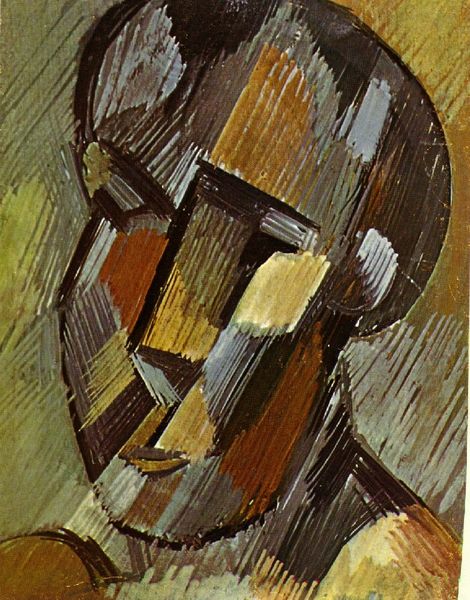
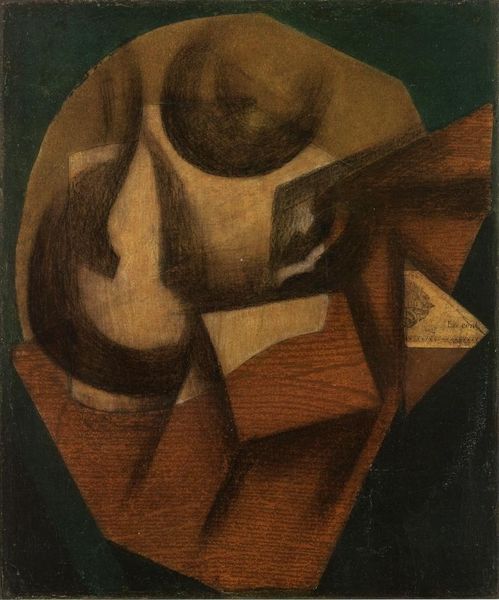
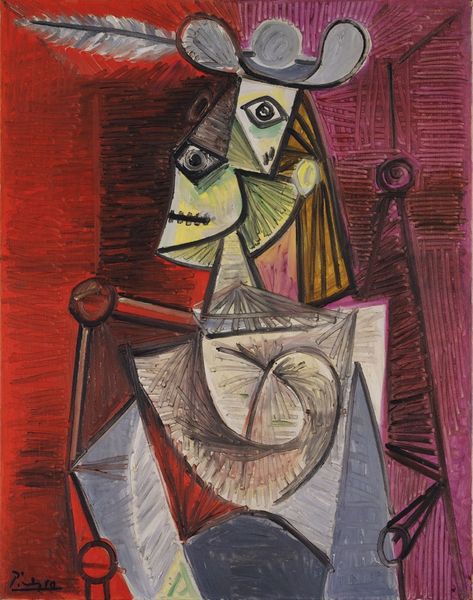
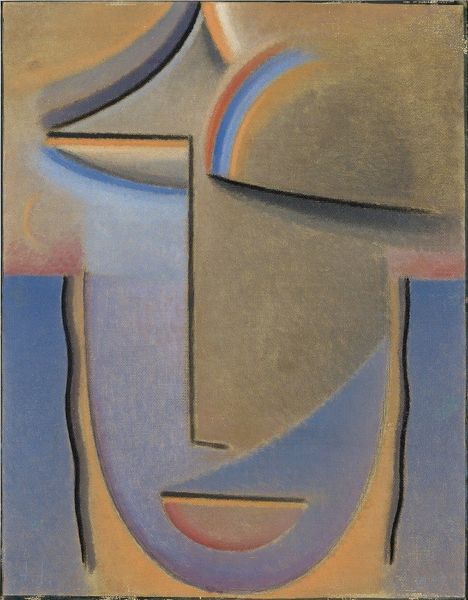
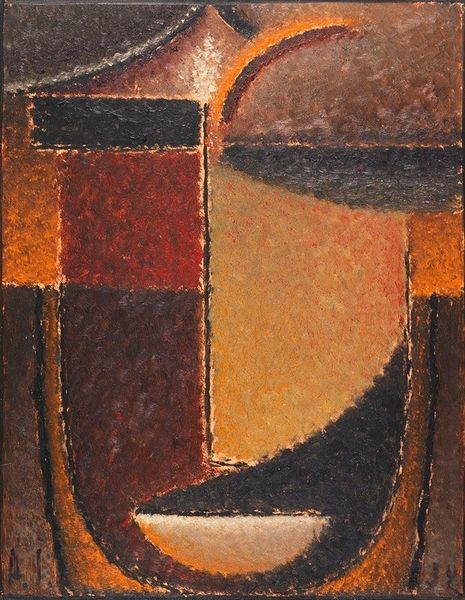
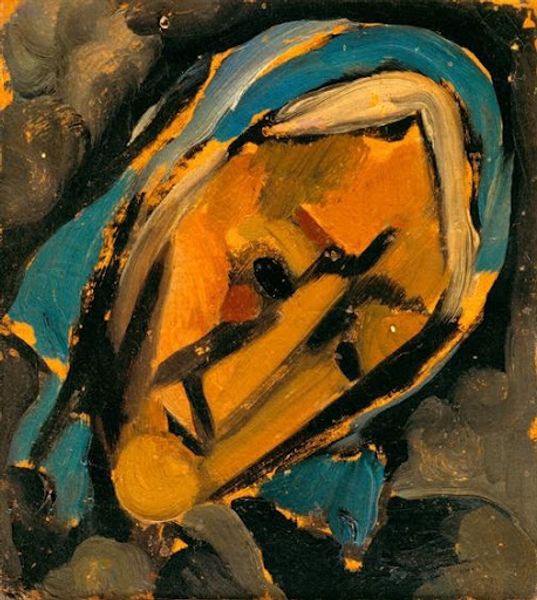
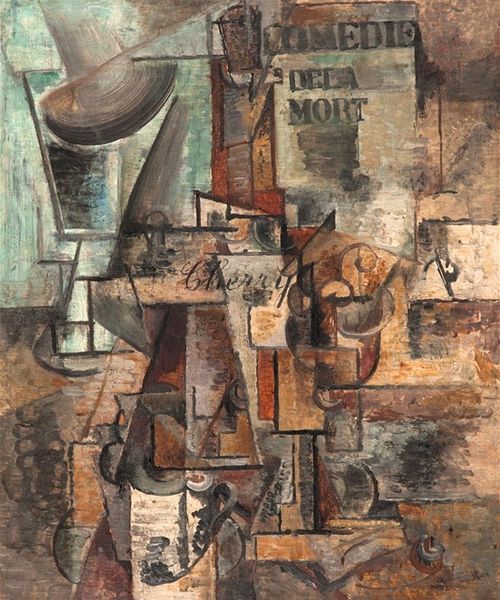
Editor: We're looking at Picasso's "Head of a Man," painted in 1908 using oil paint. It's currently housed at the Musée Picasso in Paris. I find it quite… disorienting, the way the features are broken down. How should we interpret this cubist approach to portraiture? Curator: Indeed. Note the planes that construct the face; they suggest volume, but the flatness of the canvas is constantly reasserted through the geometric structure. Observe how the light doesn't fall naturally; rather, it seems applied arbitrarily to accentuate different facets. What do you make of this unconventional treatment of light? Editor: It’s almost like the light is being used to deconstruct, not illuminate. Instead of revealing the form, it emphasizes the individual geometric shapes. Curator: Precisely. And what is the effect of reducing the figure to these component shapes? How does that alter the traditional role of portraiture? Editor: I guess it moves away from capturing a likeness, and is more about the intellectual exercise of representing three dimensions on a two-dimensional surface. It's less about the man and more about the idea of a man. Curator: An astute observation. By fracturing the image, Picasso encourages us to actively reconstruct it, forcing us to engage with the painting on a cerebral level. What did you make of the earthy tones in this artwork? Editor: I like the shades, and how unified the composition is. Curator: Agreed. We’ve observed how form takes precedence over illusionism in this work, radically redefining the parameters of portraiture. Editor: This experience helped me appreciate the focus on geometric shapes and the shift away from realism in Cubism.
Comments
No comments
Be the first to comment and join the conversation on the ultimate creative platform.
 Collect
 React
React Comment
More like this