1856 - 1914
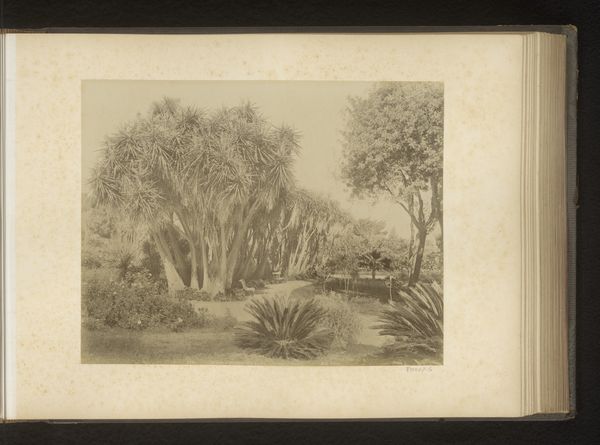
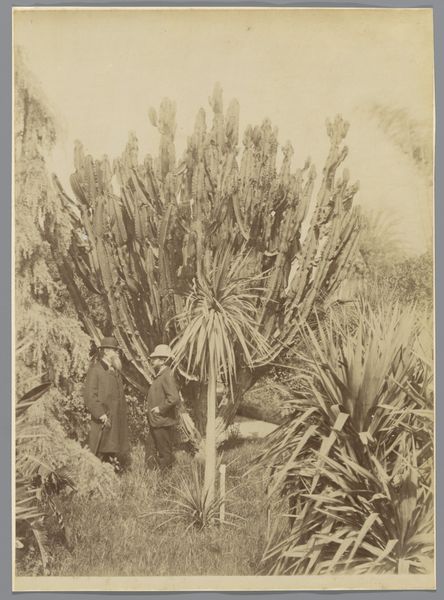
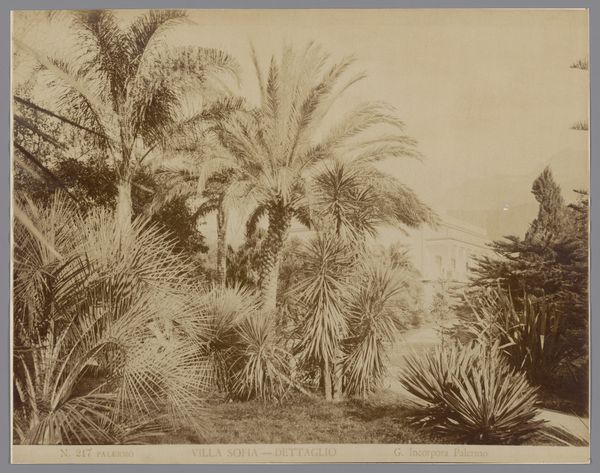
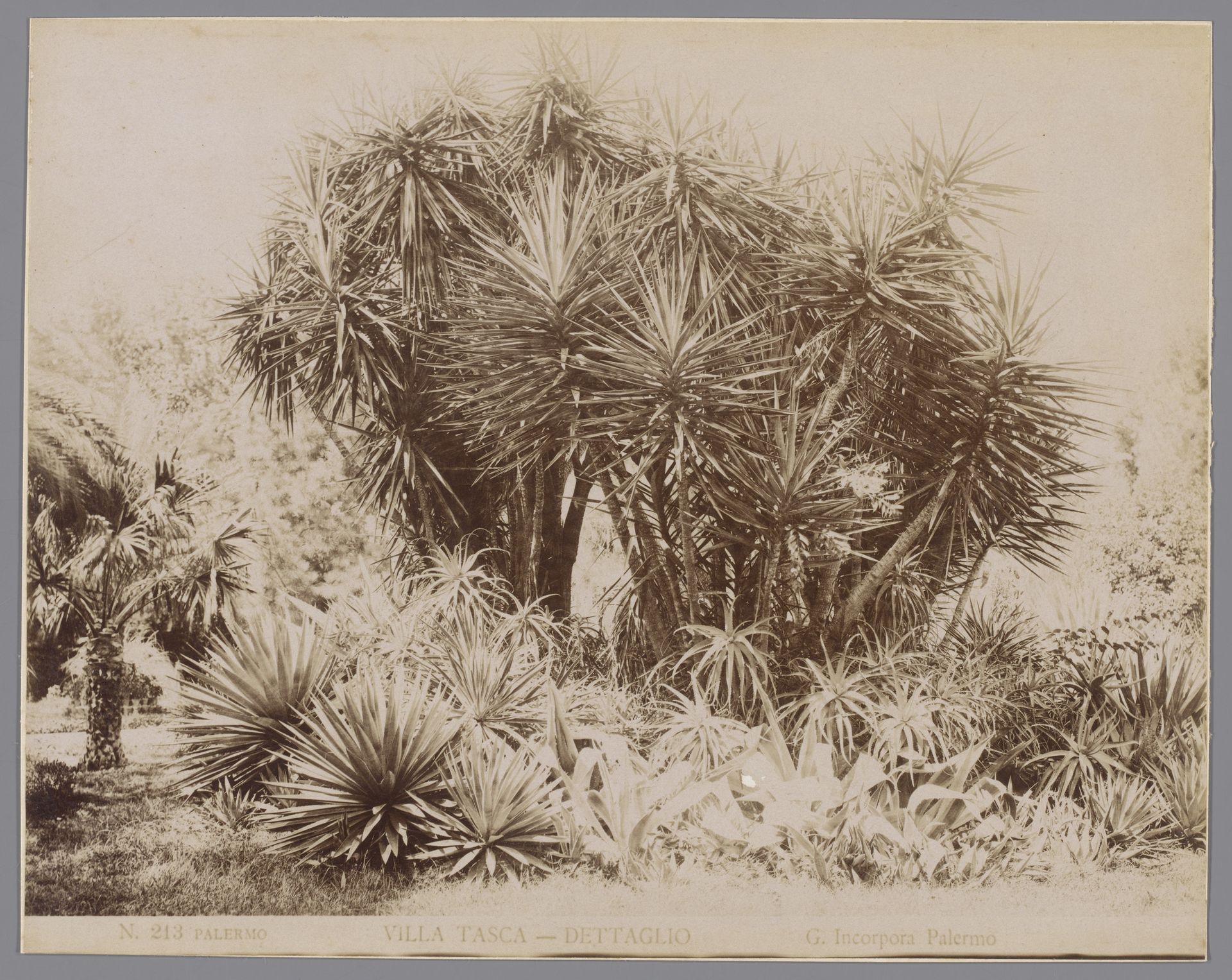
Bomen en struikgewas in de tuin van Villa Tasca in Palermo

Listen to curator's interpretation
Curatorial notes
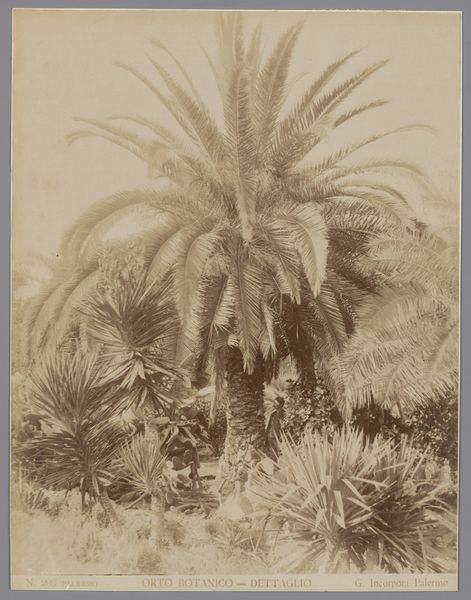
Editor: This is "Bomen en struikgewas in de tuin van Villa Tasca in Palermo" by Giuseppe Incorpora, sometime between 1856 and 1914. It's a photograph and I find the textures and patterns fascinating, especially the way the light filters through the leaves. How do you interpret this work formally? Curator: Initially, the monochromatic palette demands attention, influencing our understanding of form and depth. Notice how Incorpora utilizes light and shadow, almost sculpturally, to define the varied plant life. Consider the composition: a dense arrangement, a careful balance between organic forms and tonal values. Do you perceive any underlying structural elements? Editor: I see the repetition of spiky leaf shapes, creating a sense of rhythm and movement, even though it's a still image. Is that something you would also focus on? Curator: Absolutely. This rhythmical repetition can be analysed as a form of visual syntax, a structuring element. Semiotically, what do these forms evoke? One might even analyse the depth of field, where intentional focus blurs the background to force visual attention. Editor: That's insightful. It is as though he is drawing our eye toward the central cluster of trees. How much can you discern about his specific photographic technique? Curator: Close inspection reveals an interesting employment of tonal range which speaks to its materiality and photographic process. Through understanding the image’s inherent structures, we gain a profound comprehension. Editor: It's amazing how much one can see through this kind of detailed analysis. Thank you. Curator: Indeed. By engaging in close observation, we expose layers within the visual and, correspondingly, enrich our perception of its composition and materiality.