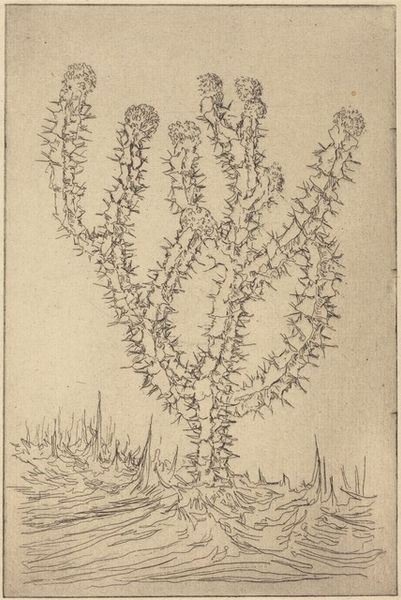
Cactus


Listen to curator's interpretation
Curatorial notes
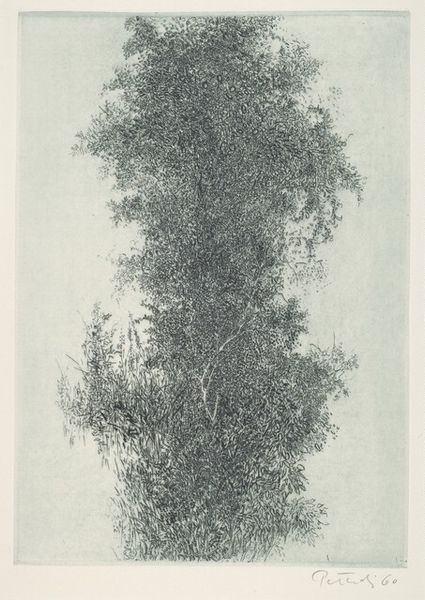
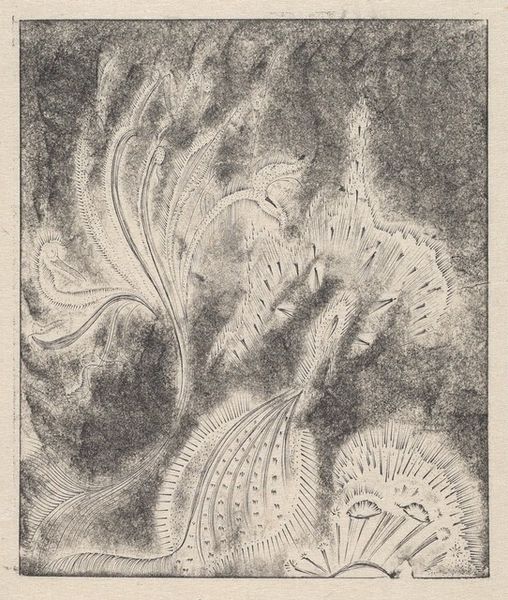
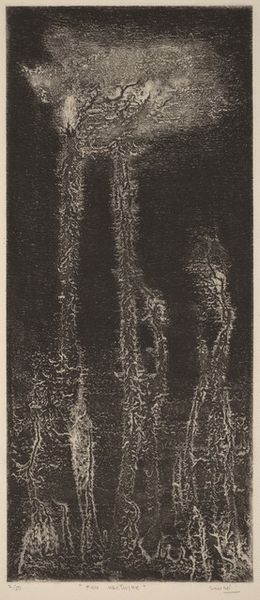
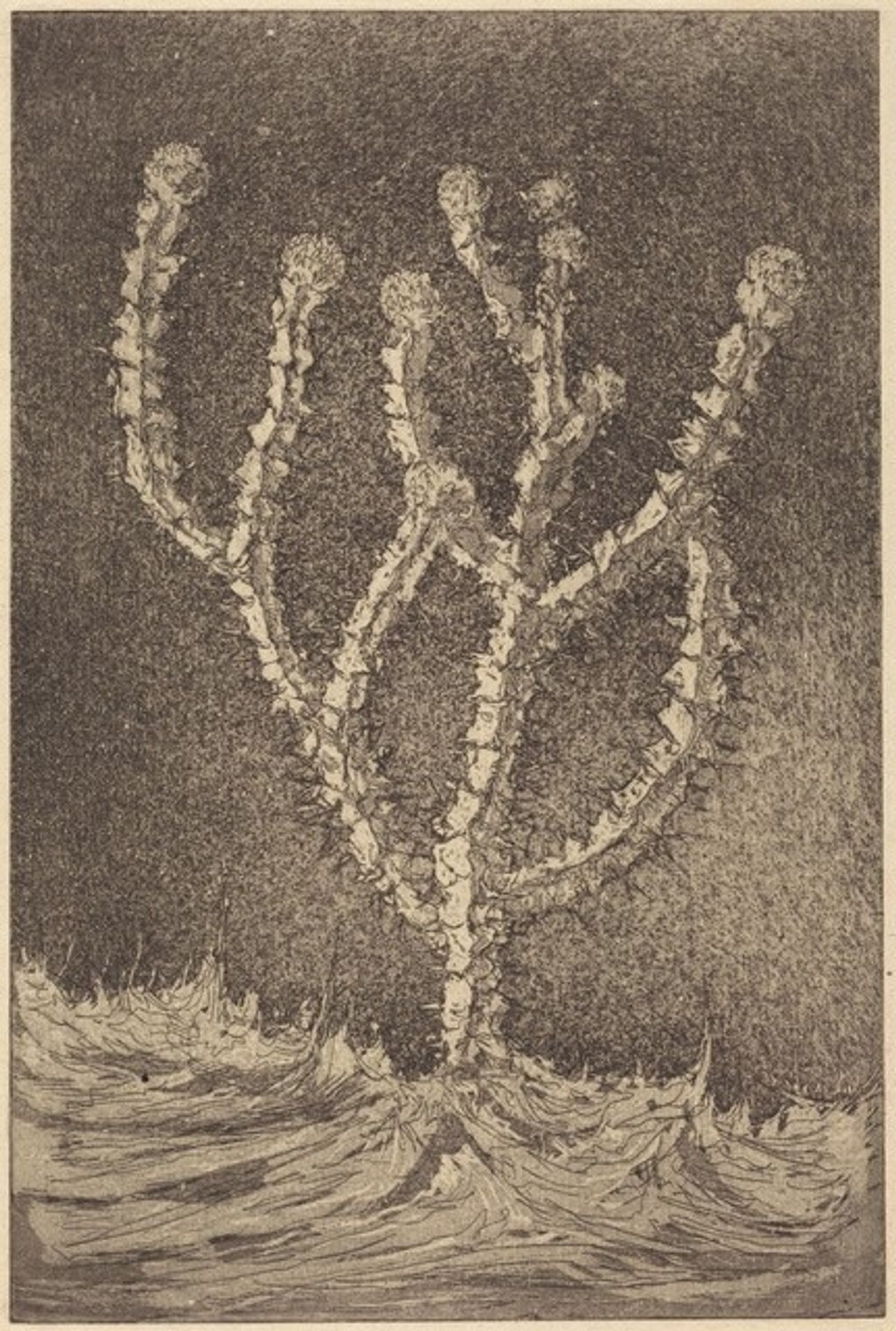
Tomás Joseph Harris made this etching, titled "Cactus," sometime before his death in 1964. It presents us with the thorny resilience of nature. But what does it suggest about human intervention? Harris was born in London and associated with Surrealist circles, including Salvador Dalí. Harris later became involved in espionage during the Second World War. Given this context, we might view this image of the cactus as a symbol of resistance and survival in a harsh environment, mirroring his own experiences during wartime. The dark tones and intricate lines of the etching emphasize the cactus's sharp spines. The plant stands defiantly against the elements. Harris perhaps used the cactus as a metaphor for the strength and endurance required to navigate complex social and political landscapes. To fully understand Harris's work, we can consult his biography and letters, delve into the history of Surrealism, and examine the impact of WWII on artistic expression. Art, after all, is contingent on its social and institutional context.