Copyright: Public Domain: Artvee
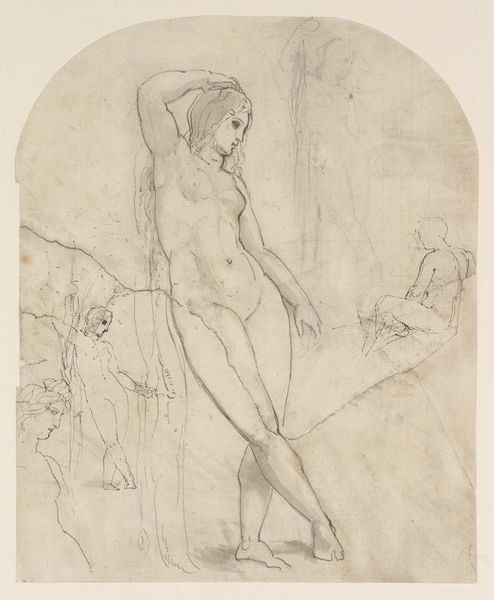
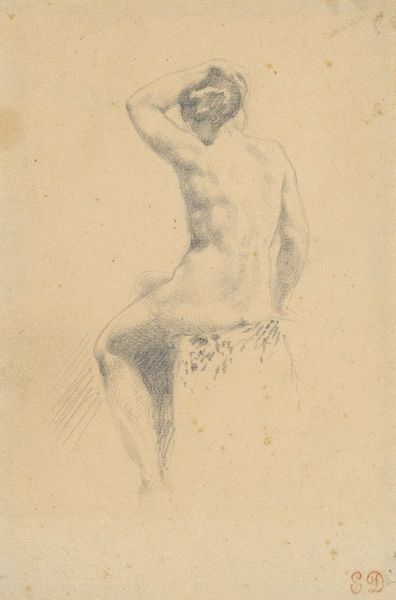
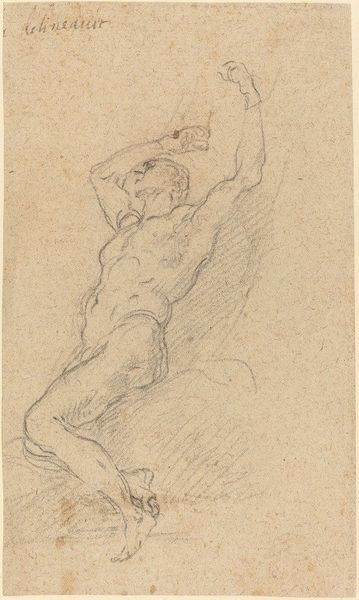
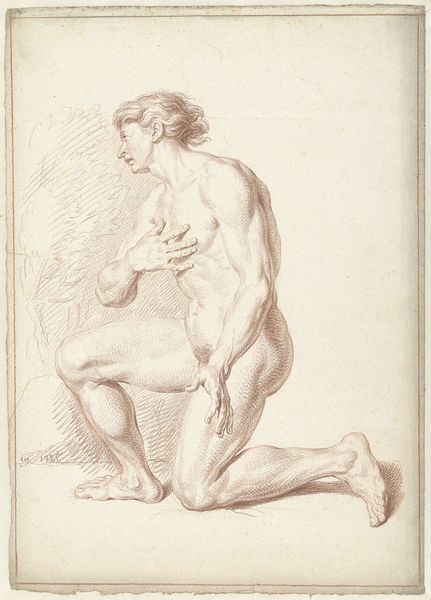
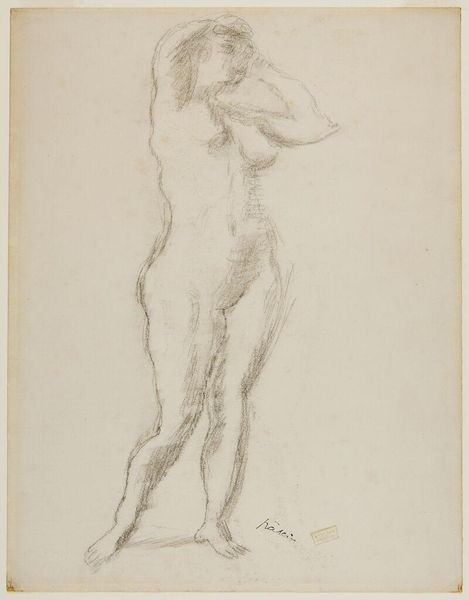
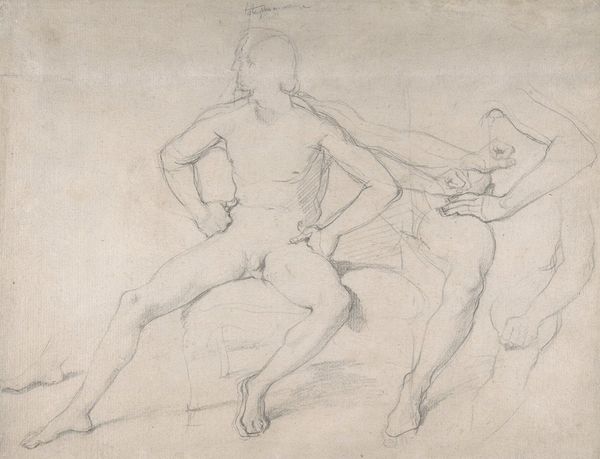
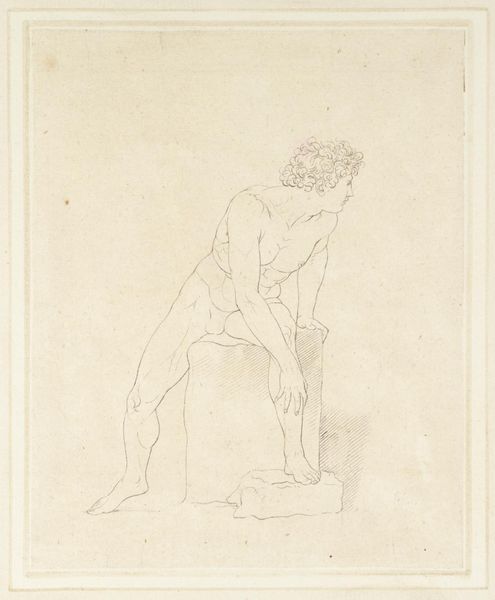
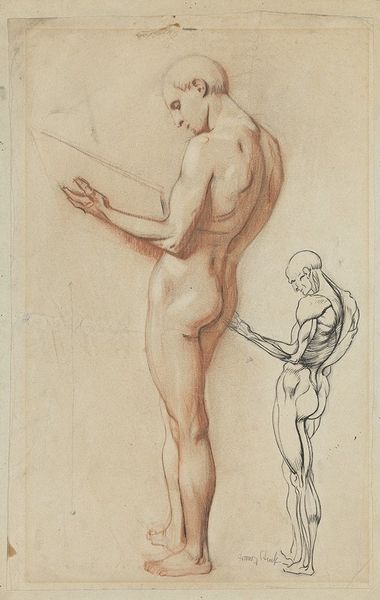
Curator: Before us is Camille Pissarro's "Study of Two Female Figures," dating from the mid to late 19th century. It's a delicate pencil drawing on paper. Editor: There’s an immediate tenderness to it. The figures feel vulnerable, not quite complete but definitely present, caught mid-thought. Almost like a dream on paper. Curator: Precisely! Pissarro's interest in depicting everyday life is certainly present here. He's not idealizing the female form in a classical sense, but capturing something far more intimate and real. Think of the availability and price point for materials like pencils; such things made these types of figure studies more commonplace and achievable for artists. Editor: I like that accessibility you pointed out. This wasn’t some grand commission with elaborate layers of paint and expensive oils. It seems raw and direct, like a sketch ripped from a personal sketchbook—but a damn good one, haha. You see the subtle, insistent work and labor on the paper itself, not some perfect, smoothed-over, finished piece. Curator: The medium plays such a vital role here. The pencil allows for those soft, subtle gradations of light and shadow. It encourages immediacy, as if Pissarro were trying to capture a fleeting impression. His hand must have moved so freely, barely tracing the forms, imbuing it all with such life. Editor: You get a real sense of motion too, don't you? And the way the figures almost bleed into the background – are we sure this isn't about memory, something dissolving even as he tries to grasp it? Perhaps it wasn't about pure record keeping at all. Curator: That interpretation resonates deeply. These weren't static objects being viewed. Editor: Considering everything, from process to experience, makes me really think of who Pissarro *was*. Curator: It also shifts the focus away from idealized bodies to ones of familiarity, process, and change—and, therefore, ones with the potential to possess more narrative nuance. What a truly delicate, intimate portrait that really speaks of that era. Editor: An intimate window into Pissarro's mind and process… leaving much room for interpretation and inviting questions about what's missing between the lines.
Comments
No comments
Be the first to comment and join the conversation on the ultimate creative platform.
 Collect
 React
React Comment
More like this