1900 - 1921
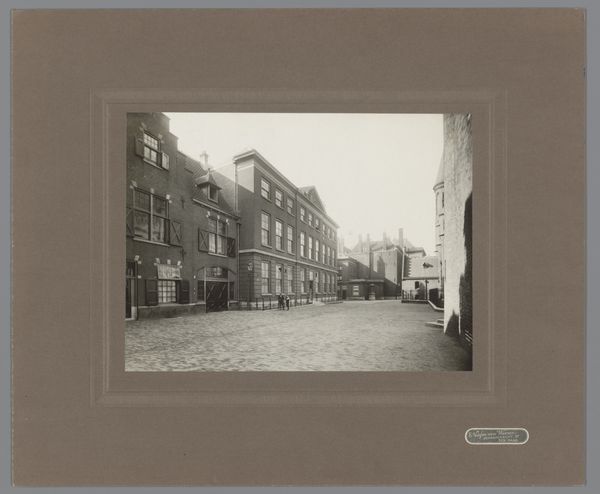
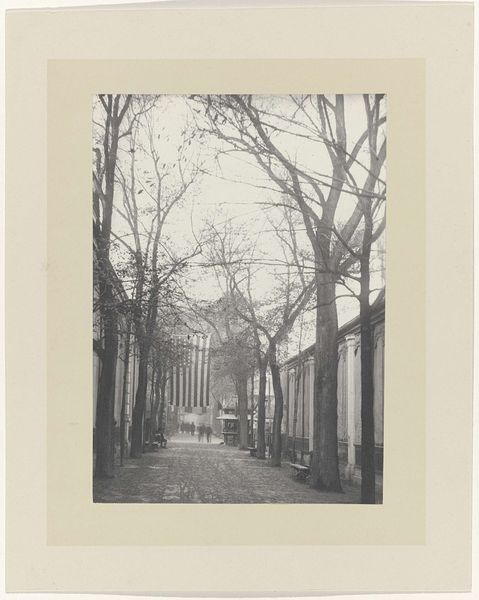
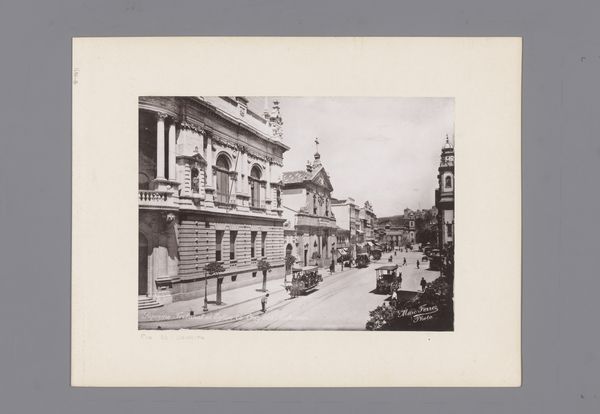
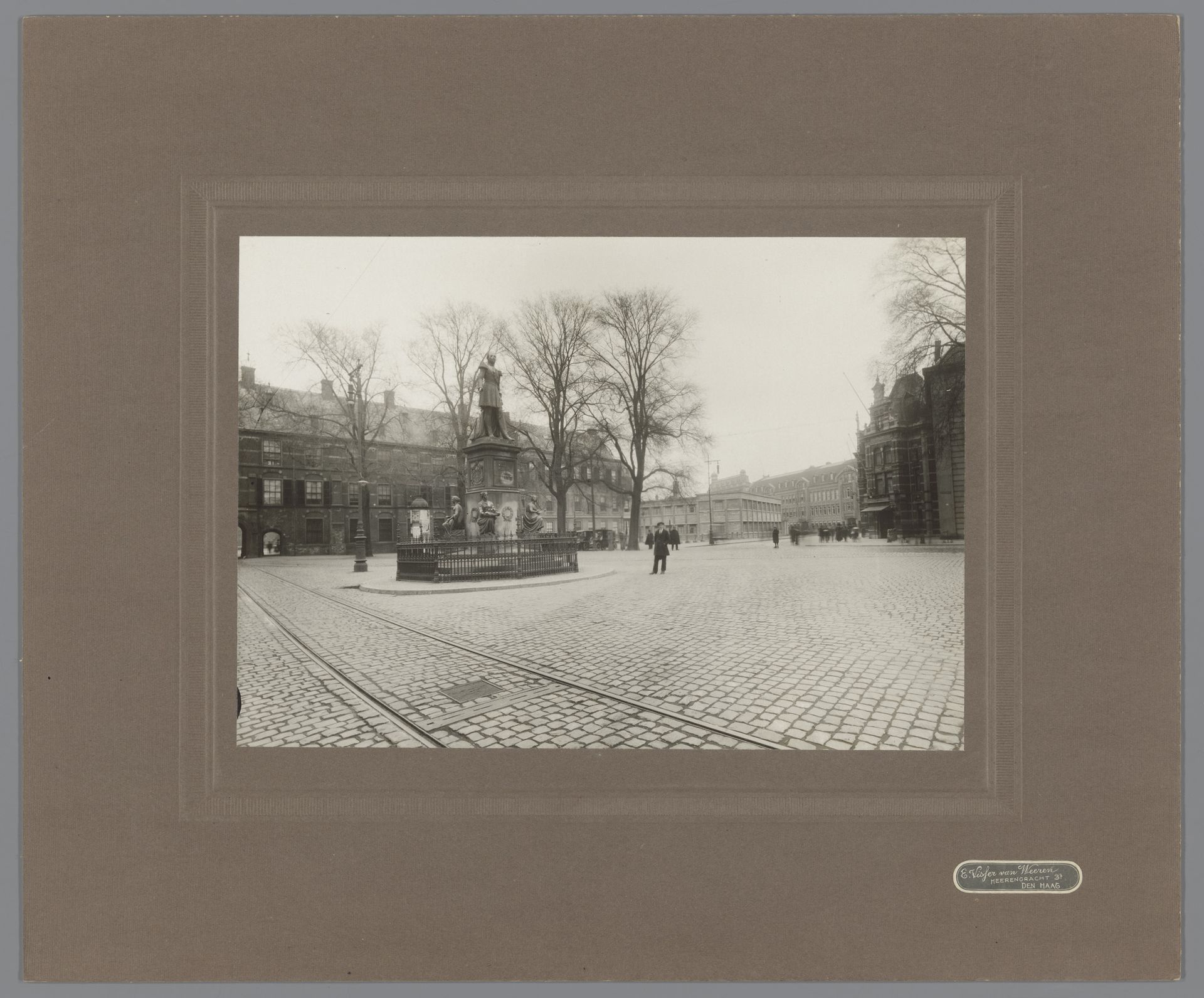
Gezicht op het buitenhof met het standbeeld van koning Willem II

Listen to curator's interpretation
Curatorial notes
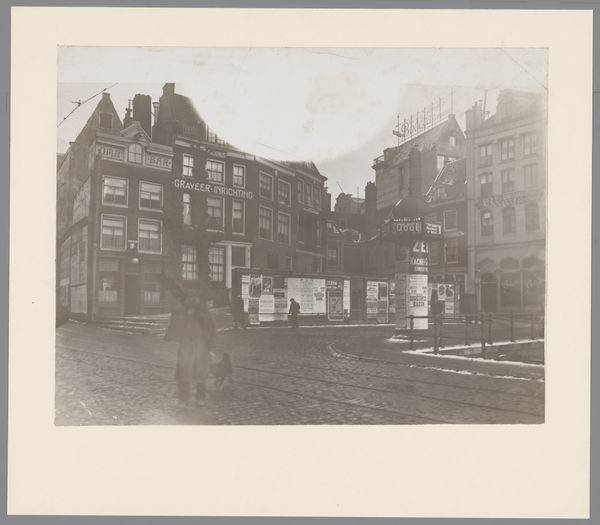
Editor: Here we have "Gezicht op het buitenhof met het standbeeld van koning Willem II" – roughly, "View of the Outer Court with the Statue of King William II" – by E. Visser von Weeren, created sometime between 1900 and 1921, and preserved as an albumen print. It's a very still scene. I’m curious how this cityscape interacts with Modernism, as the description suggests. What do you see in this piece? Curator: I see a study in materials and their relation to power and commerce. Look at the precise photographic process, the specific choice of albumen print, a process requiring skill and infrastructure to produce. And the physical scene – the cobblestone streets and the iron rails bisecting them speak to material trade, industry, movement. How were these stones and rails obtained, transported, laid? By whose labor? Editor: So, you're seeing beyond the static image and thinking about the actual work involved in creating the scene and the photograph itself? Curator: Precisely! Even the statue of King William. Consider the bronze it is made from – a material signifying status and imperial reach. The photograph freezes a moment, but the material conditions extend far beyond it. The very consumption of such an image speaks to emerging capitalist values. Editor: That’s a compelling angle. I hadn't thought about it in terms of the social implications of material production and consumption. Curator: Ask yourself, who was commissioning and consuming photographs like these, and why? It allows a deeper insight into early 20th-century society and class. Editor: This gives me a lot to think about – the interplay of materials, labor, and how they reflect power structures. It reframes the entire image for me. Curator: Indeed. By looking at materiality, we can deconstruct what photographs like this communicated, not just to its contemporary audience, but also to us, viewing it today.