About this artwork
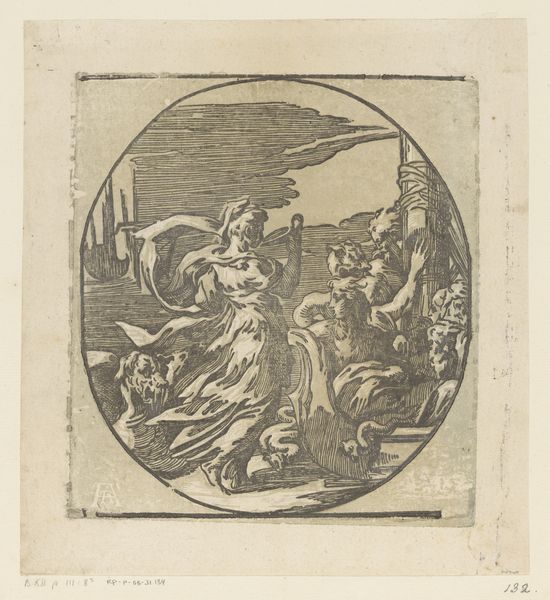
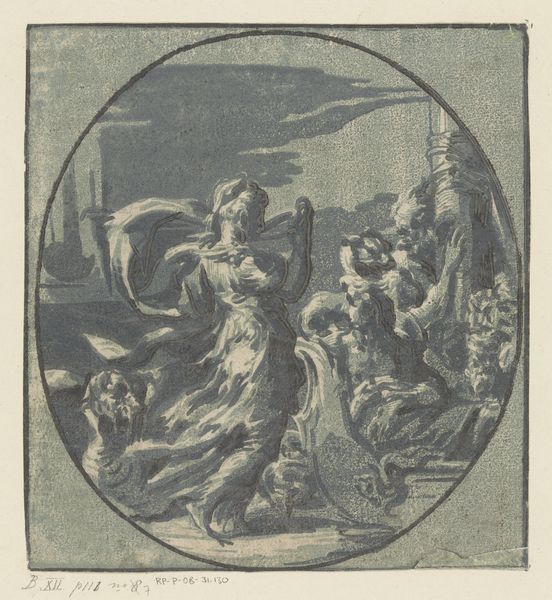
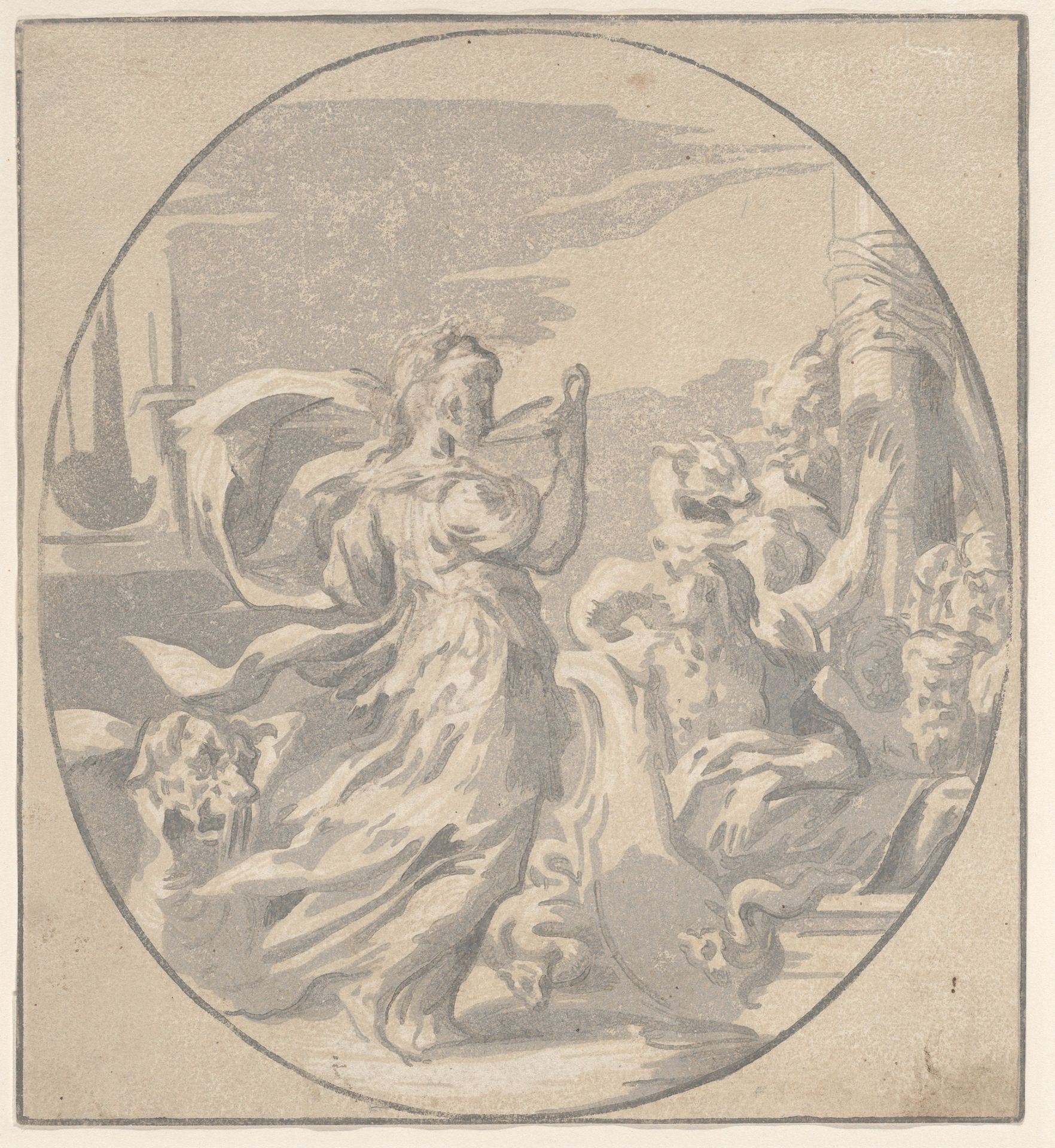
This print of Circe drinking from a cup was created by Niccolò Vicentino in the 16th century, using the chiaroscuro woodcut technique. Chiaroscuro woodcuts involve printing from two or more woodblocks, each inked in a different tone, to create a layered effect of light and shadow. This process imitates the effects of drawings on toned paper, a popular technique at the time. Vicentino had to be technically skilled to align the blocks precisely, so he could build up the image from different layers. The result is a tonal richness that models the forms of Circe and her transformed victims with a sculptural quality. The print translates the sensuousness of painting or sculpture into a more accessible, reproducible form. This speaks to the print's function as a disseminator of classical and Renaissance imagery to a wider audience. Looking at this print, we can appreciate how a traditionally graphic medium – the woodcut – could be elevated to emulate the aesthetic effects of "high art."
Circe drinking from a cup, an oval composition
1535 - 1545


Artwork details
- Medium
- drawing, print
- Dimensions
- Sheet: 8 1/2 × 7 11/16 in. (21.6 × 19.6 cm)
- Location
- Metropolitan Museum of Art, New York, NY
- Copyright
- Public Domain
Tags
Comments
Share your thoughts
About this artwork
This print of Circe drinking from a cup was created by Niccolò Vicentino in the 16th century, using the chiaroscuro woodcut technique. Chiaroscuro woodcuts involve printing from two or more woodblocks, each inked in a different tone, to create a layered effect of light and shadow. This process imitates the effects of drawings on toned paper, a popular technique at the time. Vicentino had to be technically skilled to align the blocks precisely, so he could build up the image from different layers. The result is a tonal richness that models the forms of Circe and her transformed victims with a sculptural quality. The print translates the sensuousness of painting or sculpture into a more accessible, reproducible form. This speaks to the print's function as a disseminator of classical and Renaissance imagery to a wider audience. Looking at this print, we can appreciate how a traditionally graphic medium – the woodcut – could be elevated to emulate the aesthetic effects of "high art."
Comments
Share your thoughts