c. 1550 - 1570
Perseus and Andromeda

Giulio Sanuto
1540 - 1588Location
RijksmuseumListen to curator's interpretation
Curatorial notes
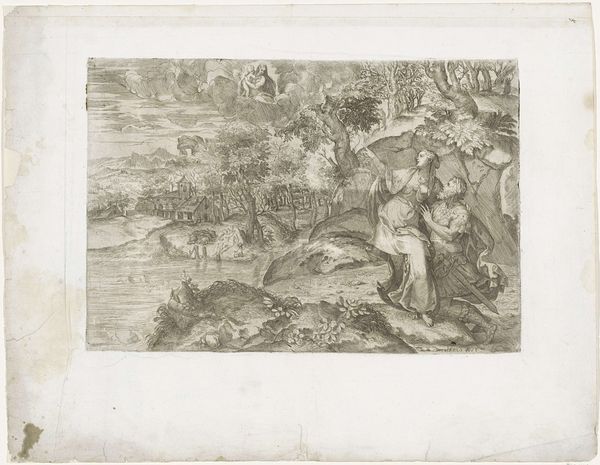
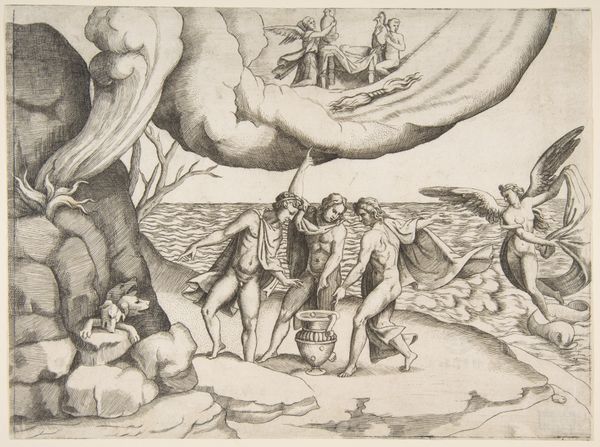
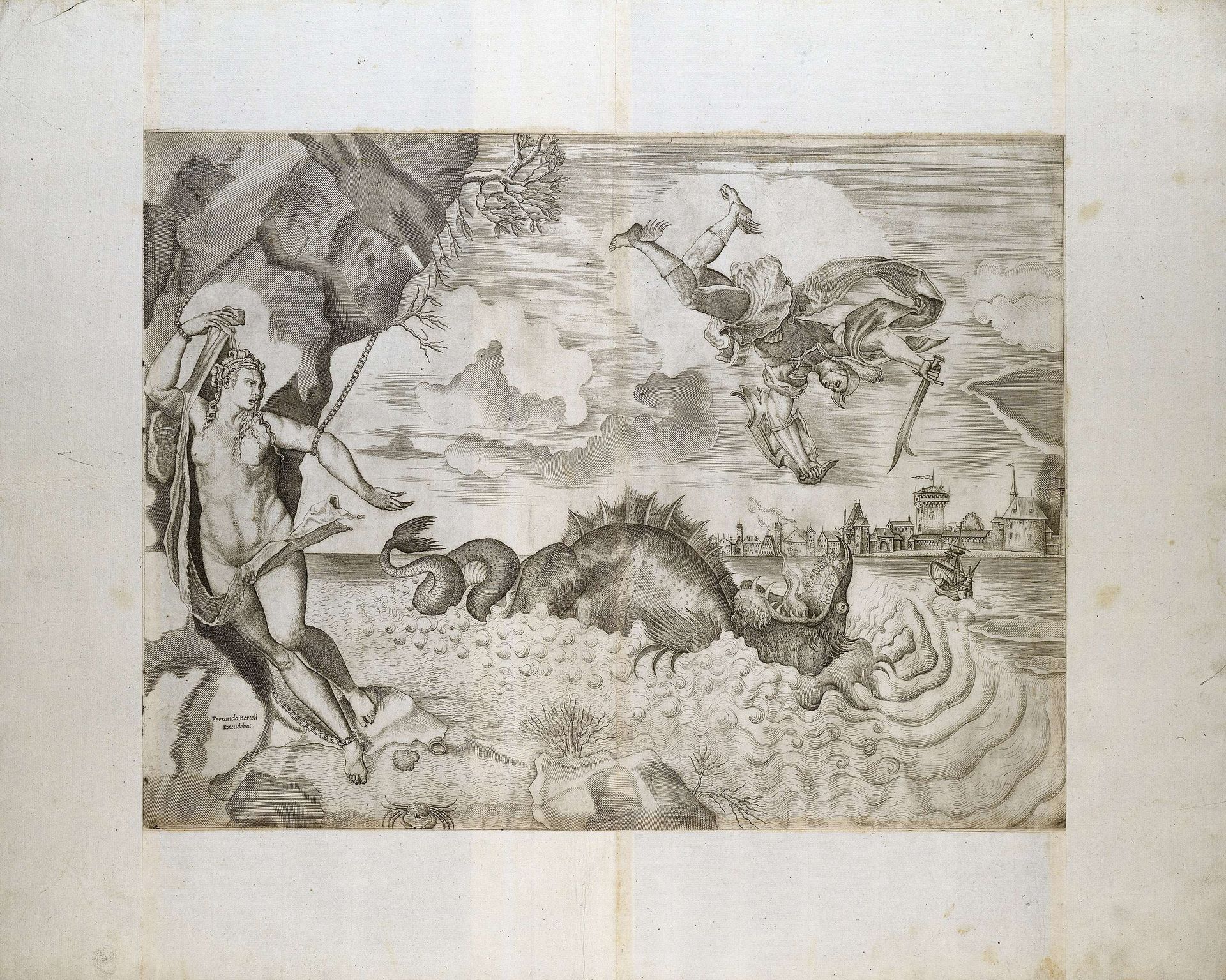
Giulio Sanuto created this print, *Perseus and Andromeda*, sometime between 1540 and 1588. During this period, mythological narratives were often used to reflect societal values and power dynamics. Here, Andromeda is chained to a rock, a vulnerable figure awaiting her fate. Sanuto presents us with a chained woman, exposed, as if to the male gaze. The story of Andromeda, a princess punished for her mother's hubris, becomes a spectacle of female suffering and male heroism. Perseus descends from the sky to rescue her, sword in hand, embodying the archetype of the courageous hero. It’s worth considering the story’s implications: a woman’s suffering as a consequence of another woman’s actions, a male savior intervening to restore order. The story is not just about rescue, but about power, gender, and the narratives we construct around them. It asks us to think about how stories shape our understanding of ourselves and the world.