1879
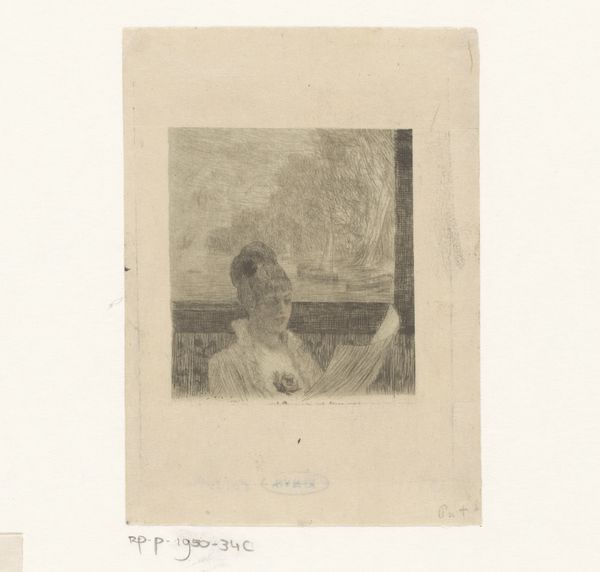
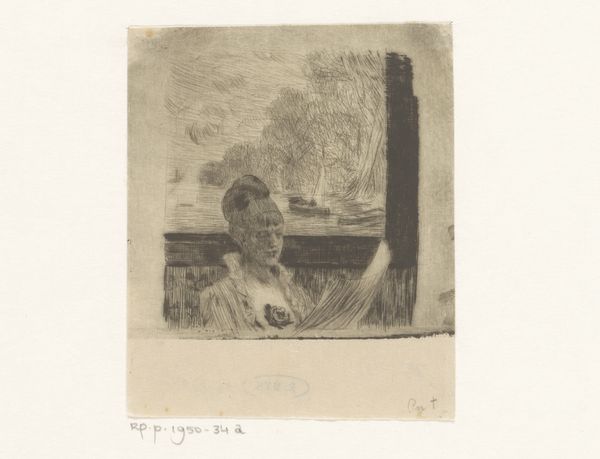
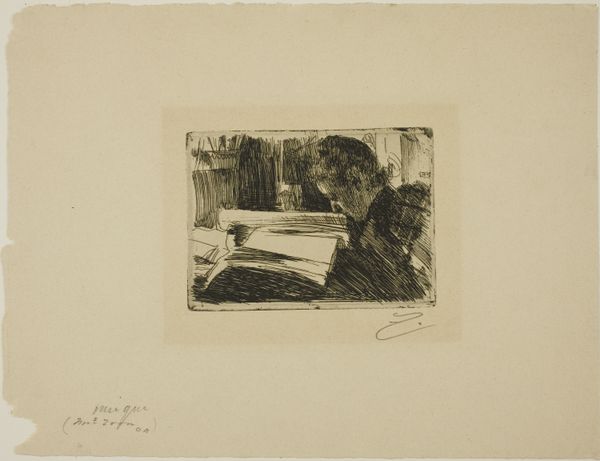
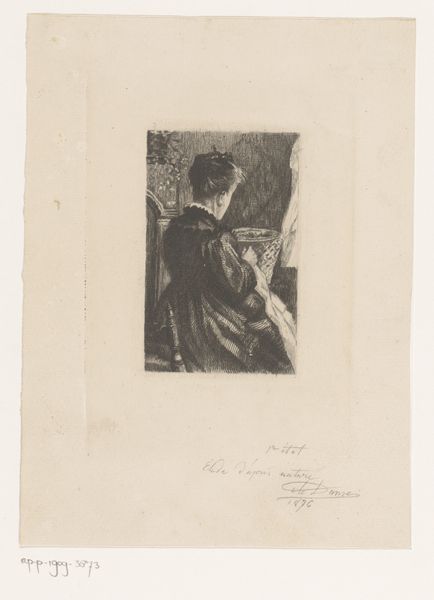
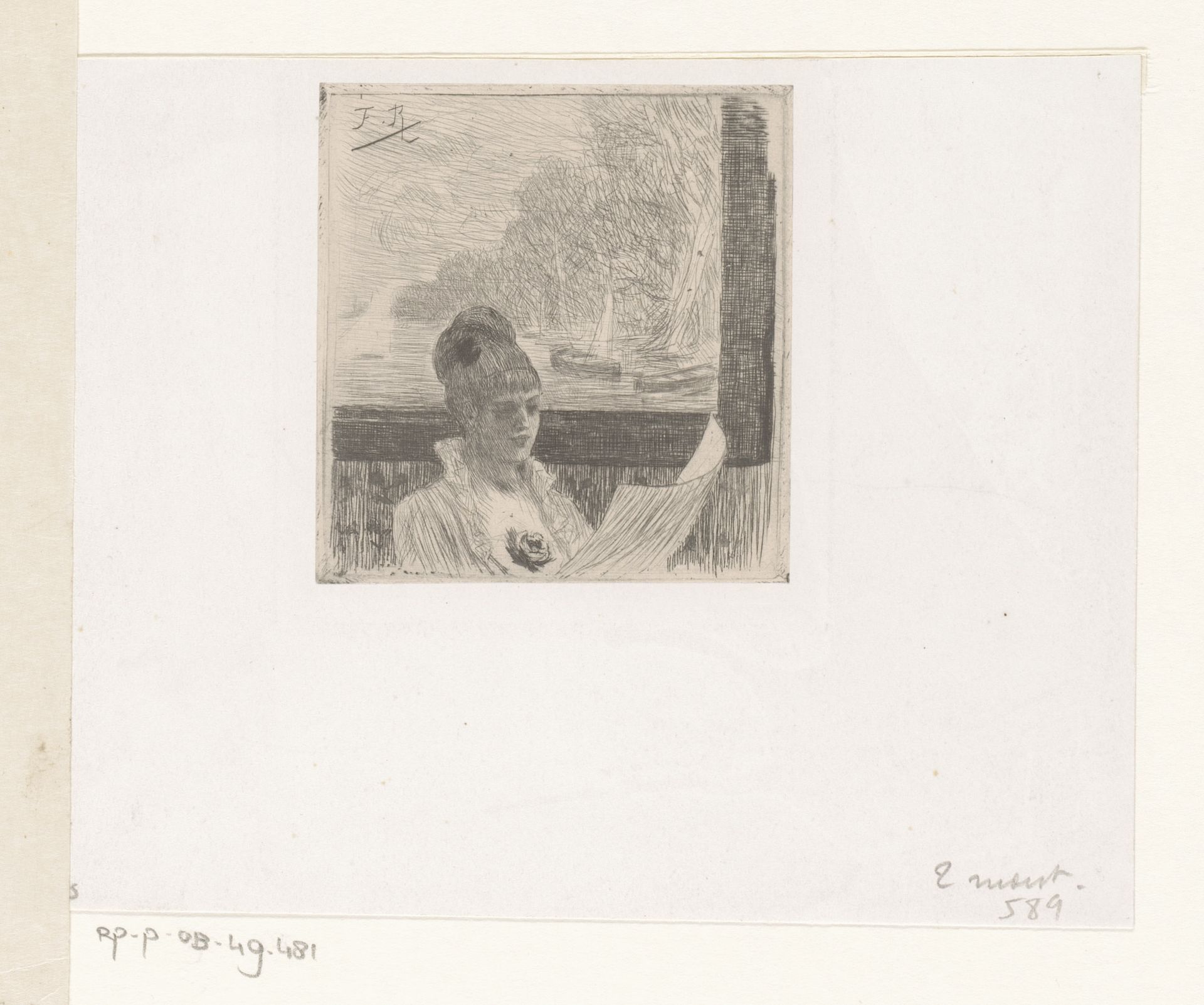
Vrouw leest aan het raam

Felicien Rops
1833 - 1898Location
RijksmuseumListen to curator's interpretation
Curatorial notes
Felicien Rops created this etching, Vrouw leest aan het raam, using a metal plate, likely copper or zinc. Lines were incised into the surface with sharp tools, and then acid was used to bite away at the exposed areas, creating grooves that would hold ink. Look closely, and you'll notice the remarkable fineness of the lines. This was skilled work, demanding meticulous labor. The etching process itself, with its reliance on corrosive acids, reflects the industrializing world that Rops inhabited. While the image depicts a woman in a domestic setting, the print medium connects it to the wider world of mass production and distribution. Etchings like this were made in multiples, intended for a growing market of art consumers. The very act of making prints democratizes art, making it more accessible, less precious, and a commodity in a modern, material world. Consider, then, how the image and the means of its making are intertwined. It is a subtle, yet powerful reminder that art is always embedded in its social and economic context.